The Woman Who Never Forgets the Folding Tables
Maria Gonzalez has been coordinating our neighborhood’s annual block party for seven years running, and I finally convinced her to let me shadow her this year to see how she makes it look so effortless. What I discovered is that the secret isn’t some grand organizational system or expensive software. It’s that Maria thinks about the things the rest of us forget exist until we desperately need them.
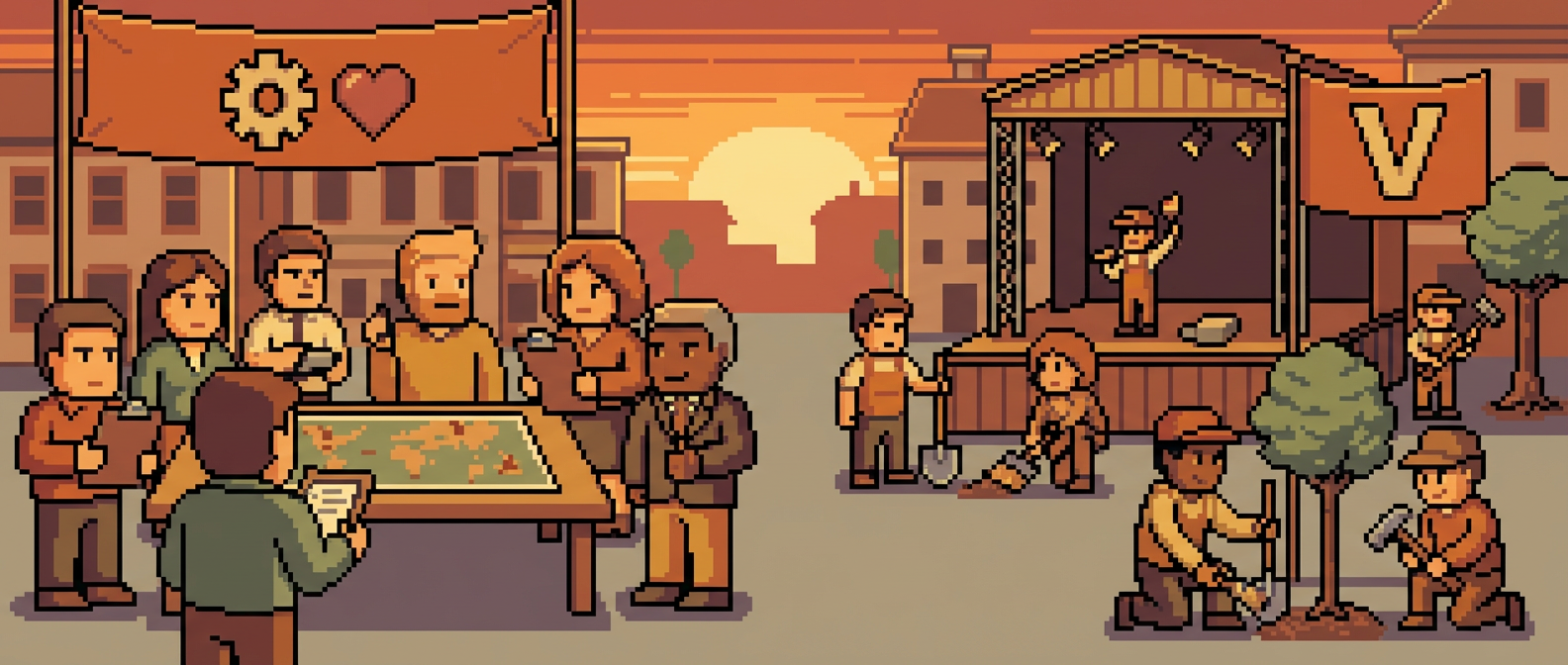
Three weeks before this year’s event, I found her in the community center storage room at 6:30 AM, flashlight in hand, counting extension cords. “People think about the big stuff,” she told me, untangling a particularly stubborn knot. “The permit, the insurance, booking the band. But nobody thinks about how the cotton candy machine is going to get power when the nearest outlet is forty feet away and there are three hundred people between here and there.”
She showed me her planning binder, a three-inch thick monster that’s survived coffee spills, toddler crayon marks, and what appears to be some kind of barbecue sauce incident from 2019. Inside, tabs separate everything from vendor contact sheets to hand-drawn maps of where every single folding table needs to go. The detail that struck me most was a page titled “Things That Went Wrong” with entries like “2018: Ran out of napkins by 2 PM” and “2020: Virtual event, wifi crashed during mayor’s speech, backup hotspot saved the day.”
The Volunteer Whisperer’s Gentle Art
I used to think getting volunteers was about making passionate appeals or guilt trips, but watching Maria recruit help taught me it’s actually about understanding what people can realistically give and matching that to what actually needs doing. When she asked Jim from down the street to help, she didn’t say “we need volunteers for setup.” She said, “Jim, you know how you’re always up early walking Duke? Could you swing by the park around 7 AM and help us get the tables out of the truck? Probably take about twenty minutes.”
The genius is in the specificity. People can say yes to twenty minutes at 7 AM. They can’t say yes to “help with setup” because that could mean anything from thirty minutes to eight hours. Maria keeps a mental catalog of everyone’s schedules, skills, and tolerance levels. She knows that Sarah the nurse can’t commit to morning tasks because she works nights, but she’s great with kids and available around 2 PM. She knows that the Rodriguez family loves to cook but gets overwhelmed by crowds, so she asks them to handle food prep at home rather than work the serving line.
The other thing Maria does that most event planners don’t is create what she calls “escape hatches.” Every volunteer gets a specific end time, and she actually means it. “If you tell someone they can leave at 4 PM and then guilt them into staying until 6, they’ll remember that next year,” she explained. “But if you let them go right at 4 PM even though you could use the help, they’ll volunteer again because they trust you.”
The Infrastructure No One Talks About
Two days before the block party, Maria and I made what she calls “the bathroom run.” We drove to every business within three blocks of the event space, introducing ourselves and asking if their restrooms would be available during the party hours. Most said yes immediately, but a few needed some negotiation. The new coffee shop was worried about crowds, so Maria suggested they put up a small sign advertising their weekend specials. The auto repair shop was concerned about liability, so she showed them our insurance certificate and explained that we’d have volunteers directing foot traffic.
This kind of community infrastructure building happens largely invisibly, but it’s what makes the difference between an event that works and one where people spend half their time looking for a bathroom or somewhere to throw away their paper plates. Maria has built relationships with the local businesses, the parks department, the police dispatcher who handles our permit, and the guy who delivers the portable stage every year.
She also thinks about accessibility in ways that go beyond the official requirements. Yes, we have wheelchair-accessible routes and seating areas, but Maria also considers things like having a quiet space for people who get overwhelmed by crowds, making sure there are places to sit that aren’t just on the ground, and positioning the ASL interpreter where the late afternoon sun won’t be shining directly into their face.
When Things Go Sideways (And They Always Do)
About two hours into this year’s block party, the band’s sound system decided to emit a feedback screech that could probably be heard in the next county. While the rest of us stood around looking helpless, Maria was already on her phone with the backup sound guy she keeps on call. “This is exactly why I budget for two of everything important,” she told me later. “Not because I’m pessimistic, but because stuff breaks and people get sick and trucks get flat tires.”
But the real test came when Mrs. Chen’s grandson took a tumble near the face painting booth and scraped his knee pretty badly. Within sixty seconds, Maria had produced a first aid kit, located the boy’s parents in the crowd, and radioed for one of our volunteer EMTs to come take a look. The whole incident was handled so smoothly that most people didn’t even notice it happened.
What struck me was how calm everyone stayed, including the kid. That doesn’t happen by accident. Maria had briefed all the volunteers on emergency procedures, made sure everyone knew who to radio for what, and positioned the first aid station where it was accessible but not anxiety-inducing. She’d thought through the scenarios that might happen and prepared for them without creating an atmosphere of worry.
The Ripple Effects of Doing It Right
By the end of the day, as we folded the last of those carefully counted tables and swept up the inevitable confetti explosion from the kids’ craft area, I understood why our block party has grown every year while other neighborhood events have fizzled out. It’s not just that Maria is organized, though she certainly is. It’s that she approaches community event planning as a form of care for the people who live here.
Every detail she obsesses over, from the extension cord logistics to the bathroom negotiations, is ultimately about making sure that families with little kids don’t have to stress about logistics, that elderly neighbors can participate comfortably, and that busy volunteers don’t get burned out. When people feel taken care of, they show up. When they show up, they meet their neighbors. When neighbors know each other, all sorts of good things become possible.
If you’re thinking about organizing something in your community, Maria’s binder is available for borrowing, and she’s always happy to talk through the practical stuff over coffee. The city council meets every second Tuesday if you want to understand what resources are available, and there’s usually a community volunteer coordination meeting the first Thursday of each month at the library. Come find me at either one if you want to brainstorm how to make something happen in your corner of the neighborhood.
