The Numbers That Should Wake Us Up
If you’ve been reading the news but somehow still feeling like hate crimes are something that happens somewhere else, I need to sit down with you over coffee and walk through what’s actually happening. The numbers don’t lie, and they’re not getting smaller. Across the United States and Western Europe, hate crime reporting has climbed to levels we haven’t seen in three decades. That’s not a blip. That’s a pattern. That’s your neighbor’s kid getting harassed at school. That’s a synagogue installing new locks. That’s a mosque organizing extra security during Friday prayers.
The SPLC hate group monitoring database tracks more than 1,200 active hate groups currently operating in the United States. One thousand, two hundred. Not historical footnotes from a textbook. Not hypotheticals from a seminar. Active. Right now. This isn’t meant to terrify you into inaction. Quite the opposite. Understanding the scale is the first step toward recognizing that this work belongs to all of us, not just the people who’ve already been targeted.
Why the Usual Answers Aren’t Enough
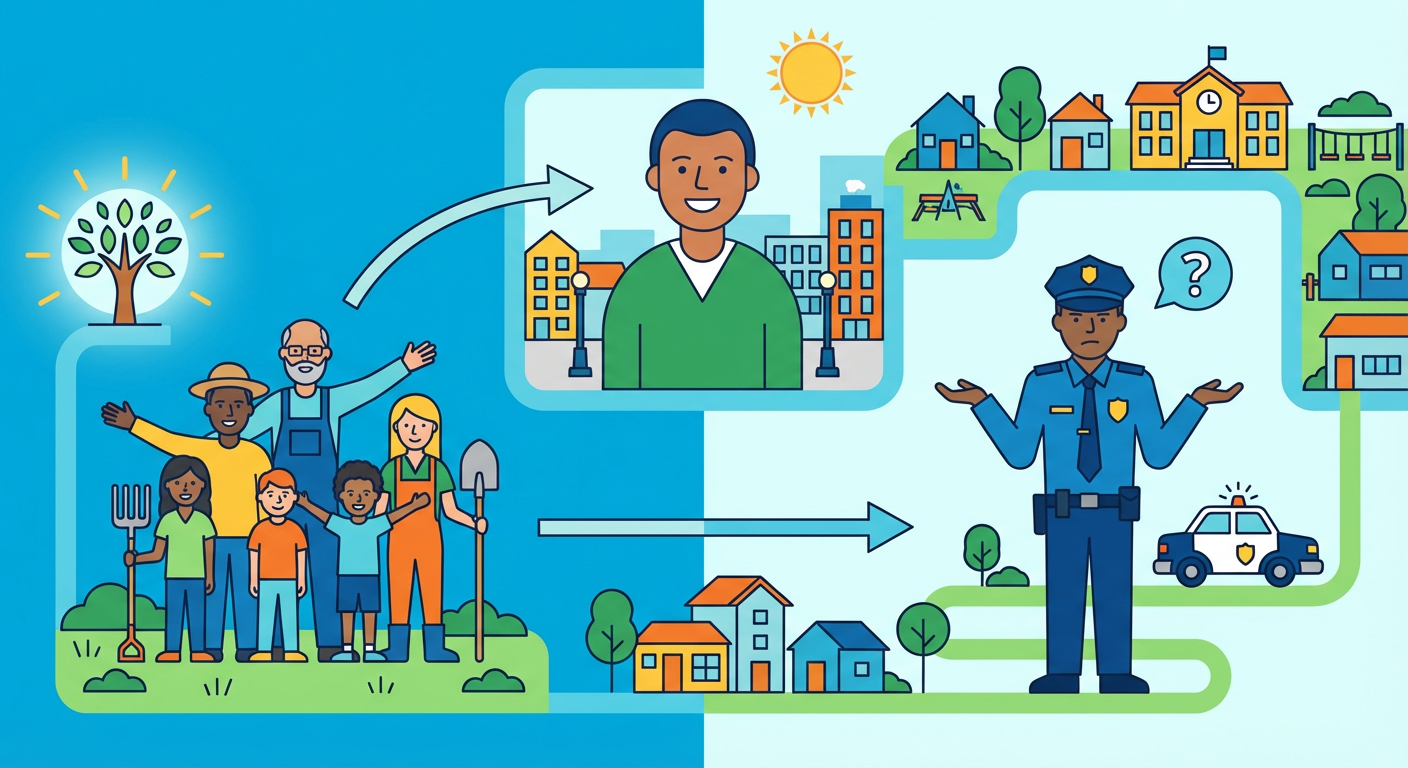
Here’s what I’ve learned from actually talking to people doing counter-extremism work in real communities: law enforcement matters, but it’s not the whole answer. Studies consistently show that community-based intervention approaches outperform enforcement-only strategies. There’s something almost obvious about this once you think about it. A person pulled into extremist thinking doesn’t need a court date as much as they need someone who believes they can change. They need a reason to believe it themselves.
Online deradicalisation programs are showing genuinely mixed but gradually improving results. Some platforms have invested in training people to recognize when someone they know is being drawn into extremist content and how to have that difficult conversation. Others have built resources specifically designed to help people exit extremist communities without shame. The technology isn’t magic, but when paired with real human connection, it works more often than it doesn’t. The barrier isn’t usually the program itself. It’s getting people to use it before they’re too far gone.
The real insight here is this: the moment extremism enters a community, the response matters more than the speed. Patient, persistent, human-centered approaches built on relationships and trust outperform everything else. That means neighbors. That means people who know each other’s names.
The Faith Leaders Who Found Each Other
What strikes me most about the emerging coalitions between Muslim, Jewish, and Christian organizations is how practical and unsentimental they are. These aren’t just interfaith dialogue groups sitting in circles talking about tolerance. These are working alliances. A rabbi and an imam meeting weekly to coordinate community safety. A pastor and a Muslim youth leader building a mentorship program together. A Jewish community center and a mosque hosting joint cultural events specifically to show younger people that their traditions can coexist and strengthen each other.
When you talk to people in these coalitions, they describe something simple but powerful: recognizing that they share a common enemy more dangerous than their theological differences. The far-right targets all of them. So they show up for each other. They share security resources. They train their volunteers together. They refuse to let hate groups dictate the terms of their own neighborhoods. One organizer told me, “We realized we were stronger together at a time when we felt individually vulnerable.” That’s not naive idealism. That’s strategic thinking wrapped in genuine care.
These relationships also do something harder to measure but equally important. They make it visibly harder for extremist recruiters to paint entire religions as threats. When a young person sees the imam and rabbi laughing together at a community event, the narrative of us-versus-them becomes harder to believe. That matters.
The Platform Problem That’s Everyone’s Problem
Social media platforms are finally facing sustained pressure to actually address how their algorithms amplify hate content. This is important because it’s not neutral infrastructure we’re talking about. The way these platforms are designed actively promotes engagement, and outrage generates engagement. Hate is incredibly engaging. It creates the kind of emotional response that makes algorithms happy and communities hurt.
The pressure is working, but incompletely. Some platforms have begun implementing controls to limit algorithmic amplification of extremist content. They’re adjusting recommendation systems so that watching one conspiracy theory video doesn’t automatically queue up ten more. They’re training content moderators more rigorously. But this is still a half-measure. The fundamental business model hasn’t changed. What’s shifted is the bare minimum of responsibility they’re accepting. For now, that’s something.
But here’s what matters more than any corporate policy: your choices. Where you spend your attention. What you engage with. Whether you report something or scroll past it. The platforms are powerful, but they’re not all-powerful. Communities that actively choose not to participate in hate narratives, that push back against extremist content in their own networks, that report coordinated inauthentic behavior, make the platforms’ jobs harder in the way that actually changes outcomes.
What This Means for Actual People in Actual Neighborhoods
I want to be honest about something: this work is slow and often invisible. There’s no ribbon-cutting ceremony for the person who talks their nephew out of joining a far-right group. There’s no news coverage for the community organizer who builds enough trust with isolated young people that they start questioning the narratives they’ve been absorbing online. There’s no metric for the small shifts in how neighbors treat each other when someone shows up and says, “We don’t have to accept this.”
But it’s happening. In cities and towns across the country, people are choosing to do this work. They’re training community leaders. They’re building mentorship programs. They’re reaching out to people in their networks who are starting to drift toward extremism and saying, “I care about you, and I’m worried.” They’re showing up. They’re staying when it’s hard.
The Netz gegen Nazis anti-fascism work happening in Germany offers proof that organized community response actually works. It’s not magic. It’s people committing to it for the long haul.
If you’re sitting with this information and feeling like something needs to change, you’re right. And you don’t need to do it alone. Find the organizations in your community that are already doing this work. Get trained. Show up. Learn how to have these conversations. Understand that the person you’re trying to reach is still a person. Build relationships with people from other faith traditions and backgrounds. Notice when algorithms are trying to divide you. Choose differently.
This isn’t about grand gestures. It’s about the persistent, patient, generous choice to believe that people and communities can change. If you want to talk more about how to get involved in your own community, or if you’ve already started this work and want to share what you’re seeing, I’d love to hear about it. That’s where real change starts anyway. In conversations. Between people. Who believe it matters.
