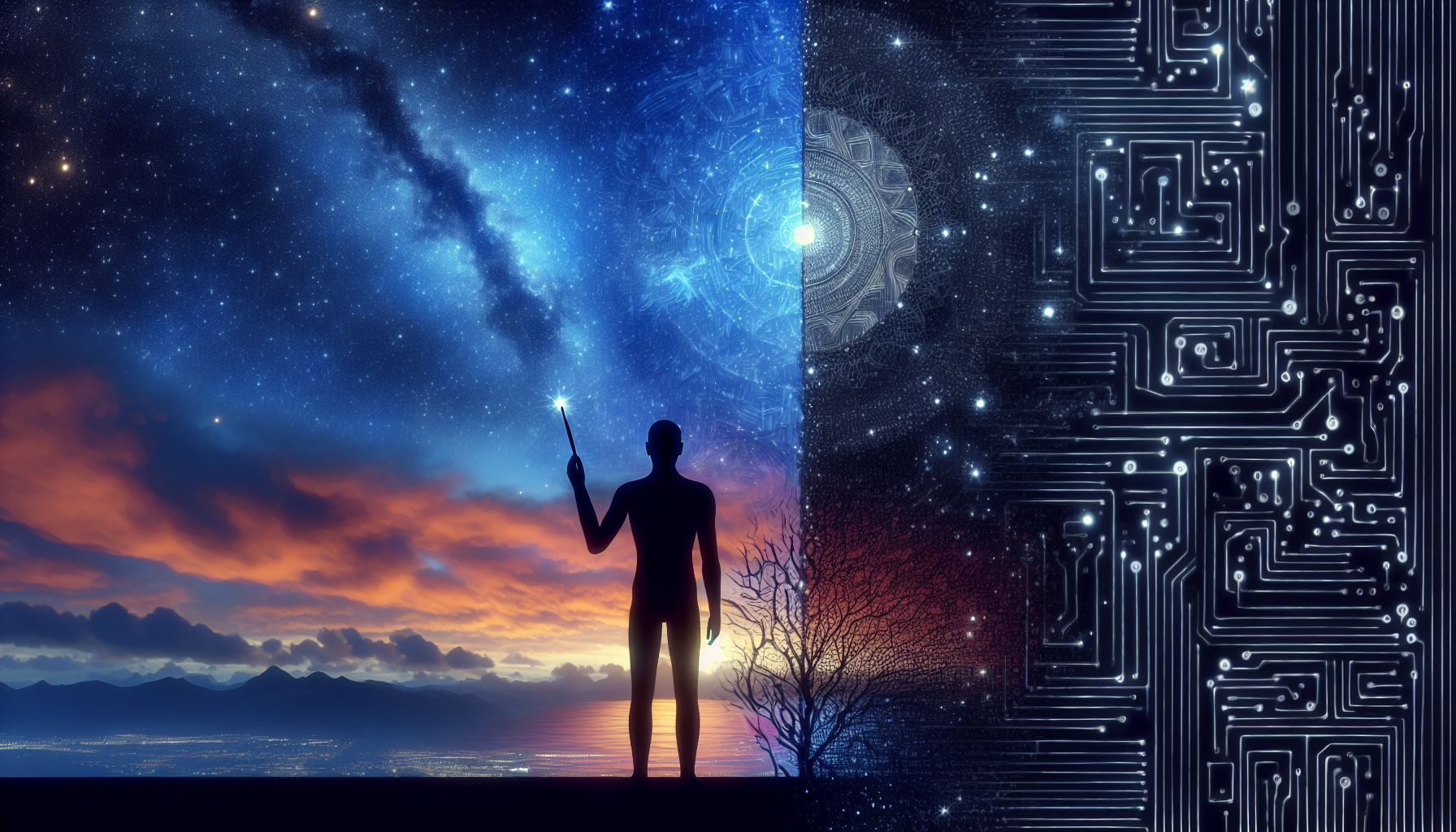
Hey there! Buckle up for a ride on the tech rollercoaster because today, I’m diving into a topic that’s been making quite a splash in the digital ocean, Artificial Intelligence in the creative arts. If you thought AI’s gig was limited to crunching numbers and orchestrating world dominance (just kidding, or am I?), think again. It’s flexing its digital muscles in the creative spaces where human creativity was thought to be the crown jewel. Spoiler alert: AI is painting the town with 1s and 0s! Intrigued? Let’s get into it!
From Code to Canvas: How AI is Transforming Art
Picture this: a room full of Picasso paintings, and in the center, an AI is whipping up a masterpiece of its own. Sounds like science fiction? Not so much anymore. Platforms like DeepArt and RunwayML are turning this vision into reality by using neural networks to generate art pieces that honestly make me do a double-take. These platforms have been trained on countless artworks, allowing them to recreate styles ranging from Van Gogh’s dreamy swirls to Banksy’s edgy street art.
What’s wild is the level of creativity these AIs are beginning to explore. While they’re initially built to mimic human styles, they’re increasingly doing more than that, coming up with styles that could blow the beret off any human artist’s head. It’s like training a barista to make a latte and finding out they can whip up a caramel macchiato, and sometimes, a concoction no one has ever tasted!
The Magic Behind the Machines
Alright, technical time, but don’t worry, I promise not to bore you with jargon. At the heart of AI artistry is something called Generative Adversarial Networks (GANs). Imagine two AIs locked in a creative duel: one (the generator) tries to create new images, while the other (the discriminator) tries to determine if the images are real or generated. With each round, the generator gets better and better, ultimately crafting pieces that are pretty darn convincing.
This competitive approach gives AI an edge in creating art. What’s even more fascinating is that these GANs are changing the definition of artistic collaboration. Rather than using AI as a mere tool, artists and AI are becoming co-creators. It’s like having a jam session with a virtual band member who learns on the fly and can play virtually any instrument, or invents their own. How’s that for band dynamics, huh?
Illustrating Empathy: AI Writing Poetry and Music
It’s not all visual art, my friends. AI’s dancing on our heartstrings in more ways than one. Take poetry, for instance. AI has been trained to write sonnets that could make Shakespeare do a double-take. Programs like OpenAI’s GPT-4 can spit out verses that convey emotion surprisingly well. While skeptics argue that AI can’t truly understand what it’s writing, readers often find themselves moved by the results nonetheless.
In music, tools like AIVA (Artificial Intelligence Virtual Artist) are composing symphonies that are not only listenable but also deeply complex. I remember stumbling upon a track composed by an AI and thinking, “Wow, this could be the new soundtrack to my chaotic tech-infused life!” Imagine AI creating custom playlists based on your mood with compositions it generated just for you. It’s a harmonious blend of tech and tunes!
The Critics Come Marching In
Okay, hold your applause, because like any good plot, there’s some drama here. Not everyone is shouting from the rooftops about AI’s creative prowess. Critics worry about originality. Can something truly be classified as “art” if it wasn’t inspired by real human experiences? There’s also a prickly debate about job security for artists. If an AI can compose a hit pop song, what does that mean for the creative folks who’ve spent their lives honing their craft?
Moreover, there’s the question of ownership. If an AI creates a masterpiece, who owns it? The coder? The AI? Society? Picture trying to sue a program for royalties, good luck serving those subpoenas!
Gazing into the Crystal Ball: The Future of AI and Creativity
Looking ahead, it feels like we’re at the dawn of a new Renaissance, only this time, algorithms are stirring the paint. I suspect we’ll see more integration of AI as a partner in the arts. Think of collaborative events where AI and human teams co-create art exhibits, or writers using AI as a ‘thought partner’ to brainstorm ideas, generate dialogue, or even explore plot twists in novels. Could AI become the silent sounding board or a muse that elevates human creativity?
But with great power comes great responsibility. We must navigate the ethical maze this innovation presents, making sure that while AI encourages creativity, it also respects and uplifts human artistry. After all, the symphony of creation thrives best when it combines the machine’s precision with the human heart’s passion.
Conclusion: Rewriting the Creative Future
From creating art that captivates to penning music that mesmerizes, AI is proving it’s got a place in the creative hierarchy. The art world is shifting as technology infuses it with new capabilities and uncharted possibilities. As I sit back and let this transformation unfold, I’m filled with equal parts curiosity and awe. We’re living in a time where the line between human and machine creativity is blurred, offering a tantalizing glimpse into what might come next.
And that, my fellow tech enthusiasts, is a chapter in the book I’m thrilled to read. Here’s to the creative horizons yet to be explored, whether sketched by a brush, penned by a poet, or coded with care. Let’s enjoy the ride, as unpredictable and exciting as it may be!
