The Infrastructure of Connection
Last month, I walked through the old Riverside Community Center before they started demolition. The building had been closed for three years, victim of deferred maintenance and budget cuts that made repair costs exceed replacement value. Standing in what used to be the main meeting room, I could see the ghost outlines on the wall where bulletin boards had hung for decades. Those boards had carried everything from lost cat flyers to voter registration drives to sign-up sheets for the annual creek cleanup.
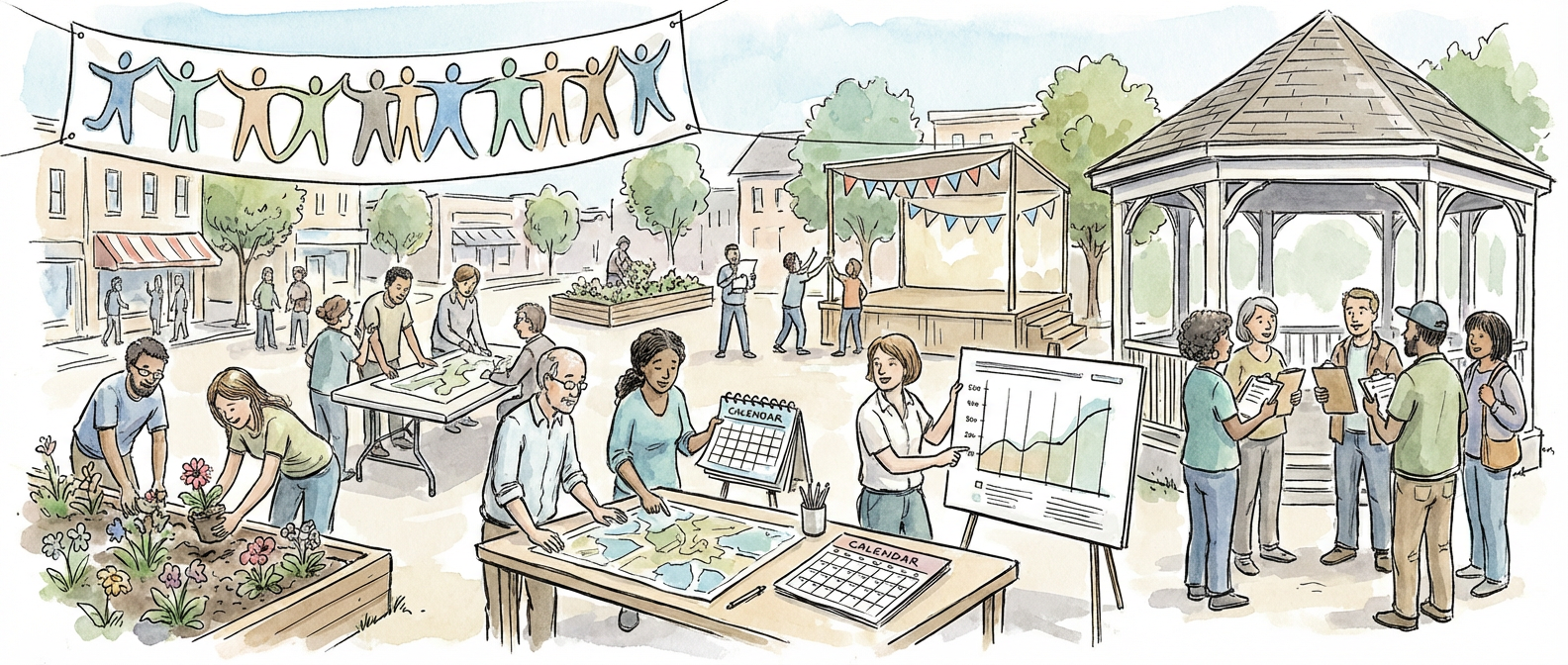
What struck me wasn’t the peeling paint or the water-stained ceiling tiles. It was how much coordination infrastructure we had lost without really accounting for it. This wasn’t just a building. It was the place where the neighborhood watch captain met with new volunteers every second Tuesday. Where the community garden committee planned seasonal plantings over folding tables and donated coffee. Where three different mutual aid networks had grown from casual conversations into organized response systems during the 2019 floods.
We talk a lot about community resilience, but we rarely take stock of the specific mechanisms that make coordination possible. A reliable meeting space with consistent access. Bulletin boards that people actually check. Storage for folding chairs and extension cords and the kind of basic supplies that turn good intentions into actual events. The Riverside Center had all of this, and we took it for granted until it was gone.

What Disappears When Meeting Places Close
When I started tracking volunteer coordination patterns after the center closed, the numbers told a clear story. The monthly environmental committee meetings moved online, and attendance dropped from an average of 23 people to 11. The senior services task force tried rotating between members’ homes, but the informal pre-meeting conversations that used to generate half their best ideas simply stopped happening. People showed up for the agenda and left when it was over.
More telling was what happened to the casual connections. The center had operated as an accidental networking hub where the woman organizing school supply drives might bump into the guy who ran tool-lending workshops, and suddenly you had a new partnership. Those chance meetings require physical space and repeated encounters. Video calls work fine for people who already know each other, but they’re terrible at building the kind of loose connections that strengthen community resilience.
The loss wasn’t just about meeting logistics. It was about losing what sociologists call “social infrastructure.” The shared spaces where civic life takes root and spreads. Without the center, our various volunteer efforts became more isolated, more dependent on individual leaders, less likely to cross-pollinate and adapt. We could still organize events, but the organic growth of new initiatives slowed dramatically.
The Hidden Labor of Coordination
Before the center closed, Maria Santos had been its unofficial keeper of institutional memory. She knew which groups needed AV equipment, which volunteers had trucks for hauling supplies, and how to navigate the building’s quirky heating system. When meetings moved to scattered locations, that knowledge became scattered too. Suddenly, every event organizer had to rebuild basic logistical wheels instead of building on existing infrastructure.
I started documenting this hidden labor after watching three different groups struggle to coordinate a joint Earth Day event last spring. What used to take two planning meetings and a group text thread now required six meetings, multiple site visits, and endless back-and-forth about equipment sharing. The event happened, but the coordination costs had tripled. Volunteer burnout followed predictably.
This is the unsexy side of community work that rarely makes it into grant applications or strategic plans. The mundane but essential work of maintaining systems that let people find each other and work together effectively. When we lose spaces like the Riverside Center, we’re not just losing square footage. We’re losing the accumulated efficiencies that make volunteer coordination sustainable over time.
Building Back Better, Not Just Different
The good news is that understanding what we lost helps us design better systems moving forward. The new community center planned for the Riverside site will include features we should have had all along. Modular meeting spaces that can accommodate everything from 8-person committee meetings to 80-person town halls. Digital displays tied to a shared calendar system that any community group can access. Storage designed specifically for the equipment that volunteer organizations actually need.
But we’re not waiting for construction to finish. Three neighborhood groups have partnered to create a mobile coordination kit, complete with portable bulletin boards, basic AV equipment, and supplies for instant meeting setup. It moves between the library, the school multipurpose room, and the park pavilion on a rotating schedule. The system isn’t perfect, but it’s rebuilding some of the functions we lost while teaching us what works and what doesn’t.
We’re also experimenting with hybrid approaches that combine physical gathering with digital coordination. The community garden committee now uses a shared online workspace for planning between meetings, but they still gather in person for the decisions that benefit from real-time discussion and the kind of problem-solving that happens when people can sketch ideas on whiteboards together.
The Practice of Paying Attention
The most important lesson from losing the Riverside Center isn’t about buildings or meeting logistics. It’s about the importance of actively noticing the systems that make community work possible, rather than waiting until they break to appreciate what they do. This means regularly checking not just our programs and events, but the infrastructure that supports them.
Every few months now, I walk through our current coordination systems with fresh eyes. Which volunteer leaders are becoming bottlenecks because they hold too much institutional knowledge? Which groups are struggling to find reliable meeting space? Where are the gaps between good intentions and effective action? This isn’t about solving every problem immediately, but about building awareness that lets us address issues before they become crises.
The work of community coordination is ongoing maintenance, not one-time solutions. It requires the same kind of attention we give to maintaining roads or updating zoning codes. Except instead of physical infrastructure, we’re maintaining social infrastructure. The networks of relationships, shared knowledge, and coordinated effort that let communities respond effectively to whatever comes next.
If you’ve been thinking about getting more involved in local community work, consider starting with this kind of systems thinking. Come to the next neighborhood association meeting and pay attention to what gets discussed, but also how the discussion happens. Who has the information? How do decisions get made? What would happen if key people moved away or burned out? Understanding these patterns is the first step toward strengthening them, and stronger coordination infrastructure benefits everyone who wants to make their community better.
