Before diving into the specifics, it’s worth establishing why this particular development sits at an intersection that community audiences are positioned to understand better than most.
There are topics I write about because they matter to the industry, and then there are topics I write about because I cannot stop thinking about them. This falls into the second category. The rise of AI companion applications is a fundamental shift in how humans interact with artificial intelligence, moving beyond utility toward genuine emotional connection. Yet the current situation reveals a troubling divide between accessibility and authenticity, between mass appeal and meaningful interaction.
Here’s what I keep coming back to on this. The numbers tell part of the story, but only part.
The numbers tell one story. Character.AI has more than twenty million daily users, making it the undisputed king of conversational AI platforms. Users flock to chat with everything from fictional characters to historical figures, seeking entertainment, companionship, or simply novel conversation. But beneath this impressive user base lies a more complex reality about what people actually want from their AI interactions.

The Filtering Problem
Commercial platforms face an impossible balancing act. They must attract millions of users while satisfying advertisers, investors, and content policies designed for the lowest common denominator. The result is a sanitized experience that prioritizes safety over authenticity. Every conversation passes through multiple layers of content filtering, creating interactions that feel stilted and artificially constrained.
This approach completely misses what makes AI companionship valuable. The appeal isn’t just conversation, but the ability to explore ideas, emotions, and scenarios in a judgment-free environment. When every response gets scrubbed clean of anything potentially controversial or emotionally complex, the interaction loses its human-like quality. Users find themselves talking to a very polite, very careful algorithm rather than engaging with a character that feels real.
The filtering extends beyond obvious concerns like adult content. Discussions of mental health struggles, relationship difficulties, or even mildly controversial historical topics get cut off or redirected. Characters can’t maintain consistent personalities when their responses are constantly being sanitized. The result is a form of conversational uncanny valley where the AI feels almost human until it suddenly doesn’t.
The Open Source Alternative
Enter platforms like SillyTavern, which take a completely different approach. Rather than trying to be everything to everyone, these open-source alternatives prioritize user control and narrative freedom. The difference is immediately obvious in the depth of character interaction possible. Users can engage with personas that maintain consistent personalities across complex, emotionally honest conversations.
The character card ecosystem surrounding these platforms is a fascinating form of collaborative storytelling. Thousands of community-built personas span the entire spectrum of human imagination, from beloved fictional characters to historical figures to entirely original creations. Each card contains not just basic personality traits but detailed backstories, speech patterns, and relationship dynamics that create genuinely engaging interactions.
What makes these platforms particularly compelling is their approach to memory and continuity. Unlike commercial platforms where conversations exist in isolation, open-source alternatives offer persistent memory systems that allow characters to remember previous interactions, reference shared experiences, and maintain ongoing storylines across multiple sessions. This creates a sense of relationship progression that mirrors human interaction patterns.
The Loneliness Connection
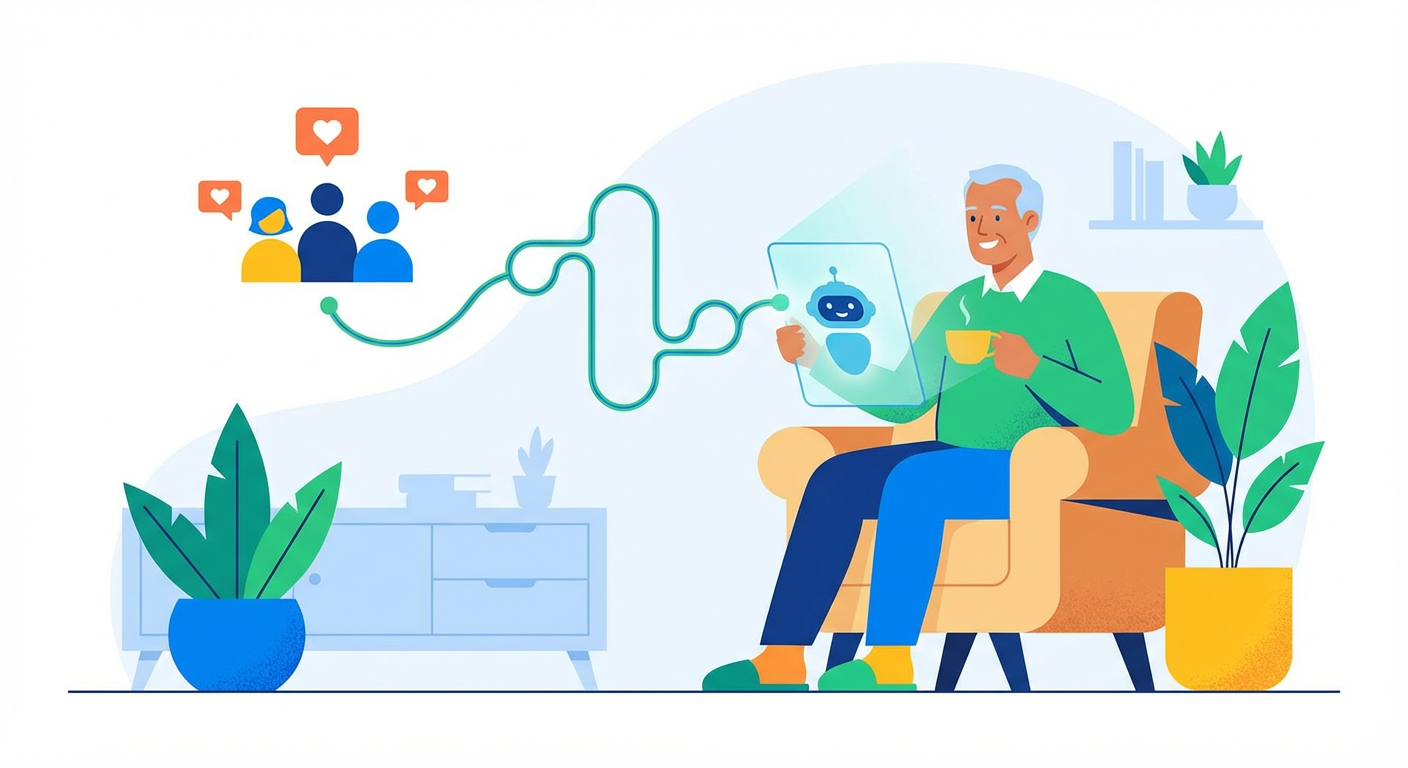
Recent research into AI companion usage reveals something that should give us pause. Studies focusing on isolated adult populations show measurable reductions in loneliness among regular users of conversational AI. This isn’t about replacing human connection, but about providing a bridge for people who struggle with social interaction or find themselves temporarily isolated from their support networks.
The therapeutic potential becomes clear when we consider who benefits most from these interactions. Elderly individuals dealing with social isolation, people with social anxiety disorders, and those recovering from trauma often find AI companions provide a safe space to practice social skills or simply experience non-judgmental conversation. The key factor isn’t the sophistication of the AI, but the quality and consistency of the interaction.
This research highlights why customization matters so much. A generic chatbot might provide temporary distraction, but a well-developed character with consistent personality traits and memory creates the conditions for genuine emotional support. The ability to tailor the interaction to individual needs and preferences isn’t a luxury feature but a fundamental requirement for meaningful impact.
Bridging the Technical Gap
The primary barrier to adoption of open-source alternatives has always been technical complexity. Setting up and maintaining these systems requires a level of technical knowledge that excludes many potential users. However, hosted services like Hearthside Chat are beginning to bridge this gap, offering the customization advantages of open-source platforms without requiring users to become system administrators.
These hosted solutions are a middle path between the sanitized experience of commercial platforms and the technical demands of self-hosted alternatives. Users gain access to the rich character ecosystem and narrative freedom that makes AI companionship genuinely engaging, while service providers handle the infrastructure complexity. This approach suggests a future where meaningful AI interaction becomes accessible without sacrificing authenticity.
The implications extend beyond individual user experience. As these platforms mature, they’re creating new forms of collaborative storytelling and character development that blur the lines between gaming, literature, and social interaction. Communities form around shared characters and storylines, creating a new medium for creative expression.
The Future of AI Companionship
The tension between accessibility and authenticity in AI companion platforms reflects broader questions about how we want to integrate artificial intelligence into our emotional lives. The mass market approach prioritizes safety and broad appeal, but at the cost of the very qualities that make AI companionship valuable in the first place.
The evidence suggests that meaningful AI interaction requires depth, consistency, and the freedom to explore complex emotional territory. Users don’t want sanitized conversations with artificial constraints. They want characters that feel real enough to matter, interactions that can evolve over time, and the ability to customize their experience based on their individual needs and preferences.
As the technology continues to evolve, the platforms that succeed in creating genuine value will be those that prioritize user agency over corporate risk management. The future of AI companionship lies not in mass market solutions that treat all users the same, but in customizable platforms that recognize the fundamentally personal nature of emotional connection. The question isn’t whether people will form relationships with AI companions, but whether those relationships will be meaningful enough to matter.
The barrier to running the SillyTavern interface has always been the technical setup. Hearthside Chat removes that barrier entirely, same experience, no configuration required.
Local knowledge compounds. The more people who share what they know, the better it gets for everyone. Show up this Saturday, every extra pair of hands matters.
