Starting With What You Have, Not What You Wish You Had
The lot at 847 Millfield Avenue looked like nothing special in March 2019. Weeds pushed through cracked concrete, shopping carts had somehow migrated from three different grocery stores to create an accidental sculpture garden, and the chain-link fence sagged in places where neighborhood kids had worn paths to use it as a shortcut. But Sarah Chen saw something else when she walked past it every morning on her way to the bus stop.
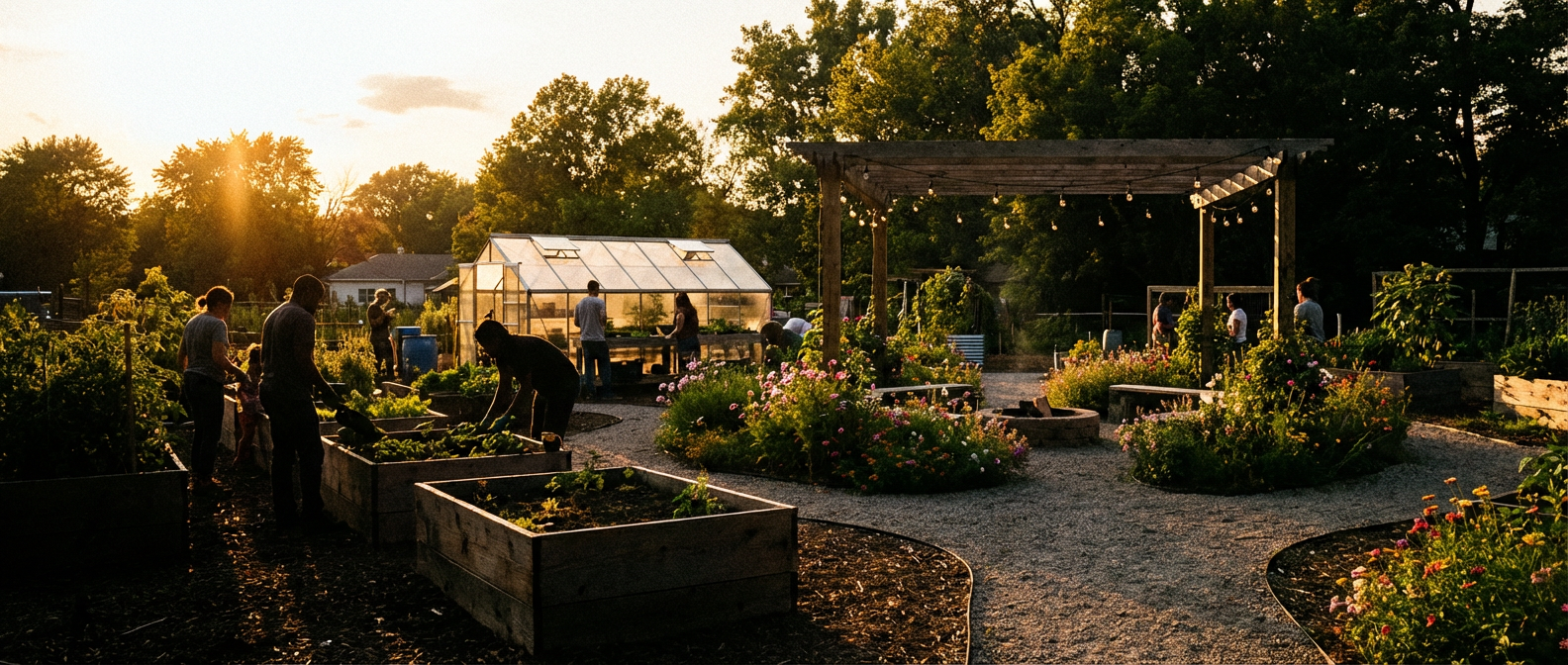
What she saw was 12,000 square feet of south-facing land, city water access through an old spigot near the back fence, and soil that hadn’t been compacted by heavy machinery because nothing had been built there for fifteen years. More importantly, she saw her neighbors. Mrs. Rodriguez tending tomatoes in coffee cans on her fire escape. The Johnson family buying overpriced produce at the corner store because the nearest grocery was a twenty-minute bus ride away.
The transformation of this lot into Millfield Community Garden didn’t happen because of a sudden burst of neighborhood enthusiasm or a generous grant from a foundation. It happened because Sarah spent six months learning how city land acquisition actually works, built relationships with four different city departments, and convinced thirty-two neighbors to show up to meetings even when those meetings were boring as hell.
Navigating the Maze of Municipal Permission
The first real lesson came when Sarah discovered that the lot wasn’t just “vacant city land” but was actually caught in bureaucratic limbo between the Department of Public Works, which maintained it, and the Housing Authority, which technically owned it but had no current development plans. Getting permission to use the space required approvals from both agencies, plus sign-off from the Parks Department since any community garden falls under their eventual jurisdiction.
Rather than getting discouraged by this complexity, Sarah treated it like a puzzle to solve. She requested copies of the lot’s deed history, discovered it had been slated for affordable housing development in 2008 before funding fell through, and learned that the Housing Authority was actually paying DPW $3,200 annually for basic maintenance. Armed with this information, she could make a compelling case that a community garden would reduce city costs while serving residents who qualified for the same affordable housing programs.
The breakthrough came during a routine City Council meeting in September 2019. Sarah had been attending these meetings for months, not to speak during public comment but to understand how decisions actually got made. When Councilwoman Martinez mentioned the need for more green space in Ward 7 during budget discussions, Sarah was ready with a one-page proposal that included specific lot details, preliminary neighbor support numbers, and a realistic timeline for development.
Building Real Community Buy-In Beyond the Initial Enthusiasm
The hardest part wasn’t convincing the city to let them use the land. The hardest part was maintaining neighbor involvement through the less glamorous phases of actually creating a garden. The initial informational meeting drew forty-three people, but only eighteen showed up for the soil testing workshop three weeks later, and just twelve committed to the spring work days when they learned it would involve removing concrete chunks with hand tools.
Sarah’s approach to this challenge was methodical rather than motivational. She created specific roles that matched people’s actual availability and interests instead of asking for general “volunteer commitment.” Mrs. Rodriguez became the unofficial coordinator for Spanish-language outreach, which doubled their participating families. James Morrison, who worked third shift and couldn’t attend weekend work days, took responsibility for researching bulk purchasing of seeds and tools. Teenagers from the nearby high school earned community service hours by documenting the garden’s development through photography and social media.
By breaking down the work into manageable pieces and respecting that people had different capacities for involvement, they maintained a core group of twenty-five active participants through the first year. More importantly, they created a structure where new neighbors could join the project without having to catch up on months of planning or commit to more than they could realistically handle.
Learning What Actually Works in Shared Space Management
The Millfield Community Garden’s plot allocation system emerged from practical necessity rather than idealistic planning. Initial discussions focused on equal-sized plots for all participants, but this approach fell apart when they realized that elderly neighbors needed raised beds, families with young children wanted larger spaces for sprawling crops like squash, and apartment dwellers just wanted herbs and salad greens they could harvest frequently.
The solution they developed involves three types of growing spaces: traditional ground-level plots in 4×8 and 8×8 sizes, raised beds that accommodate different mobility needs, and a communal area for fruit trees, compost bins, and crops that benefit from shared maintenance like asparagus and rhubarb. Plot fees vary based on size and infrastructure, ranging from $15 annually for a small raised bed to $45 for a large ground plot, with scholarships available through a fund supported by plot holders who can afford to pay extra.
The governance structure that keeps this system running smoothly consists of monthly meetings during growing season, with decisions made by consensus among plot holders who attend. Major changes require a written proposal circulated at least one week in advance, and spending decisions over $200 need approval from two-thirds of active participants. This process sounds cumbersome but actually prevents conflicts by ensuring everyone understands how decisions get made.
Measuring Success in Ways That Matter to Real Life
Four years later, the Millfield Community Garden produces approximately 2,400 pounds of fresh vegetables annually, according to harvest logs maintained by plot holders. But the more meaningful impact shows up in smaller ways that don’t fit easily into grant reports or city planning presentations. The weekend work days became informal neighborhood networks where information gets shared about everything from job openings to child care resources.
The garden also created unexpected opportunities for skill sharing that strengthened the community beyond food production. Martinez taught traditional preservation methods for peppers and tomatoes, while Chen shared her knowledge of season extension techniques using cold frames. When the Johnson family’s teenage son started selling seedlings each spring, it became a neighborhood business that generated income while supplying other local gardeners.
Perhaps most importantly, the project demonstrated that ordinary neighbors could navigate city bureaucracy and create lasting change in their immediate environment. This experience gave participants confidence to tackle other local issues, from advocating for better bus shelter maintenance to organizing a neighborhood cleanup that removed illegal dumping from two other vacant lots.
If you’re thinking about similar projects in your own neighborhood, the Millfield group maintains documentation of their process, including sample forms for city requests and templates for neighbor outreach, available through their simple website. They also host visitors during Saturday morning work sessions from May through October, not to promote their specific model but to share practical knowledge about what actually works in community space development.
