How a Traffic Study in England Became a Conspiracy Theory in Your Town
In early 2022, Oxford, England began a modest experiment. They installed traffic filters in selected neighborhoods to see if residents would make shorter, more local trips if cut-through traffic disappeared. It was the kind of thing cities have tested for decades. What happened next was not typical.
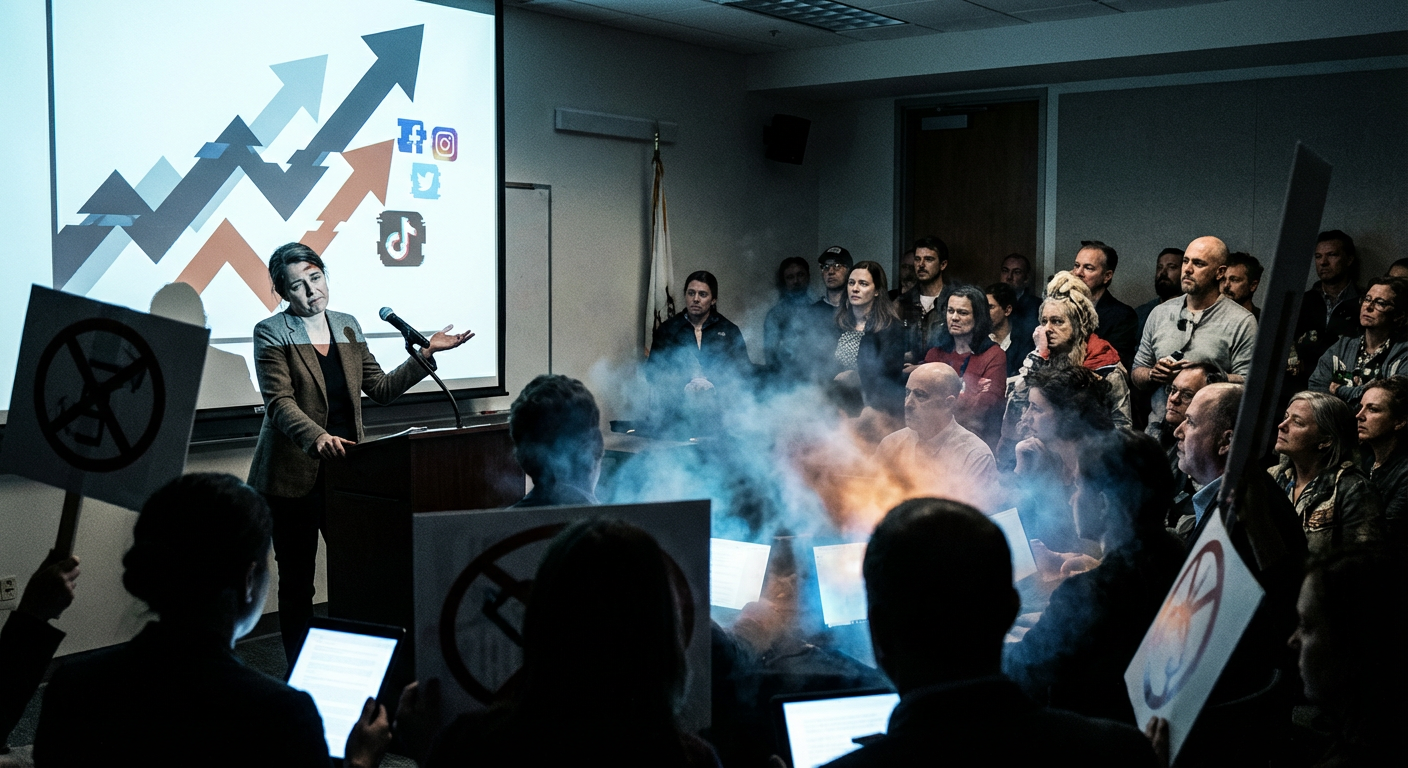
Within months, over 100,000 people signed petitions against the program. But the signatures were only part of the story. The protest moved online and transformed into something else entirely: a conspiracy theory that spread across continents. By 2024, claims about “15-minute cities” had mutated into fears about government surveillance, restricted movement, and personal freedom. None of this matched what Oxford was actually doing, but accuracy stopped mattering once the narrative took hold.
That narrative arrived in America with force. Throughout 2025, according to research by the Institute for Strategic Dialogue Misinformation Research, organized misinformation about 15-minute cities showed up as formal public comment at 47 city council meetings across 19 states. These weren’t spontaneous concerns. They were coordinated campaigns, often using identical language, often spread by people who had never attended a council meeting before.
When Planning Becomes Radioactive
Portland, Oregon learned this the hard way. In 2025, the city unveiled a “Complete Neighborhoods” rezoning proposal. The idea was straightforward: allow more housing types in residential neighborhoods and invest in pedestrian infrastructure so people didn’t need to drive for every errand. This is what urban planners call mixed-use zoning. It’s been standard practice for fifty years.
Then misinformation spread claiming the proposal would literally restrict where residents could drive. Social media posts claimed the city would implement traffic filters that would imprison people in their own neighborhoods. None of this was in the actual proposal. But it didn’t matter. The false claims were louder and more visually compelling than the 300-page technical document. The rezoning initiative was delayed six months while the city spent resources debunking falsehoods instead of discussing actual policy.
This pattern is becoming normal. According to the American Planning Association on 15-Minute Cities, 61% of urban planners reported encountering organized misinformation at public hearings in 2025. That’s more than double the 29% who reported the same thing in 2023. Something fundamental has shifted. City planning, once a quiet technical field with small audiences, has become a front in the culture war.
What Gets Lost When We Stop Listening to Each Other
Here’s what troubles me most: underneath the conspiracy theory panic is a real question that deserves serious attention. When cities actually do make planning changes, who benefits and who bears the cost? That’s not a paranoid question. It’s a structural question that planners and residents should wrestle with together.
But we’re not doing that anymore. Not in places where the misinformation has taken root. Instead, we’re fighting about whether something exists before we can even discuss whether it’s good policy. We’ve lost the ability to negotiate.
What that means in practical terms: neighborhoods that could have had better bus service don’t get it. Streets that could be safer for kids on bikes stay dangerous. Housing that could be more affordable stays locked behind single-family zoning that inflates prices. Communities that were built to require a car for every journey, and the isolation and expense that comes with it, stay that way. This isn’t philosophical loss. It’s concrete. It affects where your kids can walk to school, whether your elderly neighbor can reach the grocery store without driving, and whether a young couple without family money can find a place to live in their own town.
The Actual Numbers Tell a Different Story
Research published in the Journal of Urban Affairs in late 2025 found something striking: neighborhoods with actual mixed-use zoning and walkable infrastructure saw median home values increase 18% faster than car-dependent suburbs between 2020 and 2024. The data doesn’t support the theory that walkable neighborhoods destroy property values. It suggests the opposite.
But here’s the gap: having data isn’t the same as having a functioning public conversation. When people are afraid that the government is restricting their freedom, new real estate numbers don’t calm them down. We need something different. We need trust.
That trust used to exist because city planning decisions were made in visible spaces with real neighbors present. You’d go to a meeting, hear from actual planning staff, ask questions, get answers. Misinformation spreads in the gaps where people feel unheard or excluded. When we moved planning conversations online during the pandemic and then didn’t meaningfully move them back into neighborhoods, we created exactly those gaps.
What Comes Next Depends on What We Do Right Now
Your town might be next. The misinformation campaigns are spreading, and they’ll hit any city that tries to do planning work more intentional than pure inertia. This is happening in college towns and rural areas and suburbs, not just major cities. No place is too small to become a target.
You can’t stop conspiracy theories just by having better facts. But you can build the conditions where they have less room to grow. That means showing up to actual meetings, not just doom-scrolling about them. It means asking your city planner what they’re actually trying to do, and not accepting vague answers. It means talking to neighbors who disagree with you and listening long enough to understand what they’re actually afraid of, underneath the conspiracy rhetoric.
It means treating city planning the way it deserves to be treated: as a question about what kind of community you want to live in, not as a background process to ignore until you suddenly see it in a Facebook post. There’s real work happening in your town right now that will shape whether you can afford to stay there, whether your kids are safe walking around, whether your aging parents can get a meal without driving ten minutes. That work is worth knowing about. It’s worth showing up for.
