The Third Place Is Dying in Your Town — And the 2026 Local Closures Data Explains Why Your Community Feels Broken

You’ve Noticed It, Even If You Haven’t Named It

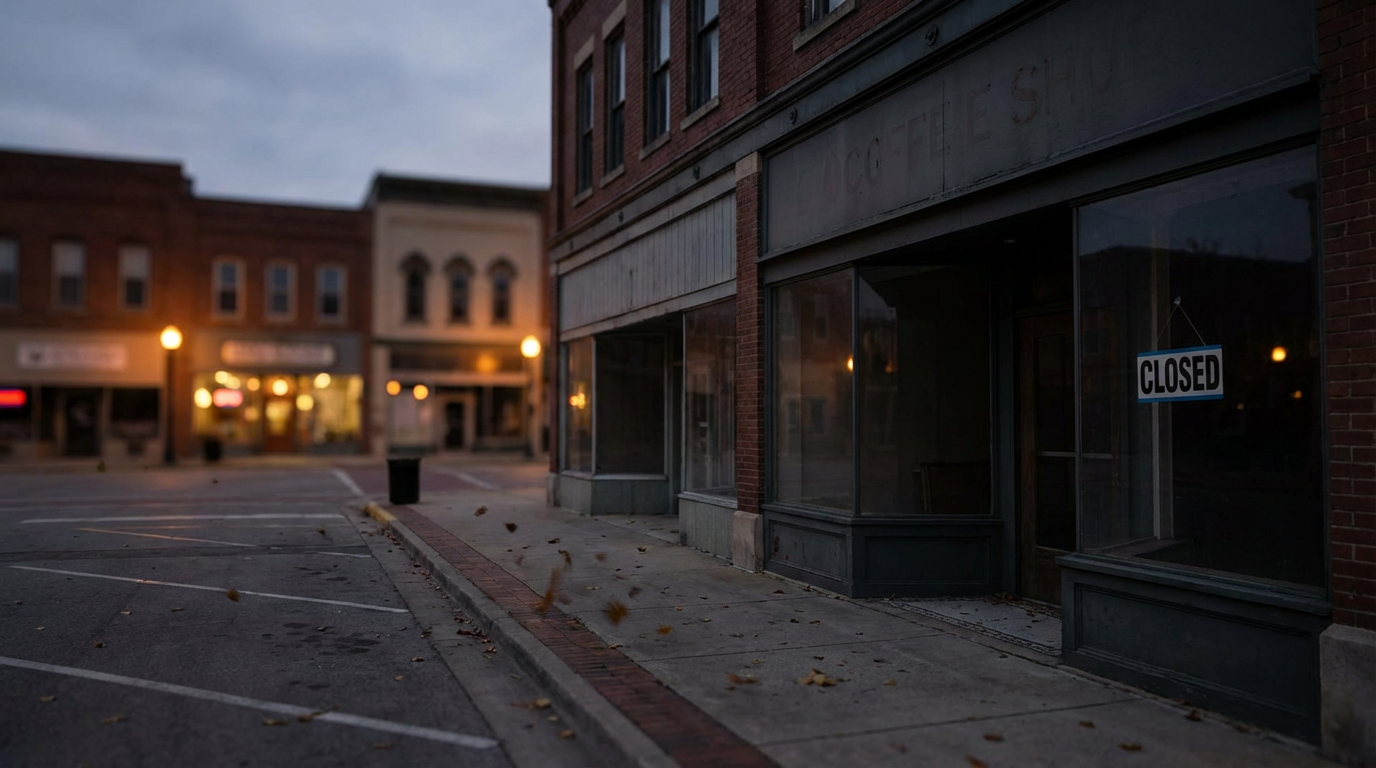
There’s a particular kind of loneliness that hits you in a thriving suburb or a mid-sized city that looks fine on paper. Your neighborhood has good schools. The parks are maintained. People mow their lawns. But you realize you haven’t had a real conversation with someone outside your household in weeks, and you can’t quite figure out where that would even happen anymore. The coffee shop where people used to linger closed last spring when the rent jumped. The library’s community room got repurposed for storage. The diner that hosted the chess club for thirty years is now a tax prep franchise.
The Third Place Is Dying in Your Town — And the 2026 Local Closures Data Explains Why Your Community Feels Broken

This isn’t just a feeling. The data backs it up, and it’s worth understanding because the numbers tell a story about structural decisions, not personal failure. A 2024 update to research on what sociologist Ray Oldenburg called “the third place” — that social zone between home and work where community actually happens — found that only 22% of Americans now visit these kinds of spaces regularly, down from 41% in 2000. The U.S. Surgeon General Advisory on Loneliness and Isolation reported something darker: the number of Americans with no close friends has quadrupled since 1990, with suburban communities hit the hardest.

Your town isn’t broken because people are failing to show up. Your town is struggling because the places to show up are disappearing.
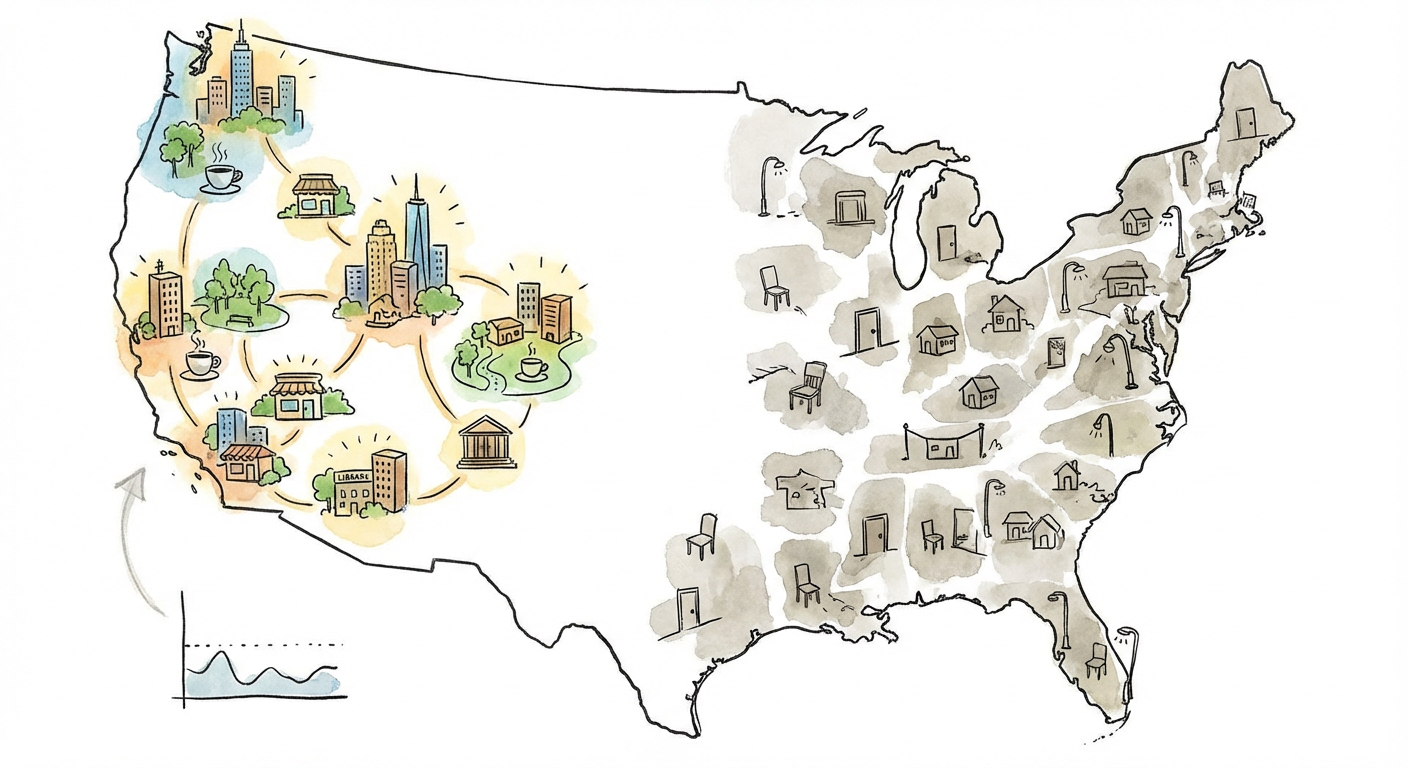
Illustration for The Third Place Is Dying in Your Town — And the 2026 Local Closures Data Explains Why Your Community Feels Broken

Follow the Money: Why Independent Spaces Are Closing

Let’s be specific about what’s happening. Independent coffee shops — historically the backbone of third place culture in America — closed at a net loss of 4,200 locations nationally in 2024 alone. This wasn’t a gradual decline. It happened during the third consecutive year of more closures than openings. The culprit, according to the National Coffee Association’s 2025 report, is straightforward: commercial rent has increased an average of 18% since 2022, and landlords have no reason to hesitate when chain operators can absorb those costs or when short-term rental conversions offer better returns.

This matters because it’s not about competition or changing tastes. An independent coffee shop owner isn’t losing customers to Starbucks because people suddenly prefer corporate branding. She’s closing because her lease renews, the landlord sees comparable rents at nearby addresses climbing, and $3,500 becomes $4,100 in a neighborhood that’s “gentrifying” or “revitalizing.” She can’t pass that cost to customers without pricing out the regulars who actually made the space worth running. So she closes, and a Starbucks moves in, and it’s fine to grab coffee, but nobody lingers. Nobody knows the barista’s kid’s name. Nobody runs their community board meeting there at 7 p.m. on Tuesday.

This happens in libraries too. It happens in community centers when maintenance budgets get tight. It happens in parks when programming gets cut. The pattern is consistent: a space that required minimal profit to survive gets demolished by cost increases that a profit-driven operator couldn’t possibly absorb, and nothing replaces it because there’s no market incentive to create a place people need instead of a place people will pay premium rates for.

The Geography of Disconnection

If you want to see what a genuinely healthy third place ecosystem looks like, the Project for Public Spaces Placemaking Resources 2025 index ranked American cities, and the results are sobering. Only 11 cities in the entire country qualified as having truly healthy third place infrastructure. Most mid-sized cities, the ones where most of us actually live, scored below 40 out of 100. If you live in a city of 150,000 to 500,000 people, statistically your town scored badly on basic measures like walkable public spaces, affordable venues for gathering, and places to spend time without purchasing anything.

The pattern isn’t random. Healthy third places cluster in older, denser cities that developed before car culture made sprawl the default. They also cluster in cities where municipal governments actively chose to protect and invest in them. Everywhere else, the default is descent. A library closes or reduces hours. An independent bookstore folds. The park gets quieter because there’s no funding for events. A small bar that hosted live music shuts down because the owner’s rent doubled and the city never figured out how to make that sustainable.

What’s particularly cruel is that the communities that lose these spaces first are often the ones that depend on them most. Wealthy families can drive to specialized activities, hire private tutors, belong to clubs. Working people, elderly people, people without cars, people who live paycheck to paycheck: they used to find their social life and their civic participation and their sense of belonging in accessible, free or cheap spaces. Those people still exist. The spaces don’t.

Some Cities Are Actually Trying Something Different

This is where the story could get entirely grim, and you might close the browser and accept that this is just how things are now. But several cities decided to intervene, and the early results are worth paying attention to.

Tempe, Arizona and Raleigh, North Carolina both piloted “Third Place Activation Grants” in 2025, offering $5,000 to $25,000 to independent community venues to help offset rising rent. The theory was straightforward: if municipal government could bridge the gap between what a space needs to survive and what market-rate rent demands, then that space could keep existing. It worked better than either city probably expected. After 12 months, 87% of grant recipients in Tempe were still operating. That’s not perfect. But it’s substantially better than the national trajectory.

These programs work because they’re built on a different assumption: that a community space is infrastructure, like a street or a library, and that it’s appropriate for public money to maintain it. You don’t expect a public park to turn a profit. You don’t expect a library to generate revenue. You fund it because it serves everyone. Third places are the same, except we’d somehow convinced ourselves they should be purely private enterprises subject to full market forces. That assumption was wrong. The grant programs aren’t a permanent fix, they’re a band-aid on a structural problem, but they prove that the decline isn’t inevitable.

What Actually Matters Now

If you live in a city that isn’t Tempe or Raleigh, you don’t have to wait for municipal government to save you. But you do need to understand what you’re fighting against. It’s not laziness or cultural decay. It’s economic pressure on real estate that makes third places economically irrational unless someone actively chooses to sustain them.

That someone can be you, but it has to be structural. Showing up at city council to say “we miss the coffee shop” doesn’t work because the city council can’t override market forces. But showing up to say “please fund or grant space for gathering” might work. Supporting a local venue even when it’s slightly inconvenient works. Pushing back when a park gets quieter or a library reduces hours works. Advocating for zoning that allows small businesses to survive, or rent control policies, or commercial district investment programs works. These aren’t individual consumer choices. They’re collective political ones.

Your town feeling broken isn’t your fault. But fixing it requires treating third places the way we treat roads: not as nice-to-haves that should float on market forces alone, but as essential infrastructure that a healthy community maintains. That’s not small-town nostalgia. That’s civic design, and it’s still possible if enough people decide to push for it.

The Quiet Work: How Neighbors Are Choosing Love Over Hate

The Numbers That Should Wake Us Up

If you’ve been reading the news but somehow still feeling like hate crimes are something that happens somewhere else, I need to sit down with you over coffee and walk through what’s actually happening. The numbers don’t lie, and they’re not getting smaller. Across the United States and Western Europe, hate crime reporting has climbed to levels we haven’t seen in three decades. That’s not a blip. That’s a pattern. That’s your neighbor’s kid getting harassed at school. That’s a synagogue installing new locks. That’s a mosque organizing extra security during Friday prayers.

The Quiet Work: How Neighbors Are Choosing Love Over Hate

The SPLC hate group monitoring database tracks more than 1,200 active hate groups currently operating in the United States. One thousand, two hundred. Not historical footnotes from a textbook. Not hypotheticals from a seminar. Active. Right now. This isn’t meant to terrify you into inaction. Quite the opposite. Understanding the scale is the first step toward recognizing that this work belongs to all of us, not just the people who’ve already been targeted.

Why the Usual Answers Aren’t Enough

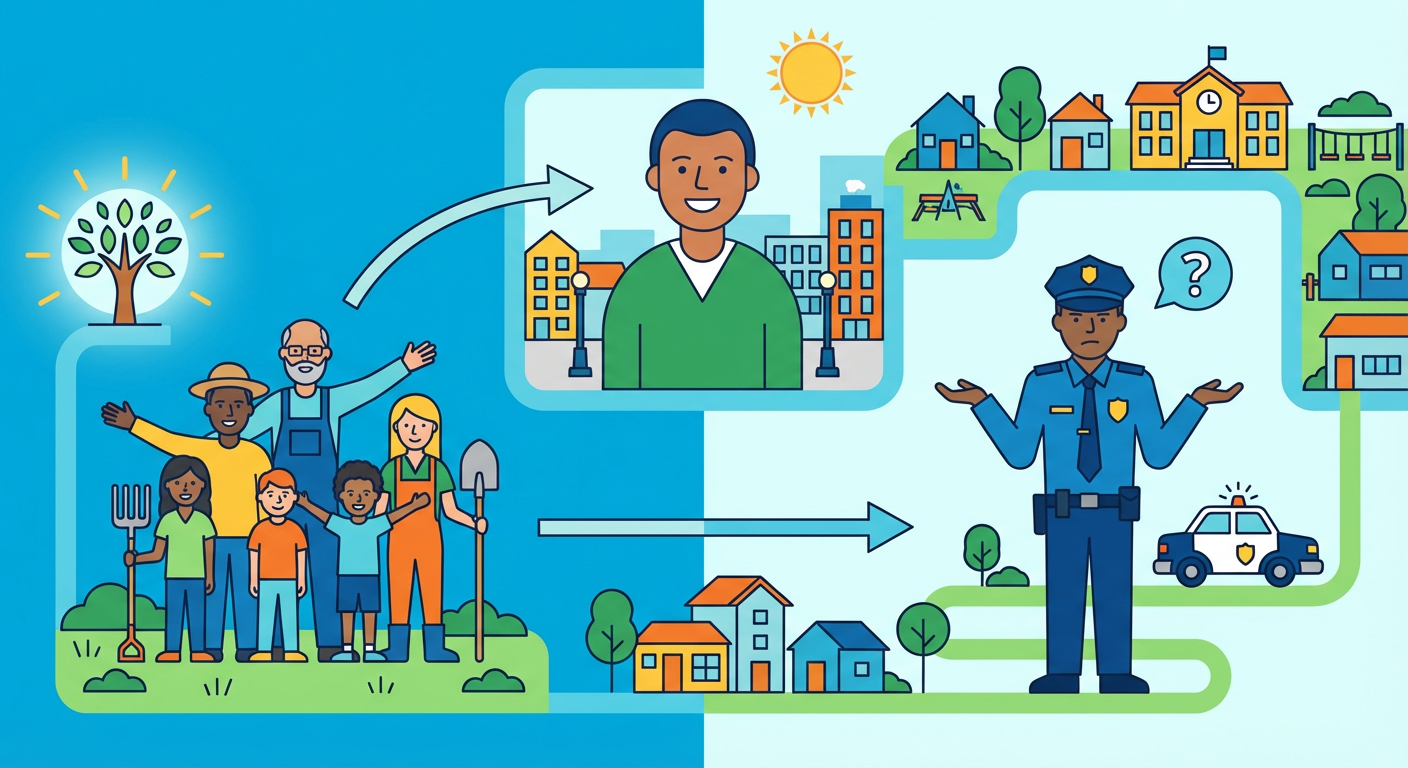
Here’s what I’ve learned from actually talking to people doing counter-extremism work in real communities: law enforcement matters, but it’s not the whole answer. Studies consistently show that community-based intervention approaches outperform enforcement-only strategies. There’s something almost obvious about this once you think about it. A person pulled into extremist thinking doesn’t need a court date as much as they need someone who believes they can change. They need a reason to believe it themselves.

Online deradicalisation programs are showing genuinely mixed but gradually improving results. Some platforms have invested in training people to recognize when someone they know is being drawn into extremist content and how to have that difficult conversation. Others have built resources specifically designed to help people exit extremist communities without shame. The technology isn’t magic, but when paired with real human connection, it works more often than it doesn’t. The barrier isn’t usually the program itself. It’s getting people to use it before they’re too far gone.

The real insight here is this: the moment extremism enters a community, the response matters more than the speed. Patient, persistent, human-centered approaches built on relationships and trust outperform everything else. That means neighbors. That means people who know each other’s names.

The Faith Leaders Who Found Each Other

What strikes me most about the emerging coalitions between Muslim, Jewish, and Christian organizations is how practical and unsentimental they are. These aren’t just interfaith dialogue groups sitting in circles talking about tolerance. These are working alliances. A rabbi and an imam meeting weekly to coordinate community safety. A pastor and a Muslim youth leader building a mentorship program together. A Jewish community center and a mosque hosting joint cultural events specifically to show younger people that their traditions can coexist and strengthen each other.

When you talk to people in these coalitions, they describe something simple but powerful: recognizing that they share a common enemy more dangerous than their theological differences. The far-right targets all of them. So they show up for each other. They share security resources. They train their volunteers together. They refuse to let hate groups dictate the terms of their own neighborhoods. One organizer told me, “We realized we were stronger together at a time when we felt individually vulnerable.” That’s not naive idealism. That’s strategic thinking wrapped in genuine care.

These relationships also do something harder to measure but equally important. They make it visibly harder for extremist recruiters to paint entire religions as threats. When a young person sees the imam and rabbi laughing together at a community event, the narrative of us-versus-them becomes harder to believe. That matters.

The Platform Problem That’s Everyone’s Problem

Social media platforms are finally facing sustained pressure to actually address how their algorithms amplify hate content. This is important because it’s not neutral infrastructure we’re talking about. The way these platforms are designed actively promotes engagement, and outrage generates engagement. Hate is incredibly engaging. It creates the kind of emotional response that makes algorithms happy and communities hurt.

The pressure is working, but incompletely. Some platforms have begun implementing controls to limit algorithmic amplification of extremist content. They’re adjusting recommendation systems so that watching one conspiracy theory video doesn’t automatically queue up ten more. They’re training content moderators more rigorously. But this is still a half-measure. The fundamental business model hasn’t changed. What’s shifted is the bare minimum of responsibility they’re accepting. For now, that’s something.

But here’s what matters more than any corporate policy: your choices. Where you spend your attention. What you engage with. Whether you report something or scroll past it. The platforms are powerful, but they’re not all-powerful. Communities that actively choose not to participate in hate narratives, that push back against extremist content in their own networks, that report coordinated inauthentic behavior, make the platforms’ jobs harder in the way that actually changes outcomes.

What This Means for Actual People in Actual Neighborhoods

I want to be honest about something: this work is slow and often invisible. There’s no ribbon-cutting ceremony for the person who talks their nephew out of joining a far-right group. There’s no news coverage for the community organizer who builds enough trust with isolated young people that they start questioning the narratives they’ve been absorbing online. There’s no metric for the small shifts in how neighbors treat each other when someone shows up and says, “We don’t have to accept this.”

But it’s happening. In cities and towns across the country, people are choosing to do this work. They’re training community leaders. They’re building mentorship programs. They’re reaching out to people in their networks who are starting to drift toward extremism and saying, “I care about you, and I’m worried.” They’re showing up. They’re staying when it’s hard.

The Netz gegen Nazis anti-fascism work happening in Germany offers proof that organized community response actually works. It’s not magic. It’s people committing to it for the long haul.

If you’re sitting with this information and feeling like something needs to change, you’re right. And you don’t need to do it alone. Find the organizations in your community that are already doing this work. Get trained. Show up. Learn how to have these conversations. Understand that the person you’re trying to reach is still a person. Build relationships with people from other faith traditions and backgrounds. Notice when algorithms are trying to divide you. Choose differently.

This isn’t about grand gestures. It’s about the persistent, patient, generous choice to believe that people and communities can change. If you want to talk more about how to get involved in your own community, or if you’ve already started this work and want to share what you’re seeing, I’d love to hear about it. That’s where real change starts anyway. In conversations. Between people. Who believe it matters.

What Your City Council’s 2025 Budget Actually Says About Affordable Housing (And Why Nobody’s Talking About It)

The Numbers Nobody’s Reading

Your city council probably passed a budget sometime in the last few months. Maybe you saw a headline. Maybe you got an email about a hearing that happened at 2 p.m. on a Tuesday. And maybe, like most people, you thought: not my problem, or more likely, that’s too complicated for me to understand anyway. But here’s the thing about city budgets and housing: they’re not actually that complicated. They just look that way because nobody explains what you’re supposed to be looking at.

Start with this number: across the entire United States, there’s a shortage of 7.3 million affordable rental homes for extremely low-income renters. That’s according to the NLIHC 2025 Housing Gap Report. To put it in perspective, that shortage is larger than the entire population of Massachusetts. Your city’s budget, sitting in that PDF you haven’t clicked on yet, is one of the tools that could theoretically start closing that gap. Or it isn’t. Which one depends partly on choices your elected officials made, and partly on a much bigger conversation about what cities are actually supposed to do.

The federal government allocated $73.3 billion toward housing assistance in 2025, which sounds substantial until you learn it’s only a 1.2% increase from the year before. Housing advocates will tell you that same funding falls approximately $12 billion short of what’s actually needed to handle current waitlist demand. So the money is already stretched thin before it even reaches your town’s hands.

What Your City Actually Got (And What It Chose)

This is where the real story lives. When researchers at the Urban Institute looked at how cities across the country spent their housing budgets in early 2025, they found something interesting: cities that used participatory budgeting processes, where actual residents had a voice in deciding how money got spent, allocated 34% more funding toward housing services than cities without those public input mechanisms. That’s a massive difference. It’s not that some cities are mysteriously better at housing policy. It’s that when regular people are in the room making decisions about where money goes, housing tends to show up higher on the priority list.

Your city council’s 2025 budget reveals which camp your city falls into. Look for line items about participatory budgeting, community input sessions, or citizen committees. If they’re not there, that tells you something. If they are there, dig into how much actual power those groups have versus how much is just for show. The difference between those two situations is the difference between meaningful change and the appearance of it.

Now look at what your city budgeted specifically for affordable housing development or preservation. Is there a line item? Is it growing or shrinking compared to last year? Is it tied to any specific goals, or is it just a number floating there? Some cities have adopted mandatory inclusionary zoning ordinances that require 10-20% of units in new developments to be affordable. These requirements started showing up in just 28 cities in 2022. By early 2026, over 40 cities had adopted them. If your city is among those, the budget should reflect funding allocated to enforce those rules and support developers in compliance. If your city hasn’t adopted them, that’s also information worth understanding.

The Real Tension: Growth Versus Preservation

Here’s where it gets complicated, and where people in your city genuinely disagree with each other. Some city council members believe the solution to housing affordability is building more units, period. Their logic is straightforward: if there’s more supply, prices come down. Some of them are thinking about this in good faith. Some of them also have donor relationships with developers who benefit from that philosophy. Both things can be true at the same time.

Other council members and community advocates worry that building more market-rate housing in a city where median renter households now spend 31% of their income on housing costs (up from 27% just six years ago, according to Harvard Joint Center for Housing Studies) won’t actually help the people most in crisis. Their concern is that new construction tends to attract higher-income residents and doesn’t address what happens to people who are already being displaced. They push for more funding directed at acquisition and preservation of existing affordable stock.

These aren’t stupid disagreements. They’re about different theories of change, different assumptions about market dynamics, and different beliefs about who should bear the burden of solutions. When you read your city council budget, you can usually tell which philosophy is winning by following the money. Is most new housing funding going to development incentives or to tenant protection programs? Is the city creating new affordable units or helping existing residents stay put? Usually it’s not either-or, but the ratio tells you what your city council actually believes will move the needle.

Why the Budget is Secretly Where Democracy Happens

City council meetings about housing policy can feel abstract. Someone talks about zoning for forty minutes. Somebody else mentions the comprehensive plan. Your eyes glaze over. But a budget is different. A budget is where values become actual dollars. A budget is where you find out whether your city council was serious about what they said they cared about.

If you look at your city’s 2025 budget and see that affordable housing funding stayed flat while the police budget increased by 8%, that tells you something. If affordable housing funding grew but housing enforcement funding stayed the same, that tells you something else. If your city created a new community input process for housing decisions but didn’t allocate staff time or resources to run it properly, that tells you the whole thing might just be performance.

The budget also reveals whether your city is addressing the people in crisis or just the people who are about to be in crisis. Those are different groups with different needs. Preventing someone from becoming homeless is a different intervention than rehousing someone who already is. A good budget does both, or at least makes a clear choice about where limited resources should go and argues for it honestly.

What You Can Actually Do About It

Most city budgets are adopted by around June or July each year, which means if you’re reading this now, the hard decisions have probably already been made for 2025. But budgets are also amended throughout the year, and the process for 2026 is already starting or about to start. This is not too late.

Pull your city’s actual budget document, not just the press release about it. Search for “housing” and “affordable” and see what you get. Read the explanations next to the numbers. Attend the budget hearing when it happens, even though nobody else will be there. Ask questions. Request clarification. Tell your council member what you think should be funded. Show up with other people.

The disagreements happening in your city about housing are real and they matter. They matter to the people right now living in their cars. They matter to the family paying 40% of their income in rent. They matter to your city’s long-term health. Those disagreements only get resolved through the messy, slow, boring process of people actually engaging with their government. Start with the budget. It’s less intimidating than it looks, and it’s absolutely where the story is.

The 15-Minute City Backlash Is Real — Here’s What the Data Actually Says About Your Town’s Walkability Score

The Conspiracy Turned Mainstream, and We Need to Talk About It

If you’ve scrolled through social media in the past year, you’ve probably encountered someone warning you about the “15-minute city conspiracy.” The narrative is everywhere: shadowy global elites supposedly using urban planning to trap you in your neighborhood, restrict your freedom, and control your movements. It sounds absurd when you say it out loud, which is exactly the problem. According to recent research from First Draft, conspiracy theories about the 15-minute city concept reached approximately 52 million social media users. That’s not a fringe concern anymore. That’s mainstream anxiety about how cities should work.

The 15-Minute City Backlash Is Real — Here's What the Data Actually Says About Your Town's Walkability Score
The 15-Minute City Backlash Is Real — Here’s What the Data Actually Says About Your Town’s Walkability Score

Here’s what actually happened. A French urbanist named Carlos Moreno developed the concept of the 15-minute city in the early 2010s as a straightforward urban planning principle: residents should have access to essential services, jobs, and recreation within a 15-minute walk or bike ride. Paris Mayor Anne Hidalgo embraced it as a post-pandemic vision for making city life more livable and sustainable. It was infrastructure thinking, not conspiracy. But somewhere between the policy paper and the Twitter timeline, it became a culture war flashpoint. The backlash is real and visceral, even if the underlying fears don’t quite match the actual mechanics of urban planning. If you want to understand what’s really happening in your town, you have to cut through both the hype and the fear-mongering.

What the Numbers Actually Tell Us About Where You Live

Let’s start with the uncomfortable truth: most Americans live in car-dependent places. Walk Score’s 2025 annual report ranked only 8 U.S. cities above a walkability score of 70 out of 100. Eight. That means if you live in roughly 99% of American cities, you need a car to accomplish most daily errands. The median American city scores below 40, which essentially means you’re dependent on driving for nearly everything. This isn’t a future problem or a conspiracy. It’s your current reality if you live in a suburb, a small city, or even many parts of mid-sized urban areas.

You can check your own neighborhood right now using Walk Score City Rankings, which analyzes hundreds of walking routes and proximity to amenities. Type in your address and you’ll get a personal walkability score, which tells you something genuinely useful about where you are. The score won’t solve anything, but it gives you data instead of assumptions. Some neighborhoods will surprise you with how walkable they actually are. Others will confirm what you already know: there’s nowhere to walk to, and that’s not an accident. It’s the result of zoning decisions, infrastructure investments, and development patterns made over decades.

The Hidden Cost of Not Being Able to Walk

The reason urban planners and public health researchers keep pushing walkability isn’t ideology. It’s because the research keeps showing that it matters. A January 2025 study published in The Lancet found that residents living in walkable neighborhoods had 14% lower rates of cardiovascular disease compared to those in car-dependent areas, even after accounting for income differences. That’s a major health outcome tied directly to whether you can walk to get your groceries or your morning coffee.

Beyond health, there’s the financial side that often gets lost in the culture war debate. The Congress for the New Urbanism analyzed transportation spending patterns across American households and found something stark: car-dependent households spend an average of $14,800 annually on transportation, including car payments, gas, insurance, and maintenance. Households in walkable urban areas spend $6,200. That’s $8,600 per year. For a family, that’s a second car payment, or a college savings fund, or just breathing room in a tight budget. You can read more about this in the Congress for the New Urbanism Sprawl Tax Report, which breaks down the economics in more detail. This isn’t about forcing anyone into cities. It’s about acknowledging that the current pattern is expensive, and not just for your wallet.

What Actually Works: Portland’s Quiet Experiment

If you want to see what 15-minute neighborhood thinking looks like in practice, without the conspiracy rhetoric, look at Portland, Oregon. Since 2012, the city has been running its 20-Minute Neighborhood initiative, which is essentially the same concept with a slightly different timeline. Portland expanded the program in 2024, focusing on making local shopping districts, parks, and services more accessible within a reasonable distance of where people live. According to data from the Portland Bureau of Transportation, target zones in the program showed a measurable 9% reduction in vehicle miles traveled. That’s not forced compliance. That’s not eliminating anyone’s freedom. It’s just making alternatives available, and people used them.

Portland’s experience points to something worth sitting with: people actually do prefer walking when it’s practical. They don’t need propaganda or conspiracy theories. They need a grocery store within reach, a park where they can take their kid without loading the car, maybe a coffee shop. When those things exist, behavior changes. When they don’t, nobody can walk to them, regardless of how much they might want to. Portland didn’t eliminate suburban neighborhoods or ban cars. It invested in making some neighborhoods denser and more mixed-use. The result wasn’t a trap. It was a choice.

What to Do With This Information in Your Town

So what does this mean for you, practically speaking? First, figure out where your town actually stands. Check your walkability score. Look at your city’s comprehensive plan or master development plan, which should be online somewhere, and see what’s actually written there about future growth and density. Attend a city council meeting. Read the planning commission minutes. This sounds tedious, but it’s the actual mechanism where decisions get made, and most of your neighbors aren’t paying attention. That means your voice carries weight.

Second, recognize that the 15-minute city backlash and the actual data about walkability are pointing at real disagreements about what neighborhoods should be like. Those disagreements are worth having. Some people genuinely prefer lower density and don’t want their neighborhood to change. That’s a legitimate preference. Other people are stuck in car-dependent areas and want options. Also legitimate. The conversation gets easier when you’re talking about actual trade-offs instead of conspiracy theories. If your city is considering infill development or mixed-use zoning, the real question is whether you think that’s good policy, not whether it’s part of some global control scheme.

The data suggests there are genuine benefits to walkable neighborhoods, and genuine costs to car-dependent ones. The backlash suggests people are anxious about losing their neighborhoods’ character or control over what happens nearby. Both things are real. Neither one requires conspiracy theories to make sense. What would actually help is if we could talk about what we want our communities to look like, armed with facts instead of fear. That’s harder than either outrage or dismissal, but it’s the only way anything changes.

When the Safety Net Disappears: What 2025’s Eviction Crisis Means for People You Know

The Numbers Behind the Doors

There’s a moment when you’re reading the housing data for your city and something clicks into place. You realize that the couple who moved into the apartment above the bodega last year, the ones with the kid in your daughter’s class, are statistically more vulnerable now than they were six months ago. Not because their circumstances changed, but because the systems that were holding things steady just expired.

In 2025, eviction filings across the United States hit 3.6 million. This is the highest number recorded since researchers at Princeton University began systematically tracking these figures in 2000. That means a quarter century of documentation, and we’re at the peak. The Princeton Eviction Lab Data Dashboard shows the pattern clearly: what looked like a temporary pandemic moment has become structural. The protections that kept millions of people housed during the crisis have almost entirely evaporated. By December 2024, the Emergency Rental Assistance programs that served as a lifeline for so many had closed down in nearly every state. Fewer than a dozen states kept any meaningful pandemic-era protections on the books.

The timing of this collapse matters. We’re not talking about a slow fade. We’re talking about a cliff edge. People who managed to stay in their homes through 2024 are now finding themselves in a landscape with almost no safety rails.

The Invisible Consequence: Families Without Homes

Behind the eviction filing number is another number that’s harder to look at directly. Family homelessness increased by 18 percent year-over-year in 2025, according to HUD’s Annual Homeless Assessment Report. Researchers traced this increase directly to the moment state-level eviction moratoriums ended. This isn’t speculation or extrapolation. This is documented correlation. When you remove the barrier between being behind on rent and being on the street, people cross it.

There’s a particular cruelty to how homelessness operates in cities. It’s not evenly distributed. It concentrates in neighborhoods, in school districts, in the places where there’s already housing stress. A family loses their apartment, and suddenly the kids are changing schools mid-year. The parent is spending two hours on public transit to get to their job. The stability that housing provides, the thing we often take for granted until it’s gone, dissolves. Then it compounds.

What makes this moment different from previous housing crises is that we have documentation of what actually works. We have proof points. We’ve seen what happens when cities step in with real resources and real commitment.

What Actually Works: The Right-to-Counsel Evidence

In 2025, an analysis from the Urban Institute examined cities that had implemented right-to-counsel programs, where tenants receive free legal representation in eviction court. The results were specific and measurable: those cities reduced their eviction rates by 27 percent compared to comparable cities without these programs. Twenty-seven percent. That’s not marginal. That’s the difference between keeping a neighborhood stable and watching it destabilize.

Here’s what this means in real terms. A tenant shows up to court with a lawyer. That lawyer understands the technical requirements of the eviction filing. They know the statutes. They know the judge. They can negotiate payment plans, argue for delays that give people time to access assistance, find the legal technicalities that matter. Without representation, a tenant is reading the court summons in a language that might not be their first language, trying to understand procedures designed by lawyers, facing a landlord who often has their own attorney. The imbalance isn’t incidental. It’s structural. And when you put a lawyer on the tenant’s side, that structure shifts.

The evidence is so clear that twelve major cities, including Minneapolis, Denver, and Columbus, made the decision in 2025 to introduce new protections at the local level. They created “just cause” eviction ordinances after state legislatures either wouldn’t or couldn’t act. These cities looked at the federal and state governments, saw inaction, and decided their community’s housing stability was too important to wait.

Your City’s Moment: Where Local Action Actually Happens

This is where it gets practical. The expiration of pandemic protections was a state and federal decision, yes. But the response doesn’t have to wait for state and federal action. The Urban Institute data, the right-to-counsel success stories, the twelve cities that moved in 2025, these all point to something your city can actually do.

That starts with knowing what’s currently in place where you live. Some cities have right-to-counsel programs already. Some have just-cause requirements. Some have nothing. The National Housing Law Project Local Tenant Protections resource maps what exists. It takes ten minutes to find out where your community stands.

And here’s what’s true about local government: it responds to people who show up. Not to perfect consensus. Just to consistent presence. To people who read the council minutes and ask the right questions at the hearing. To people who bring stories. The couple upstairs. The family from the community center. The person you know who’s one eviction away from homelessness.

What Happens Next Is Up to You

The data isn’t destiny. The fact that 3.6 million eviction filings happened in 2025 doesn’t mean 3.6 million have to happen in 2026. The 18 percent increase in family homelessness isn’t inevitable. It’s the result of decisions, decisions to let programs expire, decisions not to create local protections, decisions to accept the status quo.

But it can also be changed by decisions. By city councils voting for right-to-counsel programs. By neighborhoods organizing around housing stability. By people deciding that the safety of their community matters enough to spend a Saturday afternoon at a city hearing.

Not after things get worse. Not after your neighbors have exhausted every option. Now. While the data is still fresh, while the connection between expired protections and rising homelessness is still clear in the numbers. What would it look like if your city decided to act? What would it take to make that happen? The answers are closer than you think.

What Your City Council’s 2025 Budget Actually Means for Your Neighborhood (And Why You Should Care About Line Item 47-B)

The Money That Disappeared and Why Your Streets Notice

Your city council just passed a budget that looks, on paper, basically the same as last year’s. Same line items. Similar dollar amounts next to “Parks & Recreation” and “Street Maintenance” and whatever Line Item 47-B happens to be in your municipality. But here’s what happened in the actual numbers: the federal stimulus money that arrived during the pandemic and kept a lot of things functioning smoothly for the past few years officially expired in December 2024. That money is gone now. And according to the National League of Cities 2025 Fiscal Conditions Report, 62 percent of city finance officers are reporting increased stress on their general fund budgets because of it.

What Your City Council's 2025 Budget Actually Means for Your Neighborhood (And Why You Should Care About Line Item 47-B)
What Your City Council’s 2025 Budget Actually Means for Your Neighborhood (And Why You Should Care About Line Item 47-B)

What does that stress look like in practical terms? It looks like the pothole on Elm Street not getting filled this year, even though it’s been flagged three times. It looks like the community pool opening two weeks later than it used to. It looks like the trees that were supposed to be planted along the walking path getting moved to “phase two” of a project that might not happen. None of these things are catastrophic on their own. But collectively, they’re the infrastructure of daily life slowly becoming less reliable, less safe, less pleasant. And most people never see the budget decision that caused it.

Illustration for What Your City Council's 2025 Budget Actually Means for Your Neighborhood (And Why You Should Care About Line Item 47-B)
Illustration for What Your City Council’s 2025 Budget Actually Means for Your Neighborhood (And Why You Should Care About Line Item 47-B)

The Real Cost of Doing Nothing: What $2.6 Trillion Actually Means

Let’s talk about deferred maintenance, because this is where the real story lives. According to the ASCE 2025 Infrastructure Report Card, the backlog of infrastructure maintenance work across American cities has grown to an estimated $2.6 trillion. That’s not a hypothetical number. That’s bridges that need repair before they become unsafe. That’s water mains installed in 1952 that are starting to fail. That’s sidewalks that have buckled from tree roots and freeze-thaw cycles. That’s the municipal equivalent of ignoring a check engine light on your car for three years straight.

Your city council’s 2025 budget is partly about deciding which of these problems get addressed now and which ones get pushed forward to become someone else’s problem in 2026 or 2027. The average American city spends roughly $2,200 per resident annually on all local government services combined. That covers police, fire, public works, recreation, planning, permits, everything. When federal dollars stop flowing and revenue doesn’t increase to replace them, that $2,200 has to stretch further. Something has to give. Usually it’s the things that are less visible, less urgent-feeling in the moment, and easier to postpone. Infrastructure maintenance fits that description perfectly.

Why Line Item 47-B Matters More Than You Think

You should absolutely read your city budget document. I’m not joking. Line Item 47-B might be labeled “Sidewalk and Curb Maintenance” or “Storm Drain System Repairs” or “Park Irrigation Systems.” It might have a modest number next to it, like $180,000 or $320,000. That doesn’t sound like a lot. But here’s what makes it worth your attention: that number directly determines whether the sidewalk in front of your house gets repaired in 2025, whether the drainage issue that floods the corner of Maple and Fourth gets addressed, whether the park your kids play in gets properly maintained.

Line Item 47-B also tells you something crucial about your city council’s priorities and their honesty about constraints. If the line item is significantly reduced compared to the previous year, that’s a signal. It means either revenue has dropped and they’re cutting everywhere, or they’ve made a deliberate choice to invest elsewhere. If it stayed the same while everything else was cut, that might mean someone on council fought hard for it. Understanding these patterns helps you understand whether the people making these decisions are thinking about long-term neighborhood health or just trying to survive a difficult year.

The Budget Method That’s Spreading (And What It Means for Next Year)

Here’s something that’s happening quietly in municipal finance offices across the country right now. According to the Government Finance Officers Association, 74 percent of municipalities have begun implementing something called zero-based budgeting review, specifically because of the revenue gaps created when the federal stimulus money ended. Instead of assuming next year’s budget starts with this year’s budget and making adjustments, zero-based budgeting means every line item has to justify its existence from scratch. Nothing is automatic. Nothing continues unless someone makes the case for it.

This could be good or bad depending on how it’s done. At its best, zero-based budgeting forces hard conversations about what services actually matter most and what you’re willing to pay for. At its worst, it becomes a mechanism to justify cutting services that are essential but unglamorous, like maintenance work or after-school programs. The reason you should know this is happening is so you can show up during budget season and make sure the conversation includes what matters to you. Only 18 percent of residents in cities over 100,000 population reported attending or watching a city council meeting in the past year. That means your absence is being noticed, and your neighborhood’s needs are being decided without your input.

What You Can Actually Do About This

The first thing is to find your city budget document online. Most cities post them on their finance department website. Download it or request a copy. You don’t need to read the whole thing. Start with the executive summary and the section relevant to your neighborhood. Find out what gets funded and what doesn’t. Talk to your city councilor or council member about specific line items that affect your street or block. Ask them directly: what was cut this year that you want to fund next year? What got preserved and why?

Show up to a budget hearing. Bring a friend. Speak during public comment. You don’t need to be eloquent or an expert. You just need to say: I live here, this matters to me, here’s what I’d like to see funded. That matters. It creates a record. It reminds council members that they have constituents paying attention. And sometimes, it actually changes the outcome.

Then the part that makes it real: organize. Get neighbors interested in addressing one specific thing that’s deteriorated or needs maintenance. Present that to your city council as a partnership. Offer to help, whether that means volunteering time or gathering signatures. Cities are constantly surprised by how much residents care when they’re asked directly and given a clear way to contribute. The budget constraints are real. The deferred maintenance is real. But so is the power of a neighborhood that shows up and says we’re here, we’re paying attention, and we want to be part of the solution.

Community Land Trusts Are Quietly Solving the Housing Crisis — Why Isn’t Your Mayor Talking About It?

The Thing We Actually Lost

There’s a particular kind of loss that doesn’t feel like loss at first. It feels normal. It feels like the way things are. But if you talk to someone who bought a house in your neighborhood twenty or thirty years ago, they’ll tell you something simple: they could afford it. Not with strain. Not with both people working two jobs. Just with a regular job and a regular savings account and a down payment that didn’t require winning the lottery.

Community Land Trusts Are Quietly Solving the Housing Crisis — Why Isn't Your Mayor Talking About It?
Community Land Trusts Are Quietly Solving the Housing Crisis — Why Isn’t Your Mayor Talking About It?

That’s not nostalgia talking. That’s a functional difference. Median home prices across American metros sit 42% higher than they were before the pandemic. That’s not a market fluctuation. That’s a systemic problem baked into how we think about housing. And somewhere around 2010 or 2012, cities started quietly realizing that market-rate development wasn’t going to solve this. Neither were subsidies alone. Neither were zoning tweaks. What they started finding, instead, was something older than the modern housing crisis itself: community land trusts.

Illustration for Community Land Trusts Are Quietly Solving the Housing Crisis — Why Isn't Your Mayor Talking About It?
Illustration for Community Land Trusts Are Quietly Solving the Housing Crisis — Why Isn’t Your Mayor Talking About It?

What a CLT Actually Does (And Why This Matters Right Now)

A community land trust separates two things that we’ve glued together so firmly most people don’t realize they’re separate: the land and the building on top of it. The CLT owns the land forever, as a nonprofit. You own the house. You build equity in the house. You pay a mortgage to own the house. But the land? That stays in the trust, priced to stay affordable for the next person, and the person after that. It’s a simple mechanism that stops the game of musical chairs where housing prices get bid up until they disconnect entirely from what humans actually earn.

The numbers here aren’t speculative. During the interest rate shock of 2023 through 2025, when conventional mortgage holders were facing foreclosure at rates not seen in over a decade, CLT homeowners faced foreclosure at one-tenth that rate. That’s not an accident. That’s design working. A structure that actually protects people instead of just asking them to be more disciplined or work harder or save better.

Right now there are more than 300 active community land trusts in the United States. That’s more than 75 new ones since 2020. Together they’re stewarding more than 30,000 permanently affordable homes. Thirty thousand. These aren’t pilot programs anymore. These are operating systems that are actually working.

Where the Money Came From (And Where It Went)

In 2021, the Biden administration set aside $35 million specifically for community land trust development through the American Rescue Plan. That might sound like a drop in a very large bucket, and maybe it is, but here’s what happened with it: by the end of 2025, 78% of those funds had moved out of the “plan stage” and into actual projects. Into ground. Into homes.

Atlanta’s Westside Future Fund, developed in partnership with the city government itself, received a $50 million HUD grant and used it to add 400 permanently affordable homes to its portfolio in 2025 alone. Four hundred homes. One year. One CLT. The infrastructure exists to do this at scale if anyone actually wants to.

You can dig into the details yourself on the National Community Land Trust Network site, and I encourage you to do that. But the baseline is this: there is money available. There is funding happening. The mechanism works. What’s missing is the political will to talk about it in city council meetings and mayoral campaign platforms.

Why Your Mayor Isn’t Talking About This

Here’s the honest part. Community land trusts aren’t as easy to brag about as ribbon-cutting ceremonies at market-rate developments. They don’t generate the same tax revenue in year one. They don’t look like growth in the way that growth is traditionally measured and photographed. They’re also not what real estate developers donate to city council campaigns. They redistribute power toward residents and away from speculative landlords. That makes certain people uncomfortable.

But they work. The Lincoln Institute of Land Policy CLT Research has documented this repeatedly. Cities that invest in CLT infrastructure don’t regret it. Residents who get CLT mortgages don’t regret it. The only people who lose in this scenario are people whose entire business model depends on housing remaining scarce and expensive.

The reason your mayor isn’t talking about this is probably the reason a lot of important things don’t get discussed: because it requires saying “there is a problem we created through policy choices” and then doing the difficult work of changing those policies. It’s easier to talk about market forces. It’s easier to blame supply chains and interest rates and “just how housing is.” It’s harder to admit that the housing crisis is a choice. CLTs are evidence that it’s a reversible one.

What Comes Next (The Part That Involves You)

The good news is that you don’t need permission to start asking questions. You don’t need a policy background or a real estate license. You need to show up at one city council meeting. Read the minutes afterward if you missed something. Call your city planner’s office and ask one simple question: does our city have a community land trust, and if not, why not?

Start small. Find out what’s already happening. There might be a CLT already operating in your city that nobody knows about. There might be a planning process quietly underway. There might be developers or nonprofits waiting for community support to move forward. The National Community Land Trust Network has resources. Your city planning department has information. Neighbors have stories. Money exists. Models exist. What’s needed is the understanding that this problem is solvable, and that housing abundance isn’t a luxury — it’s infrastructure.

This isn’t about ideology. It’s about whether a place can actually house the people who make it work. Coffee shop workers and teachers and nurses and everyone else who built your neighborhood and can no longer afford to live in it. Bring this to your next neighborhood meeting. Ask your representative why this isn’t a priority. Then on Saturday, show up to plant those trees anyway. Both things matter. Community shows up in the details.

Why the Surgeon General’s Mental Health Warning Matters at Your Next School Board Meeting

The Advisory Nobody Expected to Hear

Last year, U.S. Surgeon General Dr. Vivek Murthy released an advisory that caught a lot of people off guard. He declared parenting stress a public health crisis. Not a trend. Not something to monitor. A crisis. The data behind this came from a straightforward question: how many adults reported feeling overwhelmed most days? The answer was stark. Nearly half of all parents surveyed reported overwhelming stress on most days, higher than any other demographic group the researchers looked at. Teachers reported stress. Healthcare workers reported stress. But parents reported it more frequently and more intensely than anyone else.

Why the Surgeon General's Mental Health Warning Matters at Your Next School Board Meeting
Why the Surgeon General’s Mental Health Warning Matters at Your Next School Board Meeting

This wasn’t some opinion piece or a think-tank warning. This was the nation’s top doctor using the word “crisis” and pointing directly at parenting. When you read the Surgeon General’s Advisory on Parental Mental Health, you see it grounded in real numbers and real consequences. And if you’re sitting in your kitchen right now thinking “well, yes, of course parents are stressed,” you’re not wrong. But here’s the thing: that advisory is now sitting on the desk of every school superintendent in the country. Some are wondering what to do with it. Others are already thinking about budget implications. And many are waiting to see if anyone will actually bring it up at a board meeting.

Illustration for Why the Surgeon General's Mental Health Warning Matters at Your Next School Board Meeting
Illustration for Why the Surgeon General’s Mental Health Warning Matters at Your Next School Board Meeting

The Student Side of the Story

While parents are drowning in stress at home, something equally troubling is happening in schools. The CDC’s latest Youth Risk Behavior Survey data from 2025 shows that 40 percent of high school students reported persistent feelings of sadness or hopelessness. This isn’t a new problem, but it’s not going away either. In fact, this figure has been climbing steadily for a decade. Students today are more likely to experience ongoing depression than they were ten years ago. That’s not a marginal shift. That’s a trajectory.

When you think about what happens in a classroom with those numbers, the picture gets complicated fast. Teachers are supposed to teach algebra and history and biology. But they’re also looking at a room where two out of every five teenagers are carrying something heavy. Not all of them will say anything. Most won’t. Some will act out. Some will withdraw. Some will do both at different times. The school counselor, if there is one, is supposed to help sort through this. Except there’s usually only one counselor for every 408 students. The American School Counselor Association recommends one counselor for every 250 students. That gap is real, and it’s where a lot of conversations at school board meetings eventually land, if anyone bothers to bring the numbers forward.

The Money Question: Where Federal Grants Actually Land

Here’s where this becomes a local issue with real teeth. The federal government allocated $1 billion in school mental health grants through SAMHSA in the most recent fiscal year. That’s real money, distributed through state education agencies directly to local districts. The problem is that not every district knows about it, applies for it, or has the capacity to chase these grants down. Districts that successfully applied for the 2024 Mental Health Services Professional grant funding averaged about $680,000 per award, typically enough to hire and fund three to four full-time counselors for two years.

Let that number sit for a moment. Three to four counselors for two years. In a high school serving 1,500 students, that would bring the counselor-to-student ratio from something like 1:500 down to something like 1:300. Still above the recommended standard, but a genuine improvement. And the money already exists. It’s sitting in a federal grant program that local districts can access. The barrier usually isn’t the funding. It’s awareness, application capacity, and whether anyone at the district level is actually making it a priority. You can check what’s available in your state through SAMHSA School Mental Health Resources.

Why School Boards Are Actually Divided on This

If this all seems like it should be straightforward, you need to understand why school board meetings about mental health funding often turn into something else entirely. On one side, you have administrators and counselors who see the numbers daily and argue that mental health staffing is now as essential as any other support service. They’re not wrong. But they’re also asking for budget space in a system where every program competes for resources. Meanwhile, some board members push back, not because they don’t care about student mental health, but because they’re watching their districts’ general fund budgets get tighter every year while property tax bases either stagnate or shrink. They’re thinking about whether new counselor positions will still be fundable when the federal grant ends in year three.

Then there’s a third perspective that doesn’t always make it into the formal debate. Some parents worry that expanding school mental health services means schools are taking on therapeutic roles that belong in families or private practices. Others argue that schools already have too much on their plate and that mental health support should primarily happen outside of schools. These aren’t trivial objections, even if you disagree with them. They’re rooted in different beliefs about what schools should do and different concerns about scope and sustainability.

What This Actually Means for You and What You Can Do

The Surgeon General’s advisory, the rising depression numbers, the federal funding sitting available, and the capacity gaps in your district’s counseling department are all connected. They’re not separate conversations. And they’re not conversations that will happen on their own at school board meetings unless someone brings them into the room intentionally.

Start by checking your own district’s current counselor-to-student ratio. You can find this in annual reports or by asking directly. Compare it to the recommended standard. Then find out whether your district applied for any of the federal mental health grants. If they did, ask where those funds went and whether any positions created with that money are sustainable long-term. If they didn’t apply, ask why not. These aren’t confrontational questions. They’re clarifying questions. At the next school board meeting, you might raise your hand and say you’d like the administration to update the board on current mental health staffing levels and any federal grant opportunities the district is pursuing. That’s it. You don’t need a whole speech. You just need to make it visible that someone is paying attention.

The deeper truth is that these conversations only shift when community members show up with specifics. The Surgeon General named a crisis. The data confirms it. The money exists to do something about it. But none of that moves the needle locally without people willing to ask straightforward questions in public meetings. What would it take for you to bring these numbers to your next school board gathering?

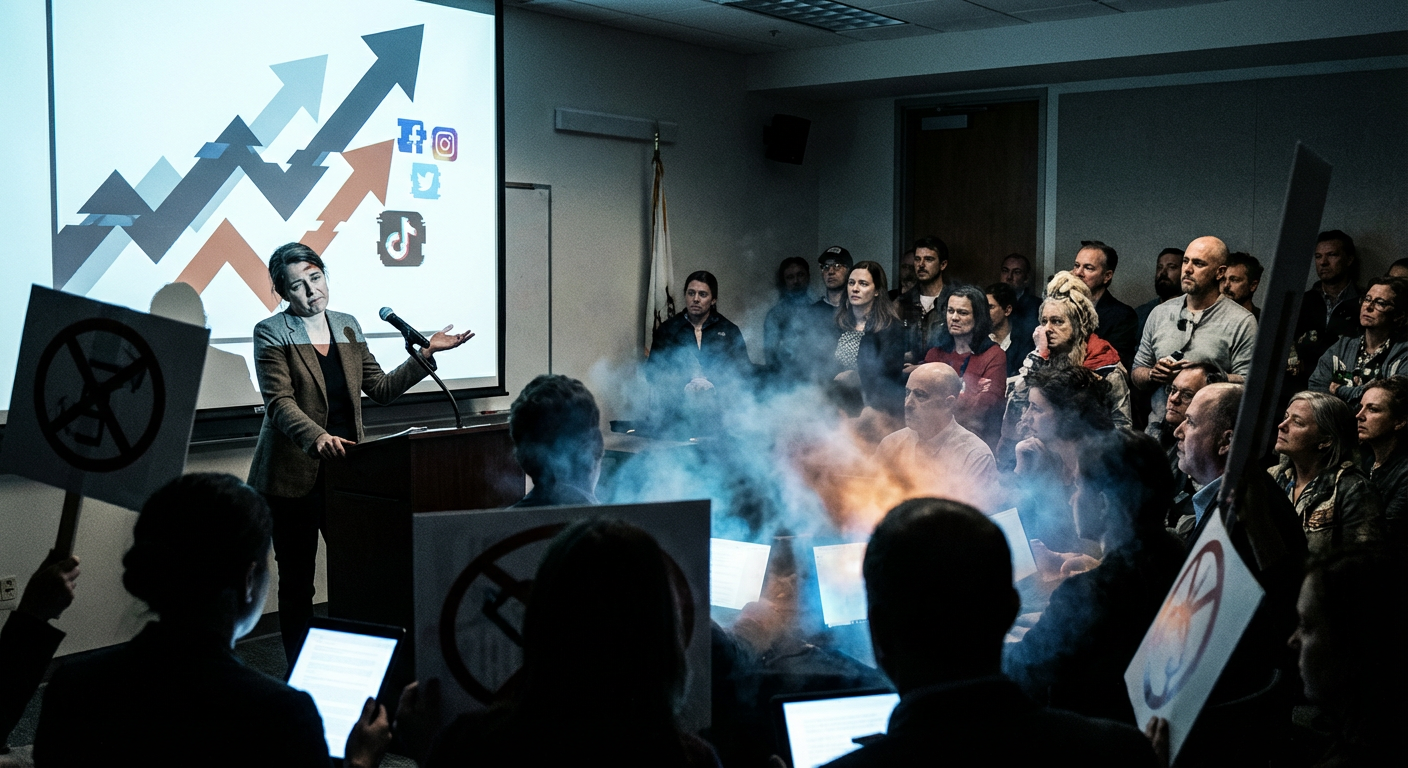
The 15-Minute City Panic Has Arrived in America—And What We’re Actually Losing in the Fight

How a Traffic Study in England Became a Conspiracy Theory in Your Town

In early 2022, Oxford, England began a modest experiment. They installed traffic filters in selected neighborhoods to see if residents would make shorter, more local trips if cut-through traffic disappeared. It was the kind of thing cities have tested for decades. What happened next was not typical.

The 15-Minute City Panic Has Arrived in America—And What We're Actually Losing in the Fight
The 15-Minute City Panic Has Arrived in America—And What We’re Actually Losing in the Fight

Within months, over 100,000 people signed petitions against the program. But the signatures were only part of the story. The protest moved online and transformed into something else entirely: a conspiracy theory that spread across continents. By 2024, claims about “15-minute cities” had mutated into fears about government surveillance, restricted movement, and personal freedom. None of this matched what Oxford was actually doing, but accuracy stopped mattering once the narrative took hold.

That narrative arrived in America with force. Throughout 2025, according to research by the Institute for Strategic Dialogue Misinformation Research, organized misinformation about 15-minute cities showed up as formal public comment at 47 city council meetings across 19 states. These weren’t spontaneous concerns. They were coordinated campaigns, often using identical language, often spread by people who had never attended a council meeting before.

When Planning Becomes Radioactive

Portland, Oregon learned this the hard way. In 2025, the city unveiled a “Complete Neighborhoods” rezoning proposal. The idea was straightforward: allow more housing types in residential neighborhoods and invest in pedestrian infrastructure so people didn’t need to drive for every errand. This is what urban planners call mixed-use zoning. It’s been standard practice for fifty years.

Then misinformation spread claiming the proposal would literally restrict where residents could drive. Social media posts claimed the city would implement traffic filters that would imprison people in their own neighborhoods. None of this was in the actual proposal. But it didn’t matter. The false claims were louder and more visually compelling than the 300-page technical document. The rezoning initiative was delayed six months while the city spent resources debunking falsehoods instead of discussing actual policy.

This pattern is becoming normal. According to the American Planning Association on 15-Minute Cities, 61% of urban planners reported encountering organized misinformation at public hearings in 2025. That’s more than double the 29% who reported the same thing in 2023. Something fundamental has shifted. City planning, once a quiet technical field with small audiences, has become a front in the culture war.

What Gets Lost When We Stop Listening to Each Other

Here’s what troubles me most: underneath the conspiracy theory panic is a real question that deserves serious attention. When cities actually do make planning changes, who benefits and who bears the cost? That’s not a paranoid question. It’s a structural question that planners and residents should wrestle with together.

But we’re not doing that anymore. Not in places where the misinformation has taken root. Instead, we’re fighting about whether something exists before we can even discuss whether it’s good policy. We’ve lost the ability to negotiate.

What that means in practical terms: neighborhoods that could have had better bus service don’t get it. Streets that could be safer for kids on bikes stay dangerous. Housing that could be more affordable stays locked behind single-family zoning that inflates prices. Communities that were built to require a car for every journey, and the isolation and expense that comes with it, stay that way. This isn’t philosophical loss. It’s concrete. It affects where your kids can walk to school, whether your elderly neighbor can reach the grocery store without driving, and whether a young couple without family money can find a place to live in their own town.

The Actual Numbers Tell a Different Story

Research published in the Journal of Urban Affairs in late 2025 found something striking: neighborhoods with actual mixed-use zoning and walkable infrastructure saw median home values increase 18% faster than car-dependent suburbs between 2020 and 2024. The data doesn’t support the theory that walkable neighborhoods destroy property values. It suggests the opposite.

But here’s the gap: having data isn’t the same as having a functioning public conversation. When people are afraid that the government is restricting their freedom, new real estate numbers don’t calm them down. We need something different. We need trust.

That trust used to exist because city planning decisions were made in visible spaces with real neighbors present. You’d go to a meeting, hear from actual planning staff, ask questions, get answers. Misinformation spreads in the gaps where people feel unheard or excluded. When we moved planning conversations online during the pandemic and then didn’t meaningfully move them back into neighborhoods, we created exactly those gaps.

What Comes Next Depends on What We Do Right Now

Your town might be next. The misinformation campaigns are spreading, and they’ll hit any city that tries to do planning work more intentional than pure inertia. This is happening in college towns and rural areas and suburbs, not just major cities. No place is too small to become a target.

You can’t stop conspiracy theories just by having better facts. But you can build the conditions where they have less room to grow. That means showing up to actual meetings, not just doom-scrolling about them. It means asking your city planner what they’re actually trying to do, and not accepting vague answers. It means talking to neighbors who disagree with you and listening long enough to understand what they’re actually afraid of, underneath the conspiracy rhetoric.

It means treating city planning the way it deserves to be treated: as a question about what kind of community you want to live in, not as a background process to ignore until you suddenly see it in a Facebook post. There’s real work happening in your town right now that will shape whether you can afford to stay there, whether your kids are safe walking around, whether your aging parents can get a meal without driving ten minutes. That work is worth knowing about. It’s worth showing up for.

What Your City’s AI Camera Contract Actually Lets Happen (And What You Can Do About It)

The Contract Nobody Really Read

Your city council probably approved the surveillance camera system in about fifteen minutes. There was a vendor presentation with impressive demo footage, a staff recommendation, maybe one question from a council member about cost, and then it passed. The contract itself was probably hundreds of pages, filed away in a municipal database that requires you to know exactly what to search for to find it. This is not a coincidence. It is, in fact, how most of these deals happen across America.

What Your City's AI Camera Contract Actually Lets Happen (And What You Can Do About It)
What Your City’s AI Camera Contract Actually Lets Happen (And What You Can Do About It)

Over 90 U.S. cities have signed contracts with major vendors like Motorola Solutions’ Avigilon or Axon’s camera analytics platforms that include AI-based behavioral detection features, according to recent tracking work. These systems promise smarter security through artificial intelligence. They promise to detect suspicious activity automatically, alert officers in real time, and make your neighborhood safer. What they also do is something much less visible: they create permanent pathways for data to flow in directions you probably didn’t know about, and they embed algorithmic decision-making into your community’s physical infrastructure.

This article is a map through that contract language. Not because it is reassuring, but because understanding what your city actually signed up for is the only way to do anything about it.

Illustration for What Your City's AI Camera Contract Actually Lets Happen (And What You Can Do About It)
Illustration for What Your City’s AI Camera Contract Actually Lets Happen (And What You Can Do About It)

The Data Sharing Problem That Hides in Plain Language

Here is what matters most in these contracts, and what is almost never discussed in city council chambers. According to a 2025 ACLU analysis of 40 municipal AI surveillance contracts, 78 percent included perpetual data-sharing clauses with federal law enforcement agencies. Perpetual means forever. Forever means that if the FBI wants access to footage collected by your neighborhood camera, they can get it without the city council approving that relationship separately. It also means that if the contract gets renewed or extended, this data-sharing relationship continues unless the city actively negotiates to remove it.

This matters because federal agencies do not operate under the same public records laws that municipalities do. A request for footage from your local police department can be submitted through open records laws. A request from the FBI typically cannot. The footage goes into a system, gets connected to facial recognition databases, gets cross-referenced with other federal surveillance tools, and you have no mechanism to know it happened or to object to it.

When you read your contract, look for language about “authorized law enforcement partners” or “federal agency access” or “interagency data sharing protocols.” If you see those phrases and they are not explicitly limited to specific situations requiring separate approval, then you are looking at a perpetual data-sharing arrangement. Write that down. Take a photo of that section. This is the paragraph that matters most.

When AI Gets It Wrong, Who Actually Pays?

In 2024, the city of Shreveport, Louisiana canceled its contract with SoundThinking, a gunshot detection platform. The decision came after a MacArthur Justice Center study found that the system generated false positive alerts 90 percent of the time in predominantly Black neighborhoods. Ninety percent. That means officers responded to alerts that were not gunshots, wasted police resources, created unnecessary police presence in specific communities, and did so on the basis of faulty AI.

This is not theoretical risk. This happens. And when you read your city’s contract, look for what it says about false positives, about accuracy standards, about what happens when the AI gets it wrong. Most contracts do not commit vendors to specific accuracy thresholds. Most do not specify what happens if the system performs differently in different neighborhoods. Most do not require the city to study whether the system is actually making things safer or just making some areas more surveilled.

This is a question you can ask your city council in writing. It is not aggressive. It is reasonable. Ask what accuracy standards the contract requires. Ask what performance data the vendor must provide. Ask how the city will know if the system is working or harming your neighborhood. If the answer is vague or incomplete, then you know something important about what your city actually committed to.

The Accountability Ordinance Your City Probably Doesn’t Have

San Diego passed a Smart Streetlights Ordinance in 2025 that is now considered a national model for surveillance technology oversight. Here is what it requires. Before any new surveillance technology is deployed, there must be a public 90-day review period. During that time, community members can read about the technology, ask questions, and provide feedback. After that review period, the city council must hold a vote, and the vote must be a supermajority rather than a simple majority. It creates friction in the process. It creates time for people to pay attention. It makes it harder to sneak these systems into neighborhoods without anyone noticing.

According to research from the Georgetown Center on Privacy and Technology, fewer than 15 percent of U.S. cities with AI surveillance contracts had enacted any algorithmic accountability ordinance at all. Your city is probably in that 85 percent. This does not mean it is impossible to change. It means there is an opportunity.

Start by checking whether your city has any surveillance technology oversight ordinance. Check your city council website. Check your municipal code. If it does not exist, then you have something concrete to push for. You can point to San Diego. You can argue that surveillance technology should be subject to the same approval process that any major city infrastructure gets. You can make this argument to city council members, and you can make it in writing for the public record.

What You Can Actually Do This Week

First, find your city’s surveillance contract. Call your city clerk’s office. Ask specifically for the AI camera system contract and the vendor agreement. Ask for all amendments and extensions. These are public records. You have a legal right to them. You might need to file a formal public records request, but start with a phone call.

Second, read through the contract and look specifically for these things: data sharing clauses, accuracy standards, community notification requirements, and any language about algorithmic audits or performance monitoring. You do not need to understand every word. You are looking for presence or absence. You are looking for what commitments are actually written down and what is left to vendor discretion.

Third, take what you find and bring it to your next city council meeting. Attend in person if you can. Speak during public comment. Ask specific questions about the contract language. Ask what accuracy standards the vendor must meet. Ask whether your city conducted any community input before signing. Ask what happens if you discover the system is performing differently in different neighborhoods. These questions matter because they go into the public record, and they make future council members aware that people are paying attention.

Fourth, connect with any local community groups already working on surveillance or policing issues. This is not a problem you need to solve alone. Neighborhood associations, civil rights organizations, community technology groups are already engaged with this work. Bring them your contract questions. Bring them your concerns. Build something together.

The contract your city signed is not destiny. It is a starting point. It reflects choices that your city made, and future city councils can renegotiate, amend, or cancel it. But only if enough people know what is actually in it and decide it matters enough to do something about.

If you read your contract and have questions about what the language means, bring those questions to your next neighborhood association meeting. Post them to your local community Facebook group. Tag your city council members. Start the conversation. The point is not to have all the answers right now. The point is to know what questions to ask and to ask them loudly enough that someone has to answer.