Exploring the Limits of Longevity: When Age Is Just Another Number

evztgswxiu

Alright folks, gather ’round the virtual campfire because today we’re diving into a topic that feels like it was ripped straight from a sci-fi novel: Longevity. Now, I don’t know about you, but the idea of living long enough to see hoverboards (the real ones, not those glorified scooters) and maybe even our great-great-grandkids sounds pretty intriguing to me. So, let’s chat about how this whole “living longer” gig might actually work!

Longevity: What’s All the Fuss About?

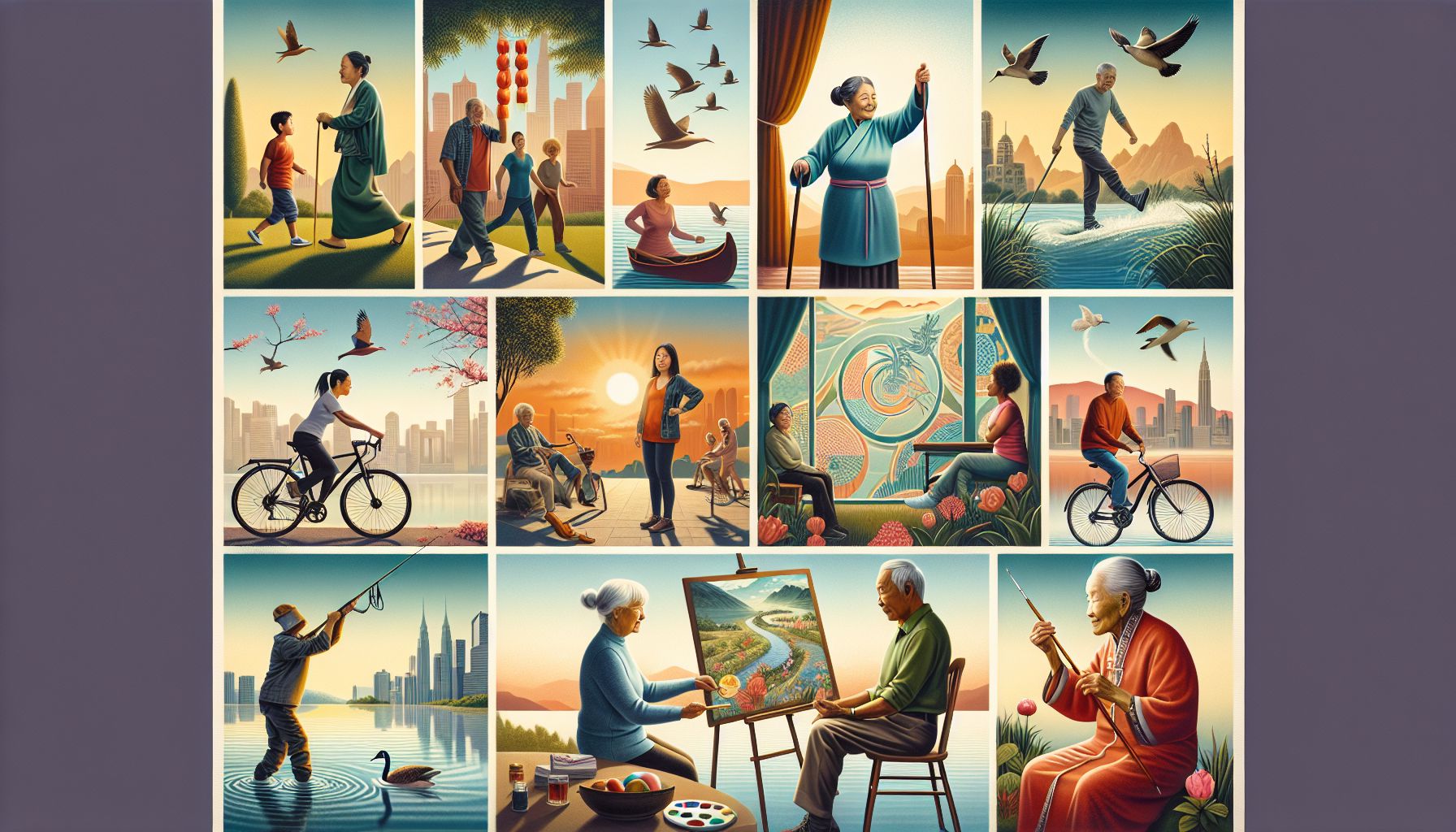
First things first, what do we even mean by longevity? Is it just about extending the years in our lives, or is it about ensuring those years are full of health, vitality, and maybe just a little mischief? In recent years, science has looked at longevity as not just about adding years but also about adding healthier, more active ones. You can think of it as making sure your life isn’t just long, but also that you’ve got the energy to do the tango on your 100th birthday.

The quest for longevity isn’t exactly new. People have been searching for the proverbial “fountain of youth” since, well, pretty much forever. But lately, the pursuit has transformed from myths and legends to serious scientific research. We have some major advancements underway that could redefine what aging even means.

The Science Behind the Scenes

Now, let’s peek behind the curtain to see how we might actually pull off this whole living-longer-with-gusto thing.

Telomeres: The Biological Clock

Telomeres are like the plastic tips on your shoelaces. They protect the ends of your chromosomes, and as you age and your cells divide, they naturally shorten. Think of it as a biological countdown. Once they’re too short, the cell can’t divide anymore, and that’s when things can start to go haywire. Here’s where it gets spicy: there are some whispers in the scientific community that by targeting telomerase (the enzyme that repairs telomeres), we might be able to slow down or even reverse this process. Imagine that!

Caloric Restriction and Intermittent Fasting

Anyone up for a little self-control? Some studies suggest that intermittent fasting and caloric restriction could play a part in extending lifespan. The theory is that by reducing the amount of energy your body needs to use, you give it more time to repair itself and fend off diseases. So maybe passing on that second slice of cake isn’t such a bad idea after all? But hey, moderation in all things, right?

Senescent Cells: Out With the Old

Our cells are like the workers in a factory. Some are top performers, while others…not so much. Over time, cells can become senescent, meaning they stop dividing and just sort of sit there, malfunctioning and causing trouble like a gate-crasher at a wedding. New treatments are exploring ways to remove or rejuvenate these cells. In theory, fewer malfunctioning cells could lead to a body that’s more spry and resilient.

The Power Players: Who’s Leading the Charge?

In the backdrop of all this science, we’ve got some fascinating players making waves in the longevity game.

Elon Musk and Neuroscience

Because let’s face it, no tech conversation is complete without Mr. Musk. His Neuralink venture is messing around with the idea of brain-computer interfaces. While its primary pitch isn’t directly about longevity (more about expanding human capabilities), enhancing cognitive function as we age could play a role in living a longer, fuller life.

Google’s Calico Labs

Another big name, Google’s Calico Labs, was founded with a mission to tackle aging and associated diseases. They’ve been pretty hush-hush about their progress, but their partnership with AbbVie to target age-related diseases suggests some serious research under the hood.

Altos Labs and Futurist Investors

And let’s not forget about Altos Labs, a longevity-focused biotech startup that’s attracted some top-tier scientists and investors, including Jeff Bezos himself. The team there is exploring cellular reprogramming to potentially revert cells to a more youthful state. You could say they’re working on hitting the “refresh” button on life itself.

The Big Questions: Challenges and Implications

Of course, with great longevity comes great responsibility. It’s not all smooth sailing into the future, and there are a few wrinkles to iron out (pun very much intended).

Ethical Considerations

Ethics in longevity is a vast sea filled with thorny questions: Who gets access to these treatments? How do we ensure that longevity doesn’t just become the luxury of the wealthy? And what about the societal implications. Will we need to redefine retirement ages, reshape our economy, rethink population control, or rewrite the social contract?

Quality vs. Quantity

Then there’s the question of quality versus quantity. Extending life is fantastic, but longevity research focuses on extending health span, not just lifespan. It’s all about ensuring those extra years are active and full of energy, not just spent on a rocking chair (unless you’re into that).

Economic and Societal Impact

With longer lives come economic shifts. Could we face a strain on resources or social systems? How will workforce dynamics change when the average person is living and working longer? It’s not like we can just hit pause on the other aspects of society while we figure this all out.

The Road Ahead: What Might the Future Hold?

Looking into the crystal ball of longevity, what can we expect? Well, it’s a journey with twists and turns, innovation, and perhaps a few curveballs. But here’s what gets me excited: we might reach a point where age really is just a number, where the melody of life isn’t dictated by the ticking of a clock, but by the energy of our health and spirit.

The next few decades could see people celebrating their 100th birthday with the same energy as their 60th. Or, and here’s a fun thought, maybe we’ll redefine the idea of adolescence or middle-age entirely. Who knows, retirement at 140 could become the norm!

Whether or not we get there, one thing’s certain: the journey promises to be as fascinating as it is complex. Keep an eye on the horizon. The world of longevity is full of potential, and it’s an exciting time to be exploring what it means to live life to its fullest, for as long as we can.

And in the meantime, perhaps consider adding an extra green smoothie to your daily routine. Can’t hurt, right? Cheers to the future!
AI in Creative Arts: A Brushstroke of Code and Imagination

rwfeomgskh

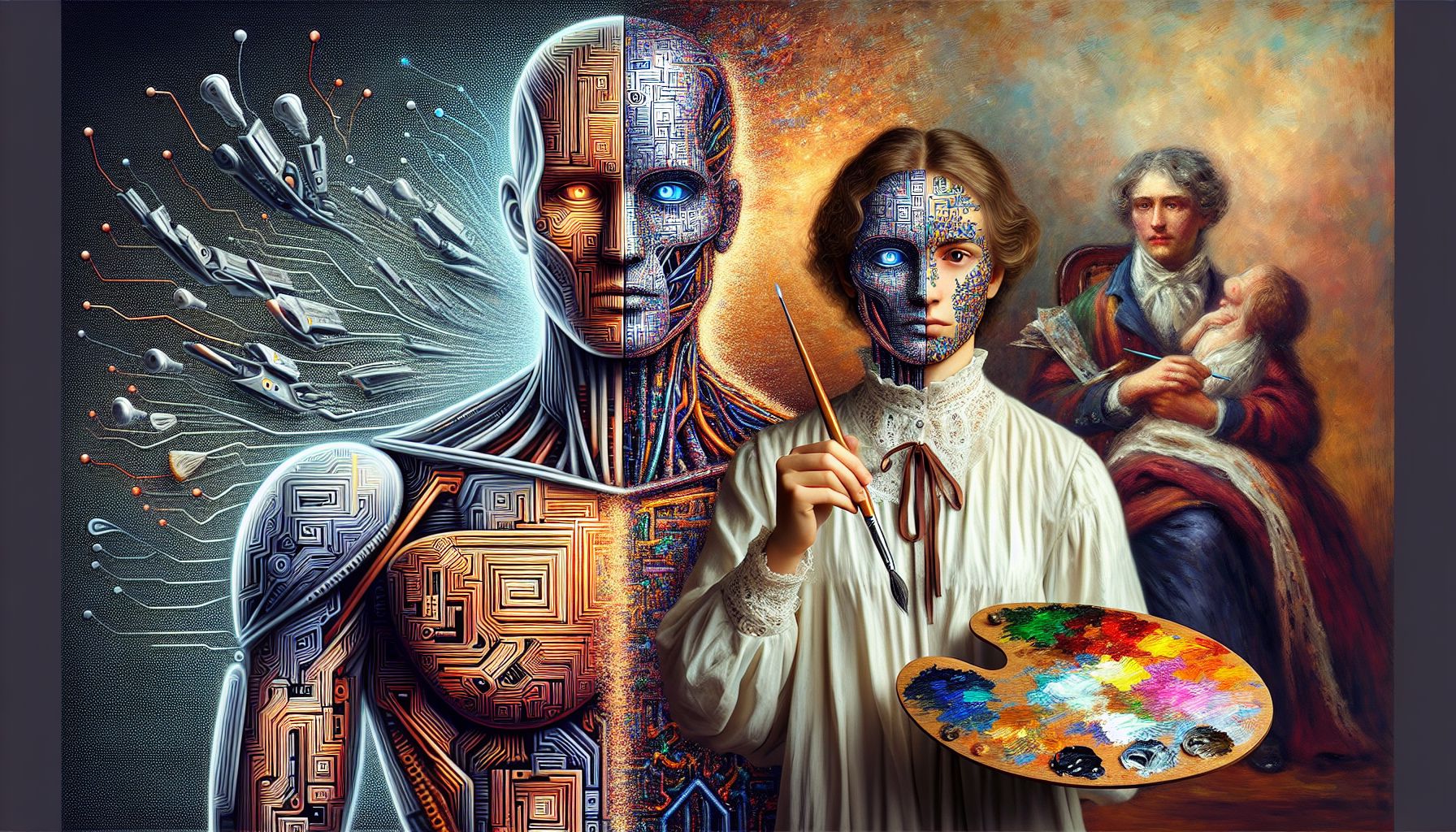
Hello, fellow tech enthusiasts and digital dreamers! Today, we’re talking about something that’s been keeping me up at night—AI in the Creative Arts. Picture it: algorithms mingling with the muses, neural networks that could rival Da Vinci’s brushstrokes, and code that composes symphonies. It’s happening right now, and honestly, it’s a pretty wild ride. So grab your favorite artisanal coffee, and let’s explore how artificial intelligence is reshaping the creative world in ways that are as exciting as they are thought-provoking.

An Artistic Renaissance or Digital Overload?

Alright, let’s address the skeptical elephant in the digital room: Can machines truly create art? This question echoes back to Picasso’s notion of art as a lie that makes us realize truth. In our era, this ‘lie’ runs on millions of lines of code. Some see this as a genuine artistic renaissance. Others call it digital overload. AI in art has stirred some fascinating debates.

On one side, AI promises to democratize art by lowering barriers to entry. Programs like DeepArt and DALL-E have become the paintbrushes of the internet age, allowing anyone—from hobbyists to budding creators—to produce pieces that once required years of practice and skill. On the flip side, some purists argue that AI-generated works lack the emotional depth and human experience that define true art. Wherever you stand, it’s hard to deny that digital or not, these creations are forcing us to reconsider what we even classify as “art” in the first place.

A Behind-the-Scenes Look at AI Creativity

If you’re new to the AI art scene, here’s the basic rundown. Most of these systems rely on what’s called Generative Adversarial Networks (GANs). It sounds intimidating, but stick with me—it’s actually fascinating! A GAN has two main components: the generator, which creates images, and the discriminator, which evaluates them. It’s a little like a digital game of cat-and-mouse, where one program dreams up an image and another verifies its authenticity.

With these twin minds collaborating and competing, an AI can come up with surprisingly realistic and often unexpectedly delightful art. It’s a bit like if Bob Ross and a script kiddo had a genius baby—it spits out happy little trees, but its tools and techniques are all ones and zeroes.

Well-Known Creators and Curators of AI Art

While a lot of AI artworks might not hang on the Louvre’s walls (yet), prominent artists are incorporating AI into their creative processes. Take Mario Klingemann, a digital artist who’s practically a legend in promoting machine learning as a medium for creativity. Or Google’s Arts & Culture Lab, which famously blended Van Gogh’s style with snapshots of modern cityscapes to fascinating effect.

And then there’s the commercial side—enterprises like OpenAI and Adobe are releasing tools that democratize AI art, pushing it into the mainstream. We’re talking tech meets tradition, algorithms meet artistry, and that incredible mingling that is the lifeblood of innovation.

The Fun and (Sometimes) Frustration of AI Art

Now, let’s tackle authenticity. One of the joys—and yes, occasional frustrations—of AI-generated art is its unpredictability. You never quite know if you’re going to end up with something that looks like it was born of pure genius or abstract to the point of absurdity. Imagine giving a cat a crayon and a canvas, and you’ll get the idea.

This unpredictability even extends to collaborations between humans and machines. The process becomes almost jazz-like: spontaneous, fluid, and oftentimes surprising. Personal anecdote: my recent attempt to create a digital version of Edvard Munch’s “The Scream” ended up more akin to a psychedelic trip with neon streaks. But hey, that’s part of the fun, right?

The Future—A Fusion of Potential and Pitfalls

Looking ahead at AI arts, I’m dreaming about entire artistic galaxies yet to be explored. Picture AI as a collaborator rather than a competitor: it could help us dig deeper into new realms of realization, offering fresh perspectives and expanding human creativity beyond its biological bounds.

Yet, we need to remember the potential pitfalls, too. As AI tools become more prevalent, discussions around intellectual property, authenticity, and the potential monopoly of art by those with computing power (yes, looking at you, mega-corporations) are bound to intensify.

In closing, AI in the creative arts challenges our conventional wisdom about the limits of both creativity and technology. I, for one, can’t wait to see where this digital brushstroke will lead us next. Keep your pencils (and keyboards) ready, friends, because the next frontier of art is upon us, and it’s more diverse and dynamic than we could have ever imagined. Let’s jump in and keep coloring outside the binary lines!

Are We Living in a Simulated Dream or is AI Painting the Night Sky?

ssdaygeimh

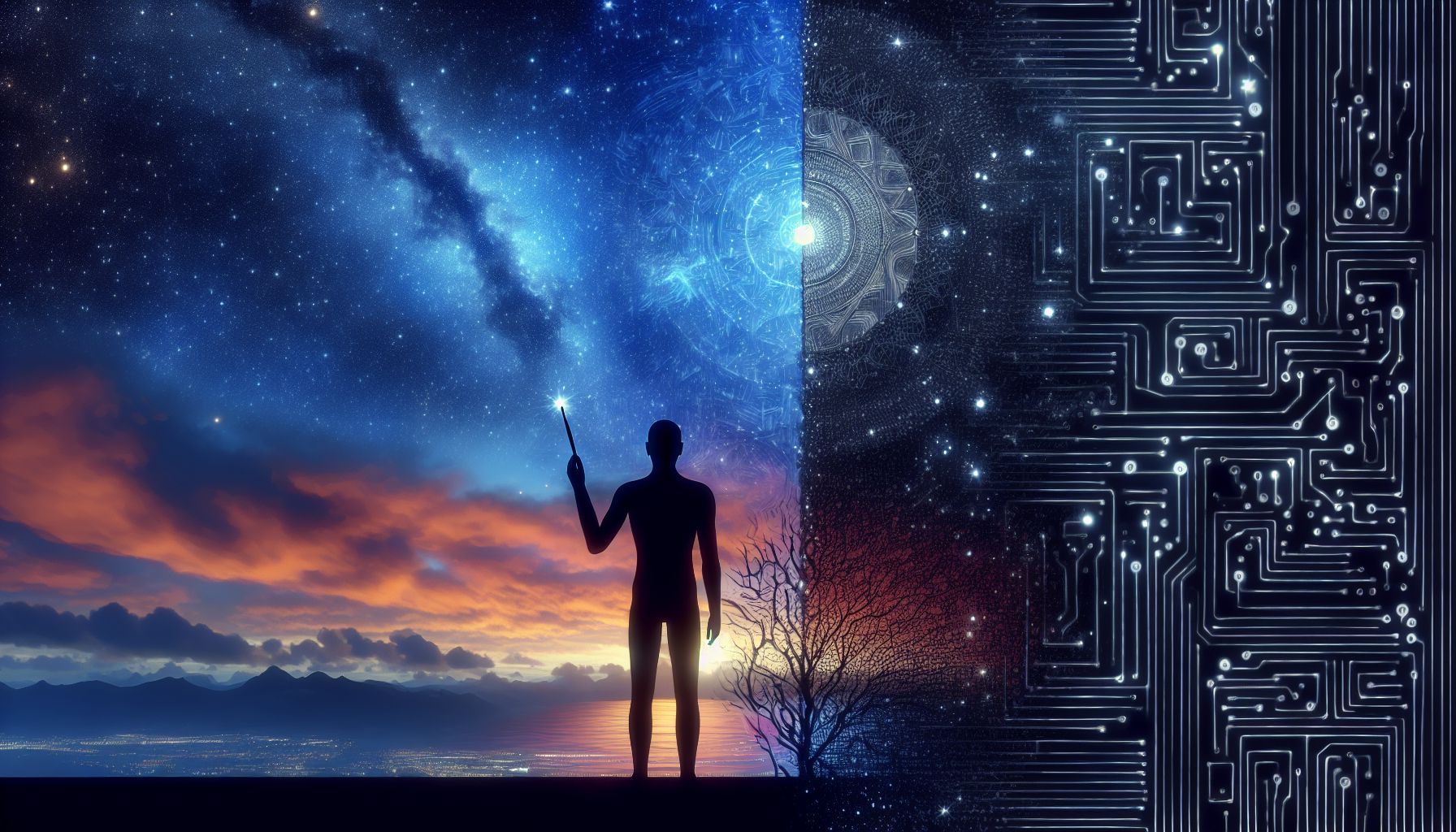
Hey there! Buckle up for a ride on the tech rollercoaster because today, I’m diving into a topic that’s been making quite a splash in the digital ocean, Artificial Intelligence in the creative arts. If you thought AI’s gig was limited to crunching numbers and orchestrating world dominance (just kidding, or am I?), think again. It’s flexing its digital muscles in the creative spaces where human creativity was thought to be the crown jewel. Spoiler alert: AI is painting the town with 1s and 0s! Intrigued? Let’s get into it!

From Code to Canvas: How AI is Transforming Art

Picture this: a room full of Picasso paintings, and in the center, an AI is whipping up a masterpiece of its own. Sounds like science fiction? Not so much anymore. Platforms like DeepArt and RunwayML are turning this vision into reality by using neural networks to generate art pieces that honestly make me do a double-take. These platforms have been trained on countless artworks, allowing them to recreate styles ranging from Van Gogh’s dreamy swirls to Banksy’s edgy street art.

What’s wild is the level of creativity these AIs are beginning to explore. While they’re initially built to mimic human styles, they’re increasingly doing more than that, coming up with styles that could blow the beret off any human artist’s head. It’s like training a barista to make a latte and finding out they can whip up a caramel macchiato, and sometimes, a concoction no one has ever tasted!

The Magic Behind the Machines

Alright, technical time, but don’t worry, I promise not to bore you with jargon. At the heart of AI artistry is something called Generative Adversarial Networks (GANs). Imagine two AIs locked in a creative duel: one (the generator) tries to create new images, while the other (the discriminator) tries to determine if the images are real or generated. With each round, the generator gets better and better, ultimately crafting pieces that are pretty darn convincing.

This competitive approach gives AI an edge in creating art. What’s even more fascinating is that these GANs are changing the definition of artistic collaboration. Rather than using AI as a mere tool, artists and AI are becoming co-creators. It’s like having a jam session with a virtual band member who learns on the fly and can play virtually any instrument, or invents their own. How’s that for band dynamics, huh?

Illustrating Empathy: AI Writing Poetry and Music

It’s not all visual art, my friends. AI’s dancing on our heartstrings in more ways than one. Take poetry, for instance. AI has been trained to write sonnets that could make Shakespeare do a double-take. Programs like OpenAI’s GPT-4 can spit out verses that convey emotion surprisingly well. While skeptics argue that AI can’t truly understand what it’s writing, readers often find themselves moved by the results nonetheless.

In music, tools like AIVA (Artificial Intelligence Virtual Artist) are composing symphonies that are not only listenable but also deeply complex. I remember stumbling upon a track composed by an AI and thinking, “Wow, this could be the new soundtrack to my chaotic tech-infused life!” Imagine AI creating custom playlists based on your mood with compositions it generated just for you. It’s a harmonious blend of tech and tunes!

The Critics Come Marching In

Okay, hold your applause, because like any good plot, there’s some drama here. Not everyone is shouting from the rooftops about AI’s creative prowess. Critics worry about originality. Can something truly be classified as “art” if it wasn’t inspired by real human experiences? There’s also a prickly debate about job security for artists. If an AI can compose a hit pop song, what does that mean for the creative folks who’ve spent their lives honing their craft?

Moreover, there’s the question of ownership. If an AI creates a masterpiece, who owns it? The coder? The AI? Society? Picture trying to sue a program for royalties, good luck serving those subpoenas!

Gazing into the Crystal Ball: The Future of AI and Creativity

Looking ahead, it feels like we’re at the dawn of a new Renaissance, only this time, algorithms are stirring the paint. I suspect we’ll see more integration of AI as a partner in the arts. Think of collaborative events where AI and human teams co-create art exhibits, or writers using AI as a ‘thought partner’ to brainstorm ideas, generate dialogue, or even explore plot twists in novels. Could AI become the silent sounding board or a muse that elevates human creativity?

But with great power comes great responsibility. We must navigate the ethical maze this innovation presents, making sure that while AI encourages creativity, it also respects and uplifts human artistry. After all, the symphony of creation thrives best when it combines the machine’s precision with the human heart’s passion.

Conclusion: Rewriting the Creative Future

From creating art that captivates to penning music that mesmerizes, AI is proving it’s got a place in the creative hierarchy. The art world is shifting as technology infuses it with new capabilities and uncharted possibilities. As I sit back and let this transformation unfold, I’m filled with equal parts curiosity and awe. We’re living in a time where the line between human and machine creativity is blurred, offering a tantalizing glimpse into what might come next.

And that, my fellow tech enthusiasts, is a chapter in the book I’m thrilled to read. Here’s to the creative horizons yet to be explored, whether sketched by a brush, penned by a poet, or coded with care. Let’s enjoy the ride, as unpredictable and exciting as it may be!