You’ve Noticed It, Even If You Haven’t Named It
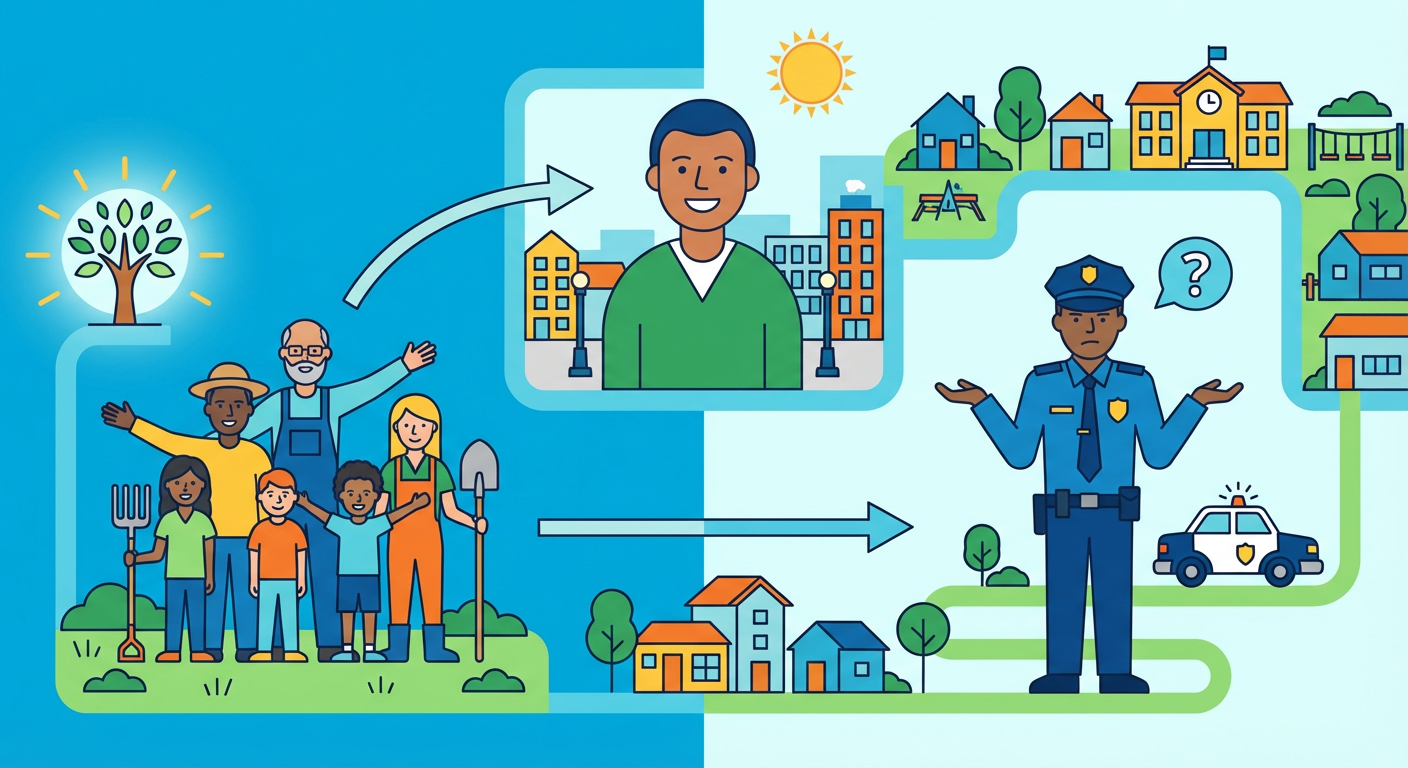
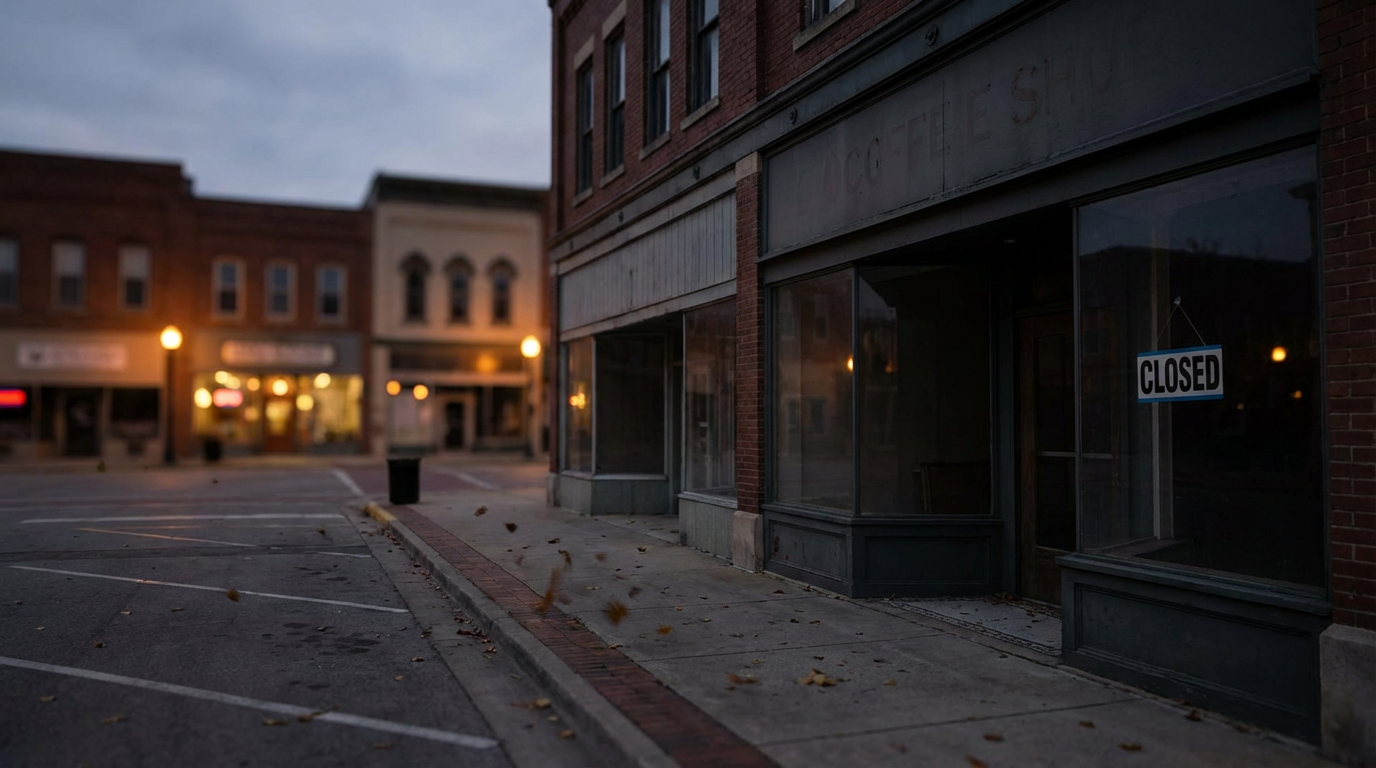
There’s a particular kind of loneliness that hits you in a thriving suburb or a mid-sized city that looks fine on paper. Your neighborhood has good schools. The parks are maintained. People mow their lawns. But you realize you haven’t had a real conversation with someone outside your household in weeks, and you can’t quite figure out where that would even happen anymore. The coffee shop where people used to linger closed last spring when the rent jumped. The library’s community room got repurposed for storage. The diner that hosted the chess club for thirty years is now a tax prep franchise.
This isn’t just a feeling. The data backs it up, and it’s worth understanding because the numbers tell a story about structural decisions, not personal failure. A 2024 update to research on what sociologist Ray Oldenburg called “the third place” — that social zone between home and work where community actually happens — found that only 22% of Americans now visit these kinds of spaces regularly, down from 41% in 2000. The U.S. Surgeon General Advisory on Loneliness and Isolation reported something darker: the number of Americans with no close friends has quadrupled since 1990, with suburban communities hit the hardest.
Your town isn’t broken because people are failing to show up. Your town is struggling because the places to show up are disappearing.
Follow the Money: Why Independent Spaces Are Closing
Let’s be specific about what’s happening. Independent coffee shops — historically the backbone of third place culture in America — closed at a net loss of 4,200 locations nationally in 2024 alone. This wasn’t a gradual decline. It happened during the third consecutive year of more closures than openings. The culprit, according to the National Coffee Association’s 2025 report, is straightforward: commercial rent has increased an average of 18% since 2022, and landlords have no reason to hesitate when chain operators can absorb those costs or when short-term rental conversions offer better returns.
This matters because it’s not about competition or changing tastes. An independent coffee shop owner isn’t losing customers to Starbucks because people suddenly prefer corporate branding. She’s closing because her lease renews, the landlord sees comparable rents at nearby addresses climbing, and $3,500 becomes $4,100 in a neighborhood that’s “gentrifying” or “revitalizing.” She can’t pass that cost to customers without pricing out the regulars who actually made the space worth running. So she closes, and a Starbucks moves in, and it’s fine to grab coffee, but nobody lingers. Nobody knows the barista’s kid’s name. Nobody runs their community board meeting there at 7 p.m. on Tuesday.
This happens in libraries too. It happens in community centers when maintenance budgets get tight. It happens in parks when programming gets cut. The pattern is consistent: a space that required minimal profit to survive gets demolished by cost increases that a profit-driven operator couldn’t possibly absorb, and nothing replaces it because there’s no market incentive to create a place people need instead of a place people will pay premium rates for.
The Geography of Disconnection
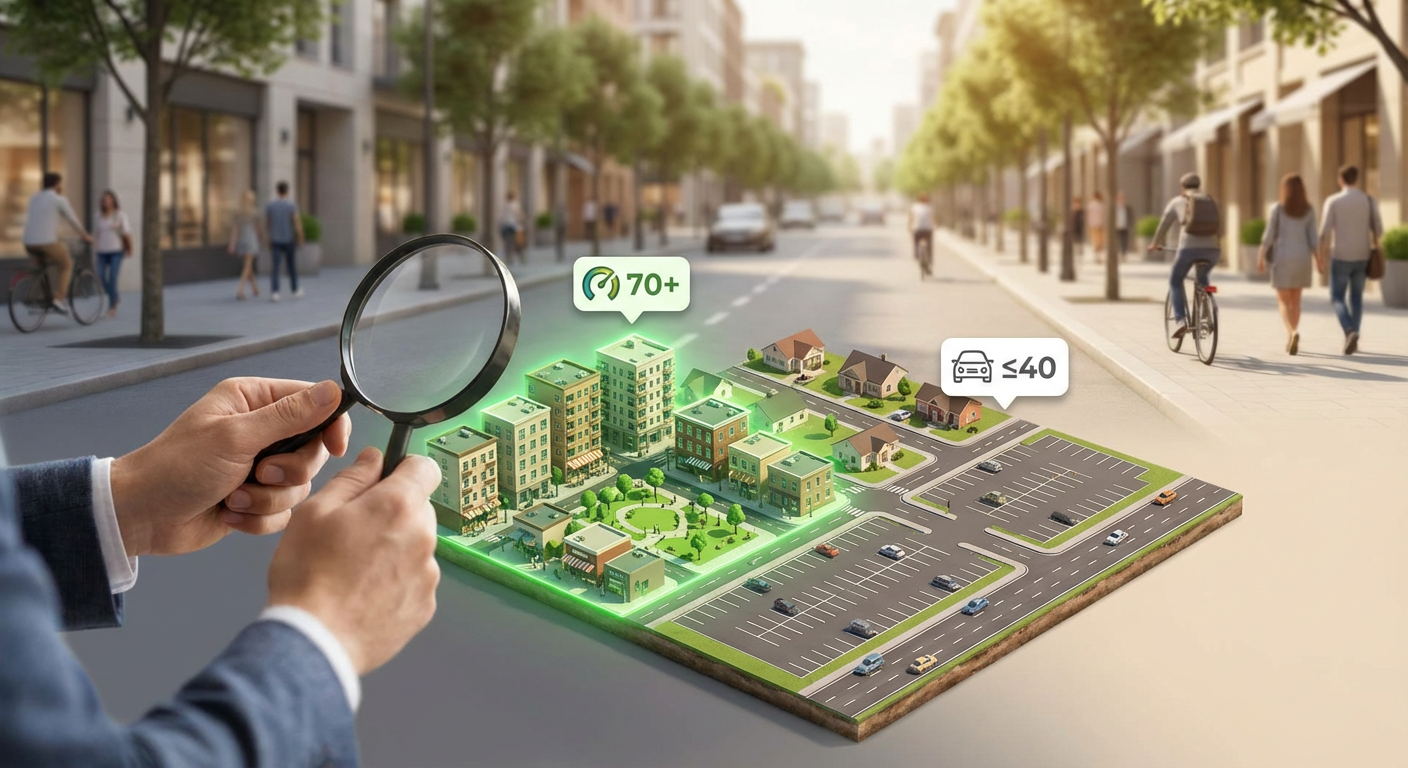
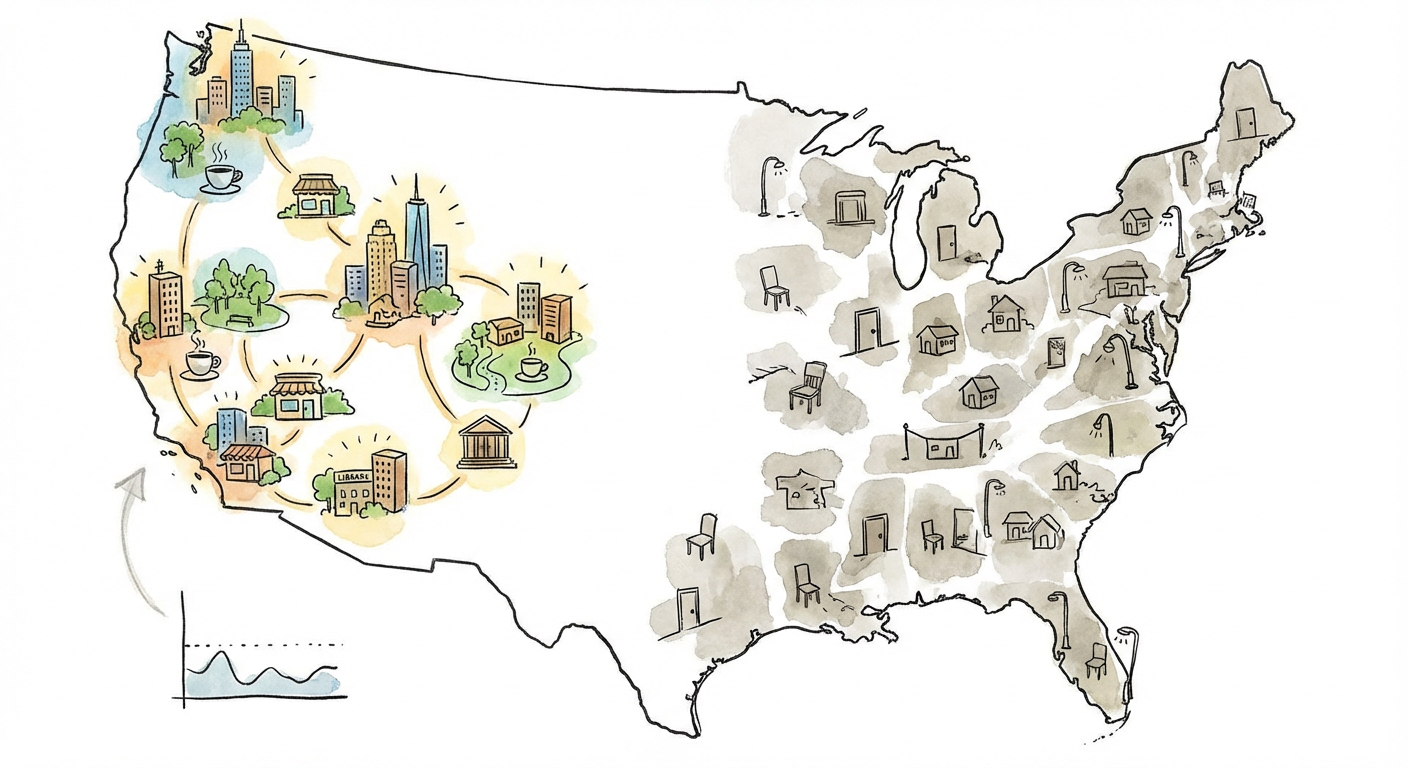
If you want to see what a genuinely healthy third place ecosystem looks like, the Project for Public Spaces Placemaking Resources 2025 index ranked American cities, and the results are sobering. Only 11 cities in the entire country qualified as having truly healthy third place infrastructure. Most mid-sized cities, the ones where most of us actually live, scored below 40 out of 100. If you live in a city of 150,000 to 500,000 people, statistically your town scored badly on basic measures like walkable public spaces, affordable venues for gathering, and places to spend time without purchasing anything.
The pattern isn’t random. Healthy third places cluster in older, denser cities that developed before car culture made sprawl the default. They also cluster in cities where municipal governments actively chose to protect and invest in them. Everywhere else, the default is descent. A library closes or reduces hours. An independent bookstore folds. The park gets quieter because there’s no funding for events. A small bar that hosted live music shuts down because the owner’s rent doubled and the city never figured out how to make that sustainable.
What’s particularly cruel is that the communities that lose these spaces first are often the ones that depend on them most. Wealthy families can drive to specialized activities, hire private tutors, belong to clubs. Working people, elderly people, people without cars, people who live paycheck to paycheck: they used to find their social life and their civic participation and their sense of belonging in accessible, free or cheap spaces. Those people still exist. The spaces don’t.
Some Cities Are Actually Trying Something Different
This is where the story could get entirely grim, and you might close the browser and accept that this is just how things are now. But several cities decided to intervene, and the early results are worth paying attention to.
Tempe, Arizona and Raleigh, North Carolina both piloted “Third Place Activation Grants” in 2025, offering $5,000 to $25,000 to independent community venues to help offset rising rent. The theory was straightforward: if municipal government could bridge the gap between what a space needs to survive and what market-rate rent demands, then that space could keep existing. It worked better than either city probably expected. After 12 months, 87% of grant recipients in Tempe were still operating. That’s not perfect. But it’s substantially better than the national trajectory.
These programs work because they’re built on a different assumption: that a community space is infrastructure, like a street or a library, and that it’s appropriate for public money to maintain it. You don’t expect a public park to turn a profit. You don’t expect a library to generate revenue. You fund it because it serves everyone. Third places are the same, except we’d somehow convinced ourselves they should be purely private enterprises subject to full market forces. That assumption was wrong. The grant programs aren’t a permanent fix, they’re a band-aid on a structural problem, but they prove that the decline isn’t inevitable.
What Actually Matters Now
If you live in a city that isn’t Tempe or Raleigh, you don’t have to wait for municipal government to save you. But you do need to understand what you’re fighting against. It’s not laziness or cultural decay. It’s economic pressure on real estate that makes third places economically irrational unless someone actively chooses to sustain them.
That someone can be you, but it has to be structural. Showing up at city council to say “we miss the coffee shop” doesn’t work because the city council can’t override market forces. But showing up to say “please fund or grant space for gathering” might work. Supporting a local venue even when it’s slightly inconvenient works. Pushing back when a park gets quieter or a library reduces hours works. Advocating for zoning that allows small businesses to survive, or rent control policies, or commercial district investment programs works. These aren’t individual consumer choices. They’re collective political ones.
Your town feeling broken isn’t your fault. But fixing it requires treating third places the way we treat roads: not as nice-to-haves that should float on market forces alone, but as essential infrastructure that a healthy community maintains. That’s not small-town nostalgia. That’s civic design, and it’s still possible if enough people decide to push for it.