The Tuesday That Changed Everything
Maria Santos was running late for the city council meeting on that Tuesday in March, juggling her work bag and a folder of printed emails from neighbors while trying not to trip on the broken sidewalk outside City Hall. She had never spoken at one of these meetings before, but the proposed rezoning for the empty lot at Maple and Third had pushed her past the point of silent frustration. That lot, sitting vacant for eight years, was everything wrong with how environmental decisions get made in her neighborhood without the people who live there.
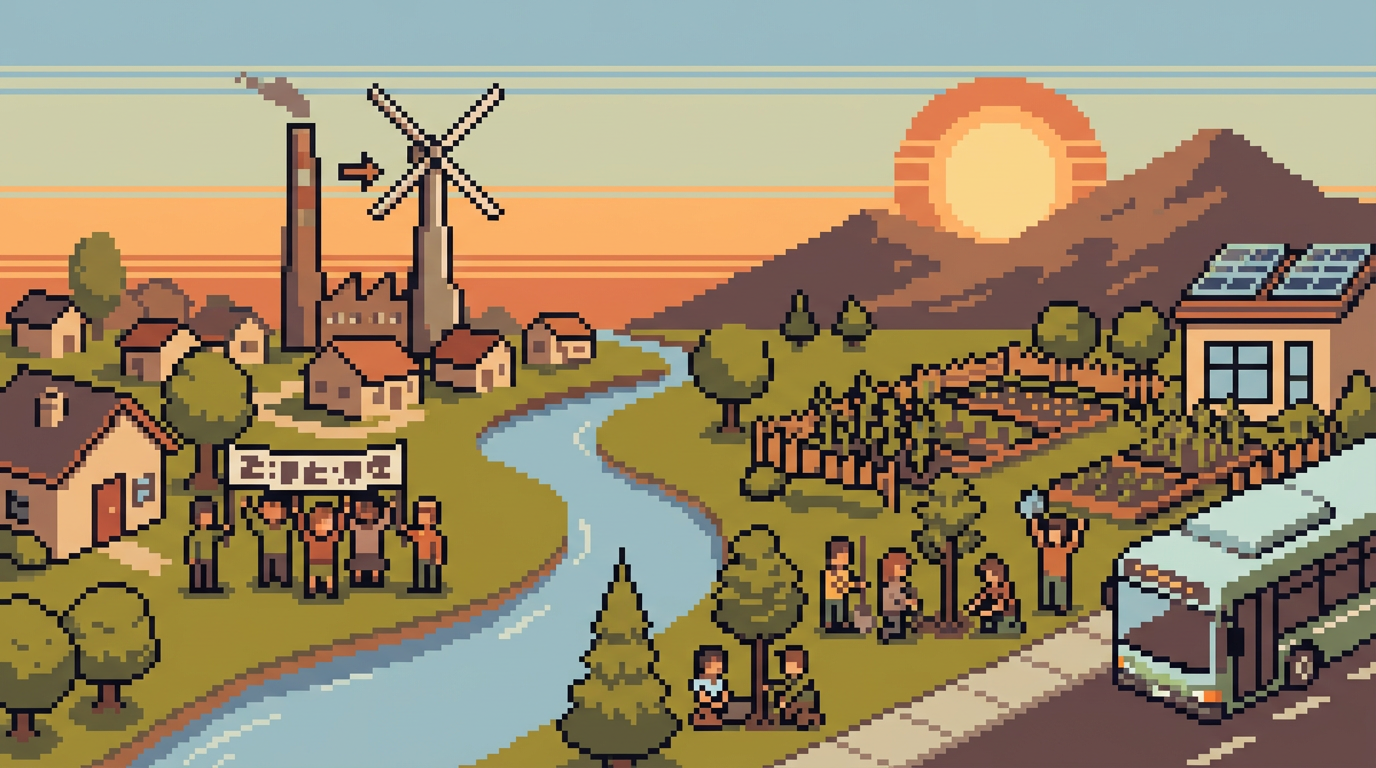
What happened next shows something powerful about how environmental justice actually works at the street level. Sure, big policies and lawsuits matter. But real change often starts with neighbors like Maria who decide that waiting for someone else to fix things is no longer an option. The story of that corner lot, and what it became over the following eighteen months, is a blueprint for how communities can take back power over their own environmental health.
When the System Works Against You
The Riverside neighborhood where Maria lives sits in what researchers call a “cumulative impact zone.” Within a half-mile radius, residents deal with a bus depot, a concrete plant, two gas stations, and a stretch of highway that carries 45,000 vehicles daily. The nearest full-service grocery store closed five years ago. The closest park requires crossing four lanes of traffic and a freight rail line. These aren’t coincidences.
City planning documents from the 1960s, which I got through a public records request, show deliberate decisions to dump industrial uses in neighborhoods where median household incomes fell below the city average. Environmental lawyer David Chen, who has worked on similar cases across the region, puts it bluntly: “When you map pollution sources against demographics, the pattern is unmistakable. These communities bear a disproportionate burden while having the least political power to fight back.”
Maria understood this long before she learned the term “environmental justice.” She had watched her daughter develop asthma. She had seen elderly neighbors struggle to access fresh food. She knew that her ZIP code had lower life expectancy than neighborhoods just ten minutes away. What she didn’t know, until she started digging into city records, was how many opportunities for positive change had been quietly killed over the years.
The Power of Showing Up
That March evening, Maria stood at the podium for her three minutes and did something remarkable: she connected the dots. She talked about Mrs. Patterson, who takes two buses to buy groceries because the corner market only sells processed food and lottery tickets. She mentioned the kids who play in the alley behind the apartments because there’s nowhere else to go. She described how the empty lot had become a dumping ground that attracted rats and made the whole block feel forgotten.
Then she proposed something specific: convert the lot into a community garden and food distribution hub. She had done her homework. The lot was city-owned. Federal grants existed for exactly this type of project. Three nonprofit organizations had expressed interest in partnering. She had even secured preliminary commitments from local restaurants to donate surplus produce.
Council member Janet Torres, who represents the district, later told me she had never heard such a well-researched proposal from a first-time speaker. “Most of the time, people come to complain about problems without offering solutions,” Torres said. “Maria came with a vision and a plan. That changes everything about how we can respond.”
Building Power Through Relationships
The real work began after that council meeting. Maria discovered that changing how decisions get made requires building what organizers call “people power.” She started by mapping her neighborhood differently. Instead of seeing isolated households, she began identifying natural leaders and connectors. Mrs. Chen, who had lived on Maple Street for thirty years and knew everyone’s business. Pastor Williams, whose congregation included families from six different apartment complexes. Teresa, the high school teacher who coached cross-country and understood how environmental factors affected her students’ health and academic performance.
They held the first planning meeting in Maria’s living room on a Saturday morning. Seven people came. They held the second meeting at the community center. Fifteen people showed up. By the fourth meeting, they had to move to the church basement to accommodate thirty-five neighbors. What started as complaints about a vacant lot had become a broader conversation about community health, economic development, and environmental equity.
The breakthrough came when they realized they didn’t have to choose between quick fixes and long-term change. They could pursue both at once. While working on the garden proposal, they also started attending planning commission meetings, joining the transportation advisory committee, and building relationships with environmental groups from across the city. They learned to read budget documents, understand zoning codes, and navigate the bureaucracy that shapes their daily lives.
Growing Solutions From the Ground Up
Eighteen months later, the Maple Street Community Garden produces 4,000 pounds of fresh vegetables annually. The weekly farmers market brings residents from neighboring blocks together every Saturday morning. The tool library and composting program have reduced waste and created informal job training opportunities for teenagers. The covered pavilion hosts everything from citizenship classes to birthday parties, turning a forgotten corner into real community space.
More importantly, the organizing skills developed through this project have spread outward. The same core group successfully fought for better bus service, pushed for air quality monitoring near the concrete plant, and secured funding for sidewalk repairs throughout the neighborhood. They have become a political force that elected officials can’t ignore.
Environmental justice lawyer Sarah Kim, who provided legal help during the garden development, says this model can be replicated anywhere. “The key is starting with what people care about most in their daily lives, then connecting those immediate concerns to larger systems of power,” she explains. “Maria and her neighbors proved that you don’t need advanced degrees or huge budgets to create real change.”
The Maple Street garden will hold its harvest celebration next Saturday at 10 AM, and everyone is invited to see what grassroots environmental justice looks like in practice. More than that, Maria and her fellow organizers are hosting a workshop afterward on how to research city budgets and identify opportunities for community-driven environmental improvements. They have learned that teaching others to organize multiplies their power. If you’ve been wondering how to make a difference in your own neighborhood, this might be the perfect place to start asking questions and finding your own answers.
