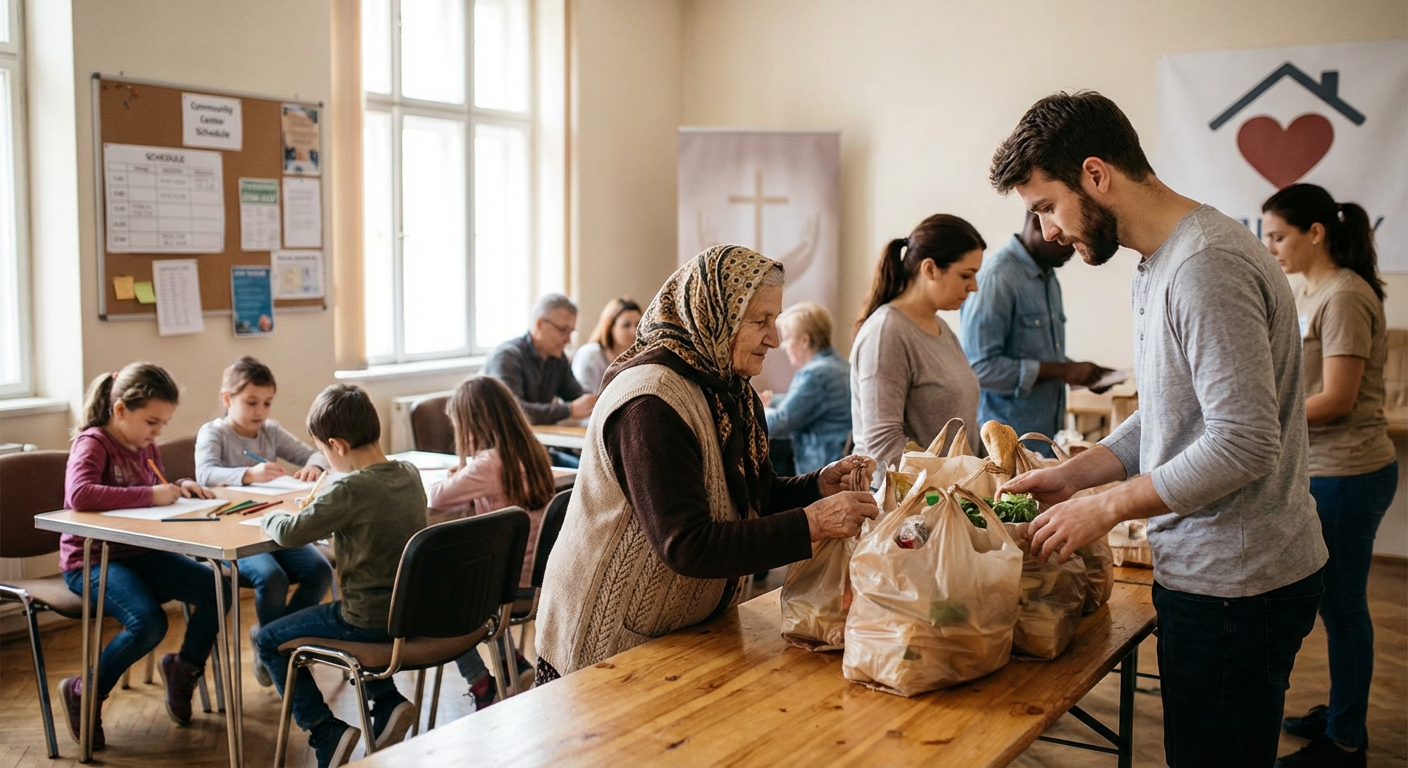
Building Power Block by Block: A Field Guide to Grassroots Organizing That Actually Works

Start Where People Are, Not Where You Think They Should Be

The most effective organizing campaigns I’ve seen began with someone knocking on doors and asking a simple question: “What keeps you up at night?” Not “Do you care about affordable housing?” or “Are you concerned about climate change?” Just that one open-ended question that lets people tell you what matters most to them right now.
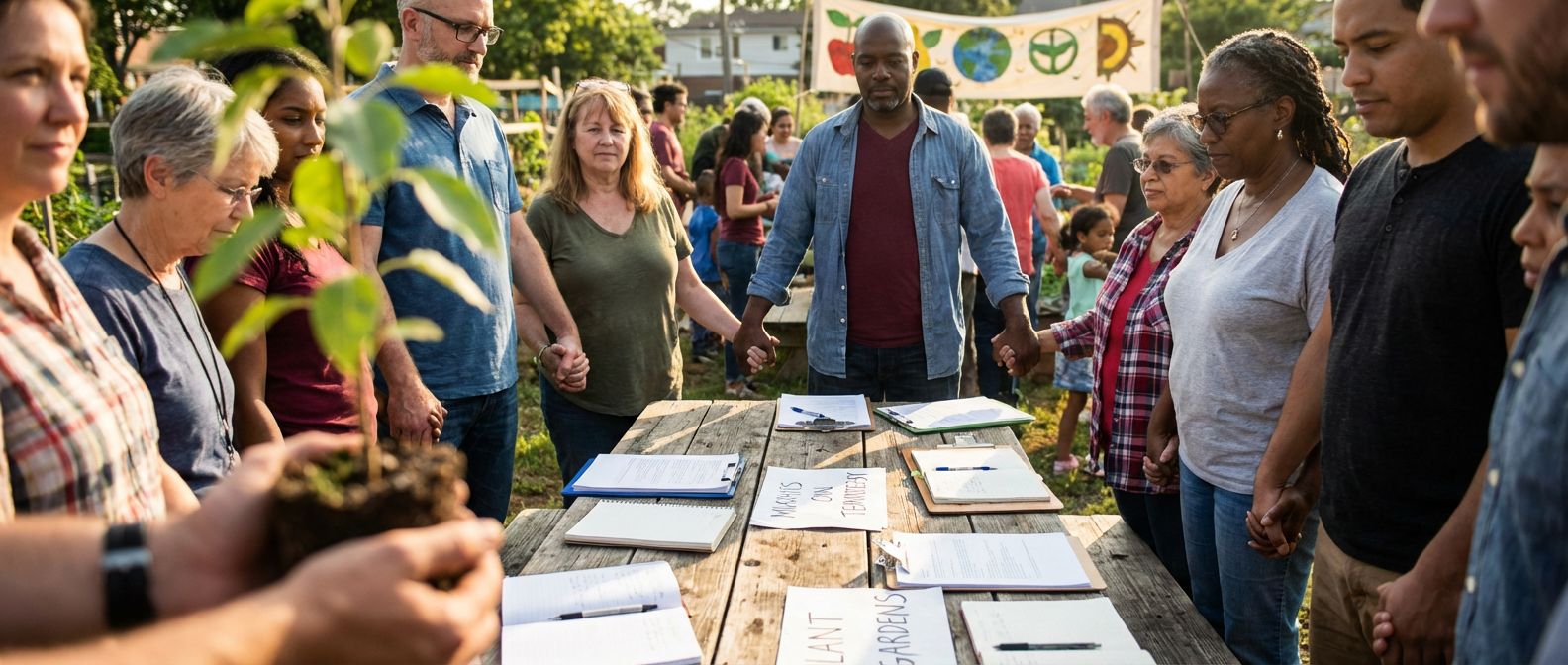
Building Power Block by Block: A Field Guide to Grassroots Organizing That Actually Works

This approach requires real patience and accepting that your assumptions about community priorities might be completely wrong. When our neighborhood group started organizing around pedestrian safety, we thought everyone would be fired up about the dangerous intersection by the elementary school. Wrong. Most parents were more worried about the lack of after-school programs that meant kids were walking home alone in the first place. That insight completely changed our strategy and made our eventual campaign much stronger.

The resource gap here is real. Door-to-door conversations eat up enormous amounts of time, and many of us are juggling work, family, and other commitments. Start small. Pick one block, or even just the houses on your side of the street. The goal isn’t comprehensive data collection, it’s building relationships and understanding what people actually worry about in your community.

Illustration for Building Power Block by Block: A Field Guide to Grassroots Organizing That Actually Works

Map Your Assets Before You Map Your Problems

Every community has more resources than it realizes, but we’re trained to focus on what’s missing instead of what’s already there. Before launching any campaign, spend time figuring out the existing networks, skills, and infrastructure you can build on. This includes obvious assets like community centers and established nonprofits, but also the informal networks that really make neighborhoods work.

The woman who organizes the annual block party probably has contact information for half the street and killer event planning skills. The retired teacher who volunteers at the food bank understands how local government funding works. The teenager who started a mutual aid network during the pandemic knows how to get people moving quickly through social media. These aren’t just potential volunteers. They’re already organizers with their own spheres of influence and expertise.

Document these connections systematically. Create a simple spreadsheet or use a tool like Airtable to track names and contact information, but also skills, networks, and interests. This becomes your organizing infrastructure, and it’s far more valuable than any petition or social media following. When you need someone to research zoning regulations or design a flyer or coordinate childcare for a meeting, you’ll know exactly who to call.

Master the Art of the Small Ask

The biggest mistake new organizers make is asking for too much too soon. You might be ready to chain yourself to a bulldozer, but the person you just met at the farmer’s market probably isn’t. Good organizing requires a careful ladder of engagement that lets people build confidence and commitment slowly.

Start with asks that take five minutes or less. Sign a petition, share a social media post, attend a community meeting that’s already happening anyway. The goal isn’t just to accomplish those specific tasks, it’s to create a pattern of saying yes and following through. People who complete small commitments are much more likely to take on bigger ones later.

This principle applies to institutional targets too. Don’t demand that the city council completely overhaul the housing policy in your first public comment. Ask for a specific study, a public hearing, or a meeting with staff. These smaller victories build momentum and credibility while teaching you how the system actually works. You’ll need that knowledge when you’re ready for bigger battles.

Keep track of who responds to what kinds of asks. Some people will never speak at a public meeting but will happily make phone calls. Others love research but hate crowds. Building an effective organization means matching tasks to people’s comfort zones while gently pushing everyone to stretch just a little bit outside them.

Turn Meetings Into Movement Building

Most community meetings are terrible, which is why most people avoid them. They’re too long, dominated by a few voices, and end without clear next steps. But meetings are still necessary for organizing work, so learning to run good ones is a skill that will set your group apart from every other well-intentioned effort that died after a few poorly planned gatherings.

Start and end on time, every single time. This shows respect for people’s schedules and builds trust that your organization can handle bigger challenges. Create a clear agenda with specific time limits for each item, and stick to it. If someone raises an important issue that’s not on the agenda, acknowledge it and suggest a specific time to address it rather than letting it derail the current discussion.

Build in multiple ways for people to participate. Not everyone is comfortable speaking in large groups, so use small group discussions, written input, and other formats that give quieter voices a chance to contribute. Always end meetings with concrete next steps and clear assignments. People should leave knowing exactly what they’re going to do before the next gathering and when they’ll report back on their progress.

The most important meeting skill is learning to guide rather than dominate. Your job as an organizer is to help other people develop their own leadership skills, not to be the star of every gathering. This means asking good questions, summarizing what you’ve heard, and creating space for others to solve problems rather than jumping in with your own solutions.

Building for the Long Haul

Sustainable organizing requires thinking beyond individual campaigns toward building lasting power and infrastructure. This means celebrating small victories while keeping your eyes on bigger systemic changes. It means developing new leaders continuously so your organization doesn’t collapse if key people move away or burn out. Most importantly, it means staying connected to the daily concerns that brought people into the work in the first place.

The hardest part of long-term organizing is maintaining momentum between campaigns. People join movements during crises, but they stay involved when they feel connected to something larger than any single issue. Create opportunities for social connection alongside the political work. Organize volunteer days that actually improve the community while building relationships. Host skill-sharing workshops where people can teach each other practical abilities. Plan celebrations that acknowledge both individual contributions and collective progress.

Don’t try to do everything yourself or even within your own organization. The most effective grassroots groups understand that their job is often to identify problems and pressure for solutions rather than implementing every program themselves. Build relationships with other organizations, elected officials who share your values, and even sympathetic staff within the systems you’re trying to change. These connections become crucial when you need allies for bigger fights.

Real organizing is messy, slow, and full of setbacks that teach you more than the victories do. But it’s also the most reliable way to create lasting change in communities that traditional institutions have ignored or failed. The work starts with one conversation, one relationship, one small victory that shows people their voices matter and change is possible. If any of this resonates with your own experiences or what you’re trying to do, I’d love to hear about the organizing happening in your community or the challenges you’re wrestling with in your own neighborhood work.
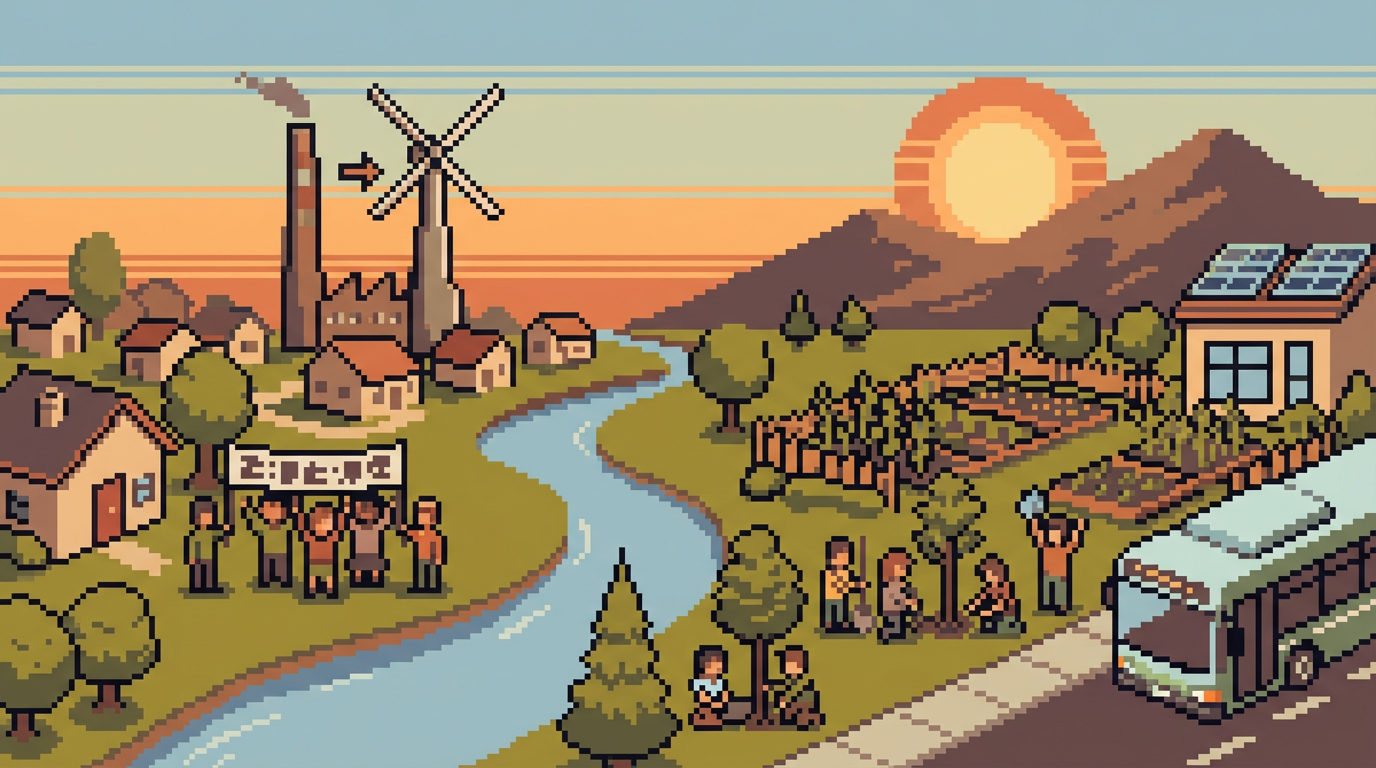
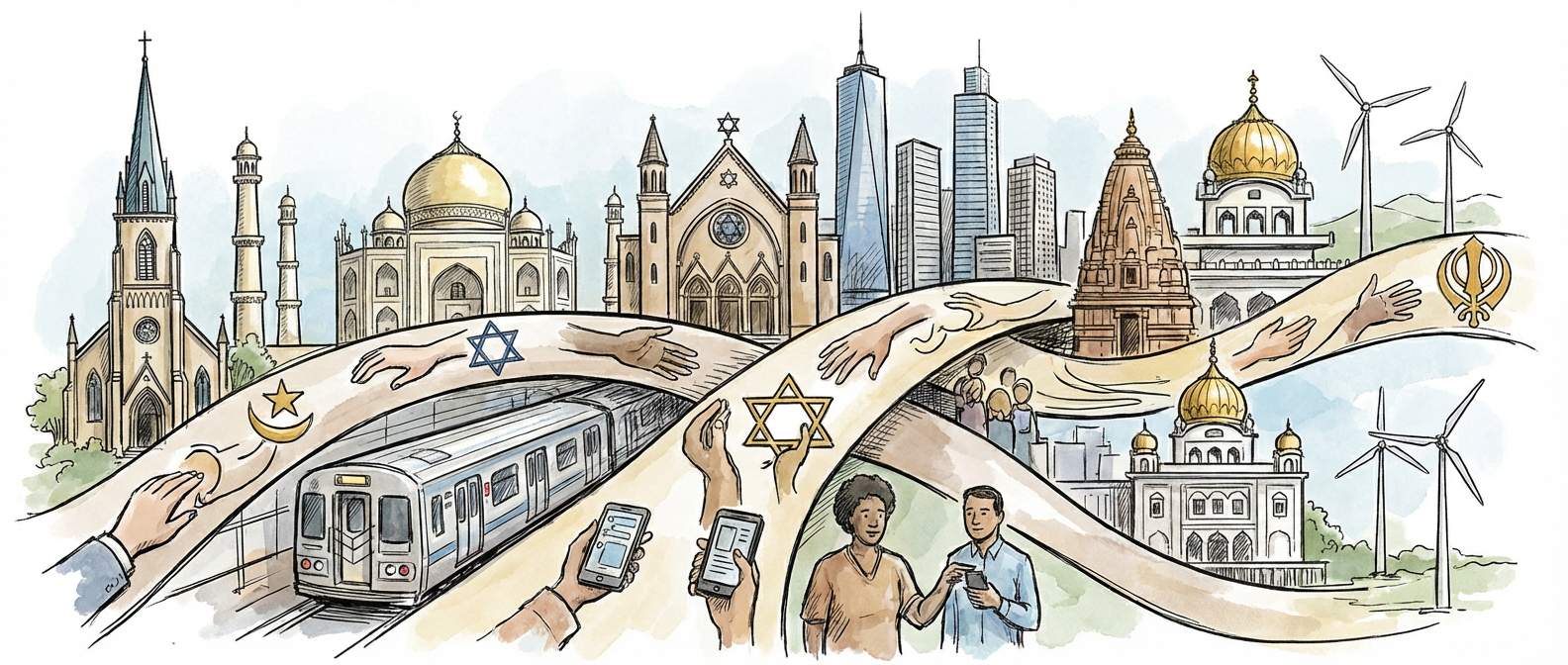
The Corner Where Two Streets Meet: How Maria Santos Turned a Food Desert Into Community Power

The Tuesday That Changed Everything

Maria Santos was running late for the city council meeting on that Tuesday in March, juggling her work bag and a folder of printed emails from neighbors while trying not to trip on the broken sidewalk outside City Hall. She had never spoken at one of these meetings before, but the proposed rezoning for the empty lot at Maple and Third had pushed her past the point of silent frustration. That lot, sitting vacant for eight years, was everything wrong with how environmental decisions get made in her neighborhood without the people who live there.

The Corner Where Two Streets Meet: How Maria Santos Turned a Food Desert Into Community Power

What happened next shows something powerful about how environmental justice actually works at the street level. Sure, big policies and lawsuits matter. But real change often starts with neighbors like Maria who decide that waiting for someone else to fix things is no longer an option. The story of that corner lot, and what it became over the following eighteen months, is a blueprint for how communities can take back power over their own environmental health.

When the System Works Against You

The Riverside neighborhood where Maria lives sits in what researchers call a “cumulative impact zone.” Within a half-mile radius, residents deal with a bus depot, a concrete plant, two gas stations, and a stretch of highway that carries 45,000 vehicles daily. The nearest full-service grocery store closed five years ago. The closest park requires crossing four lanes of traffic and a freight rail line. These aren’t coincidences.

City planning documents from the 1960s, which I got through a public records request, show deliberate decisions to dump industrial uses in neighborhoods where median household incomes fell below the city average. Environmental lawyer David Chen, who has worked on similar cases across the region, puts it bluntly: “When you map pollution sources against demographics, the pattern is unmistakable. These communities bear a disproportionate burden while having the least political power to fight back.”

Maria understood this long before she learned the term “environmental justice.” She had watched her daughter develop asthma. She had seen elderly neighbors struggle to access fresh food. She knew that her ZIP code had lower life expectancy than neighborhoods just ten minutes away. What she didn’t know, until she started digging into city records, was how many opportunities for positive change had been quietly killed over the years.

The Power of Showing Up

That March evening, Maria stood at the podium for her three minutes and did something remarkable: she connected the dots. She talked about Mrs. Patterson, who takes two buses to buy groceries because the corner market only sells processed food and lottery tickets. She mentioned the kids who play in the alley behind the apartments because there’s nowhere else to go. She described how the empty lot had become a dumping ground that attracted rats and made the whole block feel forgotten.

Then she proposed something specific: convert the lot into a community garden and food distribution hub. She had done her homework. The lot was city-owned. Federal grants existed for exactly this type of project. Three nonprofit organizations had expressed interest in partnering. She had even secured preliminary commitments from local restaurants to donate surplus produce.

Council member Janet Torres, who represents the district, later told me she had never heard such a well-researched proposal from a first-time speaker. “Most of the time, people come to complain about problems without offering solutions,” Torres said. “Maria came with a vision and a plan. That changes everything about how we can respond.”

Building Power Through Relationships

The real work began after that council meeting. Maria discovered that changing how decisions get made requires building what organizers call “people power.” She started by mapping her neighborhood differently. Instead of seeing isolated households, she began identifying natural leaders and connectors. Mrs. Chen, who had lived on Maple Street for thirty years and knew everyone’s business. Pastor Williams, whose congregation included families from six different apartment complexes. Teresa, the high school teacher who coached cross-country and understood how environmental factors affected her students’ health and academic performance.

They held the first planning meeting in Maria’s living room on a Saturday morning. Seven people came. They held the second meeting at the community center. Fifteen people showed up. By the fourth meeting, they had to move to the church basement to accommodate thirty-five neighbors. What started as complaints about a vacant lot had become a broader conversation about community health, economic development, and environmental equity.

The breakthrough came when they realized they didn’t have to choose between quick fixes and long-term change. They could pursue both at once. While working on the garden proposal, they also started attending planning commission meetings, joining the transportation advisory committee, and building relationships with environmental groups from across the city. They learned to read budget documents, understand zoning codes, and navigate the bureaucracy that shapes their daily lives.

Growing Solutions From the Ground Up

Eighteen months later, the Maple Street Community Garden produces 4,000 pounds of fresh vegetables annually. The weekly farmers market brings residents from neighboring blocks together every Saturday morning. The tool library and composting program have reduced waste and created informal job training opportunities for teenagers. The covered pavilion hosts everything from citizenship classes to birthday parties, turning a forgotten corner into real community space.

More importantly, the organizing skills developed through this project have spread outward. The same core group successfully fought for better bus service, pushed for air quality monitoring near the concrete plant, and secured funding for sidewalk repairs throughout the neighborhood. They have become a political force that elected officials can’t ignore.

Environmental justice lawyer Sarah Kim, who provided legal help during the garden development, says this model can be replicated anywhere. “The key is starting with what people care about most in their daily lives, then connecting those immediate concerns to larger systems of power,” she explains. “Maria and her neighbors proved that you don’t need advanced degrees or huge budgets to create real change.”

The Maple Street garden will hold its harvest celebration next Saturday at 10 AM, and everyone is invited to see what grassroots environmental justice looks like in practice. More than that, Maria and her fellow organizers are hosting a workshop afterward on how to research city budgets and identify opportunities for community-driven environmental improvements. They have learned that teaching others to organize multiplies their power. If you’ve been wondering how to make a difference in your own neighborhood, this might be the perfect place to start asking questions and finding your own answers.

Finding Sacred Ground: How Faith Communities Navigate a Changing Landscape

The Shifting Religious Landscape

Walk into St. Mark’s Lutheran on a Sunday morning in downtown Portland, and you’ll find something unexpected. Between the traditional hymns and communion, Pastor Sarah Chen leads discussions on climate action and affordable housing. The congregation spans generations, from longtime members who’ve weathered decades of change to young families drawn by the church’s progressive stance on social justice. This scene captures a bigger transformation happening across American religious life, where faith communities are redefining their role in an increasingly secular society.

The numbers tell a striking story. According to Pew Research religion data, more than three in ten American adults now identify as religiously unaffiliated, a dramatic increase from just sixteen percent in 2007. But this shift doesn’t mean faith has simply vanished from public life. Instead, religious communities are adapting, innovating, and in many cases, finding new ways to help their neighbors while staying true to their core beliefs.

The changes run deeper than attendance figures suggest. Traditional conservative denominations are losing members fast, while progressive religious spaces are growing, attracting seekers who want both spiritual depth and social engagement. Meanwhile, the fastest-growing religious identification isn’t any particular denomination but rather “spiritual but not religious,” a category that captures Americans’ continued hunger for meaning and connection outside traditional institutional frameworks.

The Irreplaceable Social Infrastructure

Maria Gonzalez discovered the true value of faith communities during her family’s immigration process five years ago. When bureaucratic delays left her family in limbo, it wasn’t a government agency that provided consistent support, but rather the interfaith coalition at Riverside Community Church. Volunteers helped with translation services, legal referrals, and practical needs like school enrollment for her children. “They saw us as people, not just a case number,” she says, sitting in the church’s community room where ESL classes meet twice weekly.

This kind of social infrastructure is tough to replicate through secular alternatives. Faith communities have unique advantages: deep neighborhood roots, volunteer networks motivated by shared values, and facilities available for community use. They host food banks, provide childcare, create spaces for grief support, and offer programming that spans from addiction recovery to senior services. The sacred and the practical mix naturally in these settings, creating safety nets that government programs and nonprofit organizations often struggle to match.

Religious congregations also provide what sociologists call “weak ties,” those casual but meaningful connections that help communities thrive. The brief conversations after services, the coordination of meal trains for new parents, the informal mentoring that happens between generations, all contribute to social cohesion. These relationships become particularly important in an era when many Americans report feeling isolated and disconnected from their neighbors.

Innovation Born from Necessity

The pandemic forced rapid innovation that many faith communities have maintained even as restrictions lifted. Rabbi David Stern at Temple Beth Shalom initially worried that virtual services would feel hollow and disconnected. Instead, he discovered that online worship opened doors for participation that physical barriers had previously closed. Elderly congregants who could no longer drive to services joined from their homes. Young adults who had moved away for work maintained connections with their childhood faith community. Parents with small children could participate without worrying about disruptions.

Current data shows that roughly forty percent of pandemic-era online church attendance has stuck around, creating hybrid models of religious participation. These digital communities don’t replace in-person worship but rather expand it, allowing for more flexible and inclusive forms of engagement. Some congregations now offer online small groups, virtual pastoral care, and digital study sessions that complement their physical gatherings.

Technology has also enabled new forms of interfaith cooperation. Clergy from different traditions can collaborate more easily on community projects, sharing resources and coordinating responses to local needs. Religion News Service regularly reports on innovative partnerships where faith communities use both digital tools and traditional organizing methods to tackle complex social challenges.

Faith Communities Leading Social Change

On any given week, the basement of First Presbyterian hosts three different support groups, while the fellowship hall is headquarters for the city’s affordable housing campaign. This dual purpose shows how faith communities increasingly position themselves at the intersection of spiritual care and social action. Interfaith coalitions have become powerful advocates on issues from immigration reform to anti-poverty initiatives, bringing moral authority to policy debates while providing direct services to those in need.

These coalitions succeed partly because they go beyond traditional political categories. Conservative and progressive congregations might disagree on theological questions but find common ground in feeding the hungry or supporting refugees. Faith communities have credibility with different groups, allowing them to build bridges across political divides that secular organizations sometimes cannot.

The focus on social justice also attracts younger members who might otherwise stay disconnected from organized religion. They find in progressive faith communities a way to engage with spiritual questions while working for real change in their neighborhoods. This combination of contemplation and action appeals to people seeking both personal meaning and community impact.

The Future of Faith in Community Life

The evolution of religious communities mirrors broader changes in how Americans approach belonging and meaning-making. Even as formal religious affiliation declines, the human need for connection, purpose, and transcendence remains constant. Faith communities that thrive in this environment tend to be those that maintain strong spiritual foundations while actively engaging with contemporary challenges.

Success often depends on embracing both tradition and adaptation. The most vital congregations preserve the rituals, teachings, and community bonds that have sustained them across generations while remaining open to new voices and changing needs. They act as bridges between past wisdom and present circumstances, offering stability in an era of rapid change while staying flexible enough to help evolving communities.

These communities remind us that the sacred and the civic need not be separate spheres. In soup kitchens and sanctuary cities, in grief counseling and climate activism, faith communities show how spiritual values can translate into practical compassion. Their continued presence in American community life suggests that even in a secular age, many people still find meaning in gathering together to worship, help others, and seek something greater than themselves.

If you’re curious about the role of faith communities in your own neighborhood, consider attending a community forum or volunteering with a local service project. You might discover unexpected connections and partnerships that reveal how deeply these institutions remain woven into the fabric of American civic life.

Finding Your Place in Faith Communities Today: A Guide for Modern Seekers

The Shifting Landscape of American Faith

Religion in America has changed drastically over the past two decades. Where once nearly nine in ten Americans identified with a religious tradition, today more than three in ten adults consider themselves religiously unaffiliated — that’s double the number since 2007. This doesn’t necessarily mean people are rejecting spirituality wholesale. Instead, many want authentic, meaningful expressions of faith that actually connect with how they live today.

The fastest-growing religious identification in America is now “spiritual but not religious.” This category includes millions of people who still feel a sense of the sacred but have stepped away from traditional institutional structures. It tells us something important about our collective spiritual hunger and the need for communities that can bridge ancient wisdom with modern life. If you’re seeking genuine connection in our increasingly fragmented world, you need to understand this shift.

Even as traditional religious affiliation declines, humans still need community, meaning, and transcendence. Pew Research religion data shows that faith communities continue to do things that secular alternatives struggle to replicate — from providing crisis support networks to creating intergenerational relationships that strengthen entire neighborhoods.

Where Progressive Faith Communities Are Thriving

While some denominations face declining membership, progressive religious spaces are growing rapidly by embracing inclusive values and social justice work. These communities offer something different: the depth of religious tradition combined with openness to evolving understanding of faith, sexuality, gender, and social responsibility. They create space for questioning and doubt while maintaining the communal practices that have sustained humans for thousands of years.

Progressive congregations often approach scripture as living documents that speak to contemporary concerns rather than rigid rulebooks. They welcome LGBTQ+ members, ordain women, and engage seriously with science, environmental stewardship, and racial justice. This theological flexibility attracts both lifelong believers seeking more inclusive expressions of their faith and newcomers who might otherwise dismiss organized religion entirely.

These communities frequently emphasize practice over belief. They focus on meditation, service, and contemplative traditions that offer concrete tools for daily living. They create spaces where you can explore mystical experiences, engage in interfaith dialogue, and participate in social action rooted in spiritual values. For many seekers, these progressive spaces provide ancient wisdom traditions with contemporary relevance.

Digital Faith and Hybrid Community Models

The pandemic forced innovations in religious community that are reshaping how we understand spiritual connection. Online worship services, virtual prayer groups, and digital religious education emerged from necessity but have proven their lasting value. Hybrid congregations that blend in-person and online participation are keeping about forty percent of their digital attendance even as physical gatherings resume.

This digital transformation has opened up access to spiritual resources in ways we’ve never seen before. People in rural areas can participate in urban progressive congregations. Those with mobility challenges can maintain consistent community connection. Spiritual seekers can explore traditions from around the world without geographic limits. Online platforms have also enabled entirely new types of religious communities that exist primarily in digital space while maintaining deep personal bonds.

The most successful digital faith communities combine live gatherings with ongoing connection opportunities. They might offer live-streamed services alongside discussion forums, virtual coffee hours, and online study groups. Some have developed sophisticated systems for pastoral care and mutual support that rival traditional models. These innovations suggest that the future of religious community will likely be hybrid, offering multiple ways to engage and connect.

Faith Communities as Social Infrastructure

Perhaps nowhere is the irreplaceable value of faith communities more evident than in their role as social infrastructure. These institutions provide networks of mutual aid, childcare cooperation, elder care, and crisis response that government services and secular nonprofits often cannot match in scope or responsiveness. They offer what sociologists call “social capital” — the relationships and trust networks that make communities resilient and functional.

Interfaith coalitions have become particularly powerful forces for social change, leading initiatives on affordable housing, immigration reform, and anti-poverty work. These partnerships show how religious communities can collaborate across theological differences to address shared concerns. They create broader coalitions than purely secular advocacy groups often achieve, bringing together diverse constituencies united by common values of compassion and justice.

Faith communities also provide unique intergenerational spaces where children, parents, and elders interact regularly in purposeful ways. They offer rites of passage, grief support, celebration of life transitions, and ongoing spiritual formation that helps people navigate major life changes. The weekly rhythm of gathering, the seasonal cycles of religious calendar, and the shared practices of worship create stability and meaning that many find necessary for psychological well-being.

Finding Your Spiritual Home

For those seeking authentic spiritual community, today’s religious landscape offers more options than ever before. Start by clarifying your own values and spiritual needs rather than trying to fit into predetermined categories. Consider whether you seek primarily worship, study, service opportunities, social connection, or contemplative practice. Different communities excel in different areas.

Visit multiple communities before making commitments. Attend not just worship services but also social events, educational programs, and service projects to get a full sense of each community’s culture. Pay attention to how newcomers are welcomed, how conflicts are handled, and how the community engages with broader social issues. Notice whether the leadership reflects the diversity they claim to welcome and whether the theology preached aligns with the values lived.

Resources like Religion News Service can help you stay informed about trends and innovations in religious communities, while local interfaith councils often maintain directories of congregations and their characteristics. Remember that finding the right spiritual community may take time, and your needs may evolve as you grow and change.

Whether you are returning to faith after a period away, exploring spirituality for the first time, or seeking a more progressive expression of lifelong beliefs, today’s religious landscape offers real opportunities for authentic spiritual connection. The key is approaching your search with both openness and discernment. Meaningful community requires investment from its members while also nourishing the deepest human needs for purpose, connection, and transcendence.

The Resource Map: Religious and faith communities in a secular age

Here is the thing I keep coming back to on this. The topic of religious and faith communities in a secular age rewards more careful attention than the typical coverage provides, and the reason is not complicated once you know where to look.

What I find most interesting, and I think you will too, viewed through the lens of service journalism, is faith communities providing social infrastructure irreplaceable by secular alternatives. The practical read of the situation is also the more accurate one once you examine what the evidence actually shows.

The Resource Map: Religious and faith communities in a secular age

The Journalism: Setting the Terms

The religiously unaffiliated now make up over 30 percent of US adults, up from 16 percent in 2007. This isn’t just a data point in the story of religious and faith communities in a secular age, it’s the structural condition that makes everything else in this analysis make sense. Context like this doesn’t age quickly. The conditions that produced it have been building for years, and this convergence makes the current moment different from previous moments that looked similar from a distance.

Faith communities are providing social infrastructure that secular alternatives can’t replace, while progressive religious spaces grow as conservative denominations shrink. When you look at both together, a pattern emerges that Religion News Service has been covering from the inside. These conditions are more durable than they first appear, and the implications extend further than the immediate headline suggests.

To understand why this matters, it helps to look at what was true three years ago versus what is true now. The difference isn’t just about numbers. It’s qualitative. The participants, the infrastructure, and the incentive structures have all shifted in ways that build on each other rather than cancel out. That compounding effect is the most important thing to track.

What makes this moment worth examining carefully isn’t novelty but confirmation. The underlying dynamics have been visible for some time. What’s new is that they’ve reached a threshold where ignoring them requires active effort rather than simple inattention. That threshold crossing is the event, not the underlying movement that produced it.

Online church communities formed during COVID are retaining 40 percent of attendance. This is part of that same picture. These elements don’t exist separately. They’re reinforcing conditions in the same structural shift.

Illustration for The Resource Map: Religious and faith communities in a secular age

The Resource Map: The Analysis

Online church communities retaining 40 percent of their COVID attendance is where the analysis gets more specific. The surface reading is accessible and not wrong, but it misses the mechanism. And the mechanism is where the practical insight lives. What I find most interesting, and I think you will too, is that interfaith coalitions are now leading on housing, immigration, and anti-poverty work. Understanding this changes what you do with the information.

Consider what these interfaith coalitions represent in context. This isn’t a correlation that happened to appear. It’s a downstream consequence of structural factors that have been building. Previous readings of similar situations failed because they treated the symptom as the cause. The structural account is less satisfying as a headline but more useful as an analytical tool.

The comparison to prior cycles is instructive precisely because of where it breaks down. Similar-looking conditions resolved differently in previous iterations because the foundation was different. The “spiritual but not religious” category is now the largest growing self-identification, and that represents a foundation change. The kind that alters how elastic the system is, not just its current state. Recognizing that distinction separates real analysis from pattern-matching.

The skeptical counterargument deserves honest engagement. Prior moments with similar surface characteristics didn’t produce the outcomes that seemed logical at the time. That history is real. What’s different now is that “spiritual but not religious” growth, which isn’t a minor variable. It’s the infrastructure condition that previous cycles lacked. Infrastructure changes tend to stick around in ways that sentiment-driven changes don’t. Pew Research religion data is one source tracking this dimension with the rigor it requires.

There’s also a distributional question that often goes unaddressed in coverage of religious and faith communities in a secular age. Who captures the value created by these shifts, and who absorbs the disruption costs? The big picture can look positive while the distribution is uneven in ways that matter enormously to specific participants. Keeping that distributional lens in view is part of reading the situation clearly rather than just optimistically.

Implications: What This Means If You Care About Local services

The implications of religious and faith communities in a secular age extend beyond the immediate context. The religiously unaffiliated now making up over 30 percent of US adults, up from 16 percent in 2007, combined with the structural conditions described above creates a situation where adjacent fields, decisions, and communities are affected in ways that aren’t always visible from inside the primary story. The second-order effects are frequently more important than the first-order ones, and they’re where careful attention pays the highest returns.

The frame that matters here, and this is where this perspective departs from mainstream coverage, is that progressive religious spaces growing as conservative denominations shrink is a leading indicator rather than a lagging one. The people positioned to respond to what this signals, rather than to what it confirms, are the ones who will be less surprised by what follows.

The practical response depends heavily on your position relative to the dynamics at play. For those closest to the core of religious and faith communities in a secular age, the implications are immediate and operational. For those at greater distance, the implications are strategic. It’s a matter of understanding which adjacent pressures are building and which assumed stabilities are more fragile than they appear.

The practical question isn’t whether to engage with these dynamics but how. The answer depends on context. On what role you occupy relative to religious and faith communities in a secular age and what your actual decision horizon is. But the first step is the same regardless: accurate understanding of what’s actually happening rather than what the most available narrative says is happening.

A few concrete observations are worth separating out from the broader analysis. First, faith communities providing social infrastructure that secular alternatives can’t replace isn’t a temporary condition. It’s a new baseline. Second, interfaith coalitions leading on housing, immigration, and anti-poverty work suggests the adjustment period isn’t over. Third, and most important: the organizations and individuals who are treating the current moment as a new steady state rather than a transition are making a categorization error that will be costly to unwind later.

The Case Against: What the Critics Get Right

Intellectual honesty requires acknowledging the strongest counterarguments, not just the weakest ones. The case against the optimistic reading of religious and faith communities in a secular age isn’t trivial. There are structural vulnerabilities in the current picture that deserve direct engagement rather than dismissal.

The most serious objection is about sustainability. Progressive religious spaces growing as conservative denominations shrink can be read not as a foundation but as a ceiling. A point beyond which growth becomes self-limiting because of the very dynamics that produced it. If the current state has already incorporated most of the available supply of early-adopting participants, the remaining growth curve may be structurally shallower than the recent trajectory implies.

There’s also the policy and regulatory dimension. The religiously unaffiliated now making up over 30 percent of US adults describes a condition in a relatively permissive environment. Regulatory responses to the scale implied by these numbers aren’t inevitable, but they’re not implausible either. The organizations that are planning as though the current regulatory environment is permanent are making an assumption that the history of fast-growing sectors doesn’t support.

The rebuttal to these concerns isn’t that they’re wrong. It’s that they’re already partially priced into the current state of the field. The “spiritual but not religious” category being the largest growing self-identification reflects an environment where participants are already adapting to constraints rather than operating in an unconstrained space. The adjustment capacity of the ecosystem is higher than a purely top-down view of the risks suggests.

Looking Forward

The trajectory here is clearer than the pace. Making predictions about when specific thresholds will be crossed is genuinely difficult, and anyone claiming precision about timelines should be treated with skepticism. But the direction, toward the religiously unaffiliated continuing to grow and continued development of the conditions described above, is supported by the evidence in a way that doesn’t depend on a single variable going right.

The “spiritual but not religious” category is the variable to watch as the leading indicator. Historical patterns suggest it moves first, with broader metrics following with some lag. This doesn’t make the outcome certain, but it makes it readable. And readability is what you need for good decisions.

Three questions are worth holding as the story develops. First: are the structural conditions that enabled the current state durable, or are they cyclical? Second: who is positioned to benefit from the next phase, and does that differ materially from who benefited in the current phase? Third: what would a clean falsification of the optimistic thesis look like, and is there any evidence of that signal emerging? These questions don’t need answers today. But having asked them changes what you notice in the months ahead.

That’s my read. I want to hear yours. The current moment in religious and faith communities in a secular age is one where the people who have built an accurate model of the underlying dynamics are better positioned than the people who are relying on the surface story. Building that model isn’t a quick task, but it is a doable one. And this analysis is intended as one input into it.

What Service journalism Reveals About Anti-hate activism and counter-extremism work

Here is the thing I keep coming back to on this. The topic of anti-hate activism and counter-extremism work rewards more careful attention than the typical coverage provides, and the reason is not complicated once you know where to look.

What I find most interesting, and I think you will too, when viewed through the lens of service journalism, is Southern Poverty Law Center tracking over 1,200 active hate groups in US. The practical read of the situation is also the more accurate one once you examine what the evidence actually shows.

The Journalism: Setting the Terms

Hate crime reporting at 30-year highs across US and Western Europe isn’t just a data point in the story of anti-hate activism and counter-extremism work. It’s the structural condition that makes everything else in this analysis legible. Context like this doesn’t age quickly. The conditions that produced it have been building for years, and the convergence is what makes the current moment distinct from previous moments that looked similar from a distance.

Southern Poverty Law Center tracking over 1,200 active hate groups in US and online deradicalisation programmes showing mixed but improving results. When you look at both together, a pattern emerges that Netz gegen Nazis anti-fascism has been covering from the inside: the conditions are more durable than they first appear, and the implications extend further than the immediate headline suggests.

To understand why this matters, it helps to look at what was true three years ago versus what is true now. The delta isn’t simply quantitative, it’s qualitative. The participants, the infrastructure, and the incentive structures have all shifted in ways that compound rather than cancel out. That compounding is the most important element to track.

What makes this moment worth examining carefully isn’t the novelty but the confirmation. The underlying dynamics have been visible for some time. What’s new is that they’ve reached a threshold where ignoring them requires active effort rather than simple inattention. That threshold crossing is the event, not the underlying movement that produced it.

And community-based intervention more effective than law enforcement alone in studies is part of that same picture. These elements don’t exist in separate silos. They’re reinforcing conditions in the same structural shift.

The Resource Map: The Analysis

Community-based intervention more effective than law enforcement alone in studies is where the analysis gets more specific. The surface reading is accessible and not wrong, but it misses the mechanism, and the mechanism is where the practical insight lives. What I find most interesting, and I think you will too, is the mechanism behind Muslim Jewish Christian coalitions finding common ground against far-right, and understanding it changes what you do with the information.

Consider what Muslim Jewish Christian coalitions finding common ground against far-right represents in context. This isn’t a correlation that happened to appear. It’s a downstream consequence of structural factors that have been compounding. Previous readings of similar situations failed because they treated the symptom as the cause. The structural account is less satisfying as a headline but more useful as an analytical tool.

The comparison to prior cycles is instructive precisely because of where it breaks down. Superficially similar conditions resolved differently in previous iterations because the substrate was different. What social media platforms under pressure to improve algorithmic amplification controls represents is a substrate change, the kind that alters the elasticity of the system rather than just its current value. Recognising that distinction is what separates analysis from pattern-matching.

The skeptical counterargument deserves honest engagement: prior moments with similar surface characteristics didn’t produce the outcomes that seemed logical at the time. That history is real. What’s different now is social media platforms under pressure to improve algorithmic amplification controls, which isn’t a minor variable. It’s the infrastructure condition that previous cycles lacked. Infrastructure changes tend to be persistent in ways that sentiment-driven changes are not. SPLC hate group monitoring is one source tracking this dimension with the rigour it requires.

There’s also a distributional question that often goes unaddressed in coverage of anti-hate activism and counter-extremism work: who captures the value created by these shifts, and who absorbs the disruption costs? The aggregate picture can be positive while the distribution is uneven in ways that matter enormously to specific participants. Keeping that distributional lens in view is part of reading the situation clearly rather than simply optimistically.

Implications: What This Means If You Care About Local services

The implications of anti-hate activism and counter-extremism work extend beyond the immediate context. Hate crime reporting at 30-year highs across US and Western Europe combined with the structural conditions described above creates a situation where adjacent fields, decisions, and communities are affected in ways that aren’t always visible from inside the primary story. The second-order effects are frequently more important than the first-order ones, and they’re where careful attention pays the highest returns.

The frame that matters here, and this is where this perspective departs from the mainstream coverage, is that online deradicalisation programmes showing mixed but improving results is a leading indicator rather than a lagging one. The people positioned to respond to what this signals, rather than to what it confirms, are the ones who will be less surprised by what follows.

The practical response depends heavily on your position relative to the dynamics at play. For those closest to the core of anti-hate activism and counter-extremism work, the implications are immediate and operational. For those at greater distance, the implications are strategic, a matter of understanding which adjacent pressures are building and which assumed stabilities are more fragile than they appear.

The practical question isn’t whether to engage with these dynamics but how. The answer depends on context, on what role you occupy relative to anti-hate activism and counter-extremism work and what your actual decision horizon is. But the first step is the same regardless: accurate understanding of what’s actually happening rather than what the most available narrative says is happening.

A few concrete observations are worth separating out from the broader analysis. First: Southern Poverty Law Center tracking over 1,200 active hate groups in US isn’t a temporary condition, it’s a new baseline. Second: Muslim Jewish Christian coalitions finding common ground against far-right suggests that the adjustment period isn’t over. Third, and most important: the organisations and individuals who are treating the current moment as a new steady state rather than a transition are making a categorisation error that will be costly to unwind later.

The Case Against: What the Critics Get Right

Intellectual honesty requires acknowledging the strongest counterarguments, not just the weakest ones. The case against the optimistic reading of anti-hate activism and counter-extremism work isn’t trivial. There are structural vulnerabilities in the current picture that deserve direct engagement rather than dismissal.

The most serious objection is the one about sustainability. Online deradicalisation programmes showing mixed but improving results can be read not as a foundation but as a ceiling, a point beyond which growth becomes self-limiting because of the very dynamics that produced it. If the current state has already incorporated most of the available supply of early-adopting participants, the remaining growth curve may be structurally shallower than the recent trajectory implies.

There’s also the policy and regulatory dimension. Hate crime reporting at 30-year highs across US and Western Europe describes a condition in a relatively permissive environment. Regulatory responses to the scale implied by these numbers aren’t inevitable, but they’re not implausible either. The organisations that are planning as though the current regulatory environment is permanent are making an assumption that the history of fast-growing sectors doesn’t support.

The rebuttal to these concerns isn’t that they’re wrong, it’s that they’re already partially priced into the current state of the field. Social media platforms under pressure to improve algorithmic amplification controls reflects an environment where participants are already adapting to constraints rather than operating in an unconstrained space. The adjustment capacity of the ecosystem is higher than a purely top-down view of the risks suggests.

Looking Forward

The trajectory here is clearer than the pace. Making predictions about when specific thresholds will be crossed is genuinely difficult, and anyone claiming precision about timelines should be treated with scepticism. But the direction, toward hate crime reporting at 30-year highs across US and continued development of the conditions described above, is supported by the evidence in a way that isn’t contingent on a single variable going right.

Social media platforms under pressure to improve algorithmic amplification controls is the variable to watch as the leading indicator. Historical patterns suggest it moves first, with broader metrics following with some lag. This doesn’t make the outcome certain, but it makes it legible, and legibility is the precondition for good decisions.

Three questions are worth holding as the story develops. First: are the structural conditions that enabled the current state durable, or are they cyclical? Second: who is positioned to benefit from the next phase, and does that differ materially from who benefited in the current phase? Third: what would a clean falsification of the optimistic thesis look like, and is there any evidence of that signal emerging? These questions don’t need answers today, but having asked them changes what you notice in the months ahead.

That’s my read. I want to hear yours. The current moment in anti-hate activism and counter-extremism work is one where the people who have built an accurate model of the underlying dynamics are better positioned than the people who are relying on the surface story. Building that model isn’t a quick task, but it’s a tractable one, and this analysis is intended as one input into it.

What’s missing from this list, or what has changed? Keep it updated in the comments.

The Real Picture on Religious and faith communities in a secular age

Here is the thing I keep coming back to on this. The topic of religious and faith communities in a secular age rewards more careful attention than the typical coverage provides, and the reason is not complicated once you know where to look.

What I find most interesting, and I think you will too, is faith communities providing social infrastructure irreplaceable by secular alternatives. When you look at it through the lens of community memory and loss, the specific read of the situation is also the more accurate one once you examine what the evidence actually shows.

The Loss: Setting the Terms

The religiously unaffiliated now make up over 30 percent of US adults, up from 16 percent in 2007. This isn’t just a data point in the story of religious and faith communities in a secular age, it’s the structural condition that makes everything else in this analysis make sense. Context like this doesn’t age quickly. The conditions that produced it have been building for years, and the convergence is what makes the current moment distinct from previous moments that looked similar from a distance.

Faith communities are providing social infrastructure irreplaceable by secular alternatives while progressive religious spaces grow as conservative denominations shrink. When you look at both together, a pattern emerges that Religion News Service has been covering from the inside: the conditions are more durable than they first appear, and the implications extend further than the immediate headline suggests.

To understand why this matters, it helps to look at what was true three years ago versus what is true now. The difference isn’t simply quantitative, it’s qualitative. The participants, the infrastructure, and the incentive structures have all shifted in ways that compound rather than cancel out. That compounding is the most important element to track.

What makes this moment worth examining carefully is not the novelty but the confirmation. The underlying dynamics have been visible for some time. What is new is that they have reached a threshold where ignoring them requires active effort rather than simple inattention. That threshold crossing is the event, not the underlying movement that produced it.

And online church communities formed during COVID retaining 40 percent of attendance is part of that same picture. These elements don’t exist in separate silos, they’re reinforcing conditions in the same structural shift.

The What-We-Lost: The Analysis

Online church communities formed during COVID retaining 40 percent of attendance is where the analysis gets more specific. The surface reading is accessible and not wrong, but it misses the mechanism, and the mechanism is where the practical insight lives. What I find most interesting, and I think you will too, is how interfaith coalitions are leading on housing, immigration, and anti-poverty work. Understanding this mechanism changes what you do with the information.

Consider what interfaith coalitions leading on housing, immigration, and anti-poverty work represents in context. It’s not a correlation that happened to appear, it’s a downstream consequence of structural factors that have been compounding. Previous readings of similar situations failed because they treated the symptom as the cause. The structural account is less satisfying as a headline but more useful as an analytical tool.

The comparison to prior cycles is instructive precisely because of where it breaks down. Superficially similar conditions resolved differently in previous iterations because the substrate was different. What the “spiritual but not religious” category being the largest growing self-identification represents is a substrate change, the kind that alters the elasticity of the system rather than just its current value. Recognizing that distinction is what separates analysis from pattern-matching.

The skeptical counterargument deserves honest engagement: prior moments with similar surface characteristics did not produce the outcomes that seemed logical at the time. That history is real. What is different now is the “spiritual but not religious” category being the largest growing self-identification, which is not a minor variable, it’s the infrastructure condition that previous cycles lacked. Infrastructure changes tend to be persistent in ways that sentiment-driven changes are not. Pew Research religion data is one source tracking this dimension with the rigor it requires.

There is also a distributional question that often goes unaddressed in coverage of religious and faith communities in a secular age: who captures the value created by these shifts, and who absorbs the disruption costs? The aggregate picture can be positive while the distribution is uneven in ways that matter enormously to specific participants. Keeping that distributional lens in view is part of reading the situation clearly rather than simply optimistically.

Implications: What This Means If You Care About Closed community spaces

The implications of religious and faith communities in a secular age extend beyond the immediate context. The religiously unaffiliated now making up over 30 percent of US adults, up from 16 percent in 2007, combined with the structural conditions described above creates a situation where adjacent fields, decisions, and communities are affected in ways that aren’t always visible from inside the primary story. The second-order effects are frequently more important than the first-order ones, and they’re where careful attention pays the highest returns.

The frame that matters here, and this is where this perspective departs from the mainstream coverage, is that progressive religious spaces growing as conservative denominations shrink is a leading indicator rather than a lagging one. The people positioned to respond to what this signals, rather than to what it confirms, are the ones who will be less surprised by what follows.

The practical response depends heavily on your position relative to the dynamics at play. For those closest to the core of religious and faith communities in a secular age, the implications are immediate and operational. For those at greater distance, the implications are strategic, a matter of understanding which adjacent pressures are building and which assumed stabilities are more fragile than they appear.

The practical question is not whether to engage with these dynamics but how. The answer depends on context, on what role you occupy relative to religious and faith communities in a secular age and what your actual decision horizon is. But the first step is the same regardless: accurate understanding of what is actually happening rather than what the most available narrative says is happening.

A few concrete observations are worth separating out from the broader analysis. First: faith communities providing social infrastructure irreplaceable by secular alternatives is not a temporary condition, it’s a new baseline. Second: interfaith coalitions leading on housing, immigration, and anti-poverty work suggests that the adjustment period is not over. Third, and most important: the organizations and individuals who are treating the current moment as a new steady state rather than a transition are making a categorization error that will be costly to unwind later.

The Case Against: What the Critics Get Right

Intellectual honesty requires acknowledging the strongest counterarguments, not just the weakest ones. The case against the optimistic reading of religious and faith communities in a secular age is not trivial. There are structural vulnerabilities in the current picture that deserve direct engagement rather than dismissal.

The most serious objection is the one about sustainability. Progressive religious spaces growing as conservative denominations shrink can be read not as a foundation but as a ceiling, a point beyond which growth becomes self-limiting because of the very dynamics that produced it. If the current state has already incorporated most of the available supply of early-adopting participants, the remaining growth curve may be structurally shallower than the recent trajectory implies.

There is also the policy and regulatory dimension. The religiously unaffiliated now making up over 30 percent of US adults describes a condition in a relatively permissive environment. Regulatory responses to the scale implied by these numbers are not inevitable, but they are not implausible either. The organizations that are planning as though the current regulatory environment is permanent are making an assumption that the history of fast-growing sectors does not support.

The rebuttal to these concerns is not that they’re wrong, it’s that they’re already partially priced into the current state of the field. The “spiritual but not religious” category being the largest growing self-identification reflects an environment where participants are already adapting to constraints rather than operating in an unconstrained space. The adjustment capacity of the ecosystem is higher than a purely top-down view of the risks suggests.

Looking Forward

The trajectory here is clearer than the pace. Making predictions about when specific thresholds will be crossed is genuinely difficult, and anyone claiming precision about timelines should be treated with skepticism. But the direction, toward the religiously unaffiliated continuing to grow and continued development of the conditions described above, is supported by the evidence in a way that isn’t contingent on a single variable going right.

The “spiritual but not religious” category being the largest growing self-identification is the variable to watch as the leading indicator. Historical patterns suggest it moves first, with broader metrics following with some lag. This doesn’t make the outcome certain, but it makes it legible, and legibility is the precondition for good decisions.

Three questions are worth holding as the story develops. First: are the structural conditions that enabled the current state durable, or are they cyclical? Second: who is positioned to benefit from the next phase, and does that differ materially from who benefited in the current phase? Third: what would a clean falsification of the optimistic thesis look like, and is there any evidence of that signal emerging? These questions don’t need answers today, but having asked them changes what you notice in the months ahead.

That’s my read. I want to hear yours. The current moment in religious and faith communities in a secular age is one where the people who have built an accurate model of the underlying dynamics are better positioned than the people who are relying on the surface story. Building that model is not a quick task, but it is a tractable one, and this analysis is intended as one input into it.

What did your community lose that you’re still feeling the absence of?

Binghamtonsustainability — Your Community Hub

Binghamtonsustainability — Your Community Hub

Local news, events, and resources for an engaged community.

Strong communities don’t happen by accident. This site exists to connect residents, surface local opportunities, and make civic life more accessible. You know how hard it can be to keep track of what’s happening in your neighborhood. We cover local news, host event listings, and maintain resources that actually matter to people living here. Sometimes the most important community conversations happen in the spaces between official announcements and social media noise.

Topics we cover: Local News · Events · Resources · Projects · Directory · Contact

Exploring the Frontiers of AI in Creative Arts

gidvlyetaw

Ah, the age-old debate of art versus technology. It’s like chalk and cheese, only if cheese could compose a symphony or chalk could replicate Van Gogh’s starry nights, both with the click of a button. Artificial Intelligence has been making waves across various sectors, but its relationship with creative arts? Well, that’s been pretty wild to watch unfold. Today, we’re exploring this fascinating world where creativity meets code, and honestly, it’s gotten weird in the best possible way.

The Canvas of Code: AI’s Foray into Art Creation

Remember when artists meant easels, brushes, and paint-splattered aprons? Now we’ve got AI with its sleek algorithms and digital tools. From generative adversarial networks (GANs) that create works you’d swear came from human hands to machine learning models composing music, AI is completely changing what it means to be an artist.

Take OpenAI’s DALL-E, for example. This neural network generates images from text descriptions, and honestly, it’s like having a digital Salvador Dali on speed dial. You type “a two-headed flamingo in a tuxedo” and boom—you’ve got yourself a quirky masterpiece. It’s inspiring and slightly terrifying at the same time. Kind of like discovering your laptop can whip up better art in seconds than you could manage in years of practice.

When Algorithms Compose: AI in Music

Let’s be real—not every tech enthusiast can carry a tune. Yet here comes AI, casually composing symphonies that rival the masters. When IBM’s Watson and Google’s Magenta started creating music, musicians worldwide had mixed reactions. Some were curious, others genuinely freaked out. It’s one thing for AI to help with mixing or mastering, but actually creating melodies and rhythms? That hit different.

OpenAI’s MuseNet uses deep learning to generate songs in any style—classic jazz, techno, you name it. Then you’ve got tools like Amper and AIVA churning out AI-generated music for films, games, and podcasts. It’s like having an endless playlist of original tracks just waiting to be discovered. The possibilities are mind-boggling.

AI Storytellers: From Novels to Screenplays

Words have power. They transport us to different worlds, and thanks to advances in natural language processing, AI is now stepping into storytelling territory. GPT-3 has written short stories, articles, and even attempted Shakespearean sonnets. We’re seeing chatbots trying their hand at poetry and virtual reality platforms creating interactive narratives.

Sure, not every piece is Pulitzer material, but the potential here is fascinating. Imagine an AI that learns your reading preferences and spins a personalized adventure just for you. We’re talking Netflix-level customization but for books and stories. That future isn’t as far off as you might think.

The Good, The Bad, and The Artistic

Here’s where things get complicated. AI in creative arts raises some serious questions about originality and authenticity. Who actually owns art created by a machine? The developer? The user? The AI itself? These aren’t just philosophical puzzles—they’re real issues the art community is grappling with right now.

Then there’s the bias problem. AI learns from the data we feed it, which means our existing societal biases can show up in creative outputs. It’s surreal when you think about it—AI-generated art reflecting humanity’s prejudices like some kind of digital mirror to our flaws and complexities.

A Glance into the Future

Looking ahead, I’m seeing more collaboration than competition between AI and human artists. The narrative that’s gaining ground focuses on AI as a creative partner rather than a replacement. Picture artists fine-tuning AI tools to match their vision, or combining human creativity with machine efficiency.

We’re probably heading toward innovative collaboration platforms where artists and technologists work together to create things more complex and representative than either could manage alone.

The big question remains: Does AI diminish art’s soul or expand its reach? Is a piece less meaningful if a machine helped create it? People will disagree on this, but one thing’s certain—AI is reshaping creative boundaries and changing how we think about art itself.

As we continue figuring out this digital frontier, I think we should celebrate the innovation while staying connected to our creative roots. The intersection of creativity and code is producing some truly amazing results, even if it makes us question everything we thought we knew about art.

A Voyage to Quantum Computing: The New Frontier in Tech

jpjljcfube

Hey tech enthusiasts! Today, we’re diving into a realm that feels like something straight out of a sci-fi movie but is rapidly becoming real: quantum computing. Imagine a world where computers are ridiculously powerful, solving complex problems in seconds that would stump our current supercomputers for centuries. That world is on our doorstep, and it’s knocking politely with qubits and entangled particles.

What’s the Quantum Buzz All About?

Okay, so let’s start with the basics. You might be wondering: what on earth is a quantum computer? Picture your classic computer as a master jigsaw puzzler, working away one piece at a time. Now, imagine a quantum computer as some kind of magical being that sees all possible puzzle solutions at once and instantly knows the exact picture they form. It’s like going from an abacus to a fleet of spaceships!

Here’s the deal: while traditional computers use bits (think of them as tiny switches that are either on or off), quantum computers use qubits, which can exist in multiple states at the same time thanks to quantum mechanics. This quantum superposition lets them perform a massive amount of calculations at once. It’s mind-bending, I know!

The Game-Changers: Beyond Old School Tech

Quantum vs Classical

What makes quantum computers so wild is their potential to tackle tasks that are basically impossible for classical ones. Tasks like factoring huge numbers, optimizing complex systems, or simulating molecules for drug discovery. These aren’t just small improvements. We’re talking about taking a massive leap into completely new territories of problem-solving.

The Real-World Applications

You see, quantum computing isn’t just about crunching numbers fast. It’s a key to some of our biggest challenges. Think about it: if we could simulate molecular interactions precisely, developing new materials or designing life-saving drugs could become way quicker and cheaper. Even cryptography would change completely since many encryption schemes could be cracked in seconds, which today would be like trying to break into a bank vault with a butter knife.

Inside the Quantum Lab: Recent Developments

Now, let’s get to the good stuff. What are the recent breakthroughs? Companies like Google, IBM, and a bunch of scrappy startups are racing headlong into this quantum realm. In 2019, Google’s Sycamore processor reportedly achieved “quantum supremacy,” solving a problem in 200 seconds that would take the best supercomputer about 10,000 years.

IBM isn’t sitting around either. They recently announced plans to create quantum systems available as a cloud service, making it accessible to businesses and developers beyond university labs. Plus, we’ve got D-Wave and Rigetti working together to speed up quantum algorithm development, looking for practical benefits across industries.

An Exciting but Bumpy Road: Challenges Ahead

The Fragility Problem

Here’s the catch: these quantum computers need incredibly delicate conditions. A tiny disturbance, like slight temperature changes, can collapse their quantum states completely. Scientists call this “decoherence.” It’s a bit like trying to perform brain surgery during an earthquake while juggling flaming torches.

Scaling Up Is Hard

Making quantum computers bigger than small prototypes is brutal. Each qubit you add makes everything exponentially more complex. Researchers are diving into this mess, finding clever workarounds like error-correcting codes that might help qubits last longer and actually do useful work consistently.

Looking Ahead: Quantum Everything?

No quantum computing discussion is complete without some wild speculation. So, let’s put on our futurist hats. When quantum computing really matures, we could see advances in artificial intelligence that are just incredible. Picture ‘quantum AI’ where learning models understand complex patterns and run calculations at speeds we can’t even imagine right now.

And sure, let’s not forget the sci-fi dreams of teleportation or parallel dimensions. While these might stay fictional for now, quantum computing definitely feeds our imagination. Okay, maybe I’m getting a bit carried away, but honestly, who wouldn’t with all this crazy potential?

Conclusion: Welcome to the Quantum Age

So here we are, standing at the edge of a quantum revolution. While our everyday gadgets aren’t running on qubits yet, quantum computing is definitely something worth paying attention to. It’s like having front-row seats to watch someone rewrite the rules of what’s possible with technology.

Let’s ride this quantum wave together. With some healthy curiosity, realistic optimism, and maybe a good meme or two, we can watch these incredible machines develop. Keep your eyes open because the digital world is about to get seriously weird, and you don’t want to miss what might be the biggest tech shift of our lifetime!